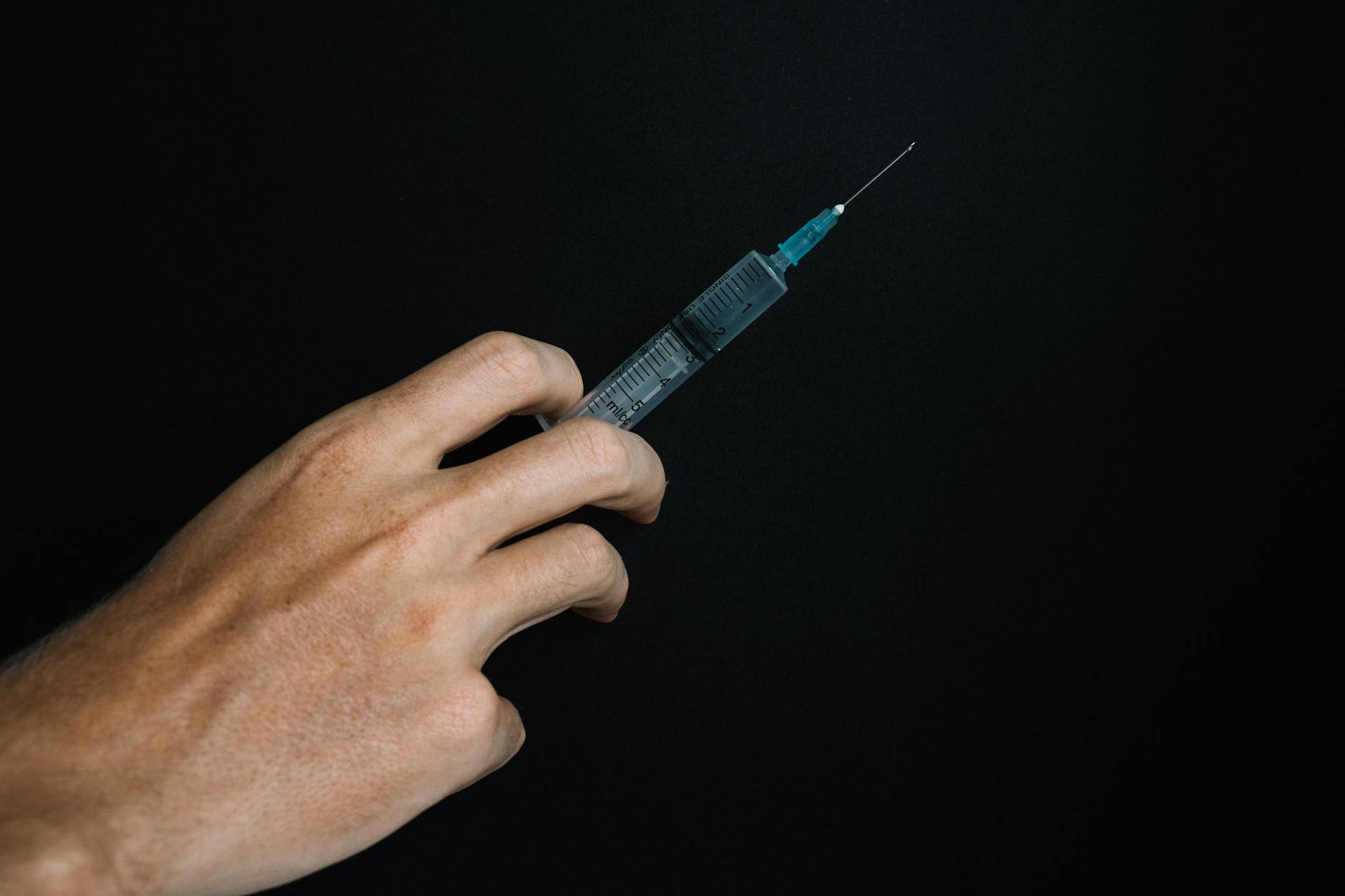
Rutgers Health researchers have found that a weekly injection of diabetes medication could replace painful daily hormone shots for people with a rare genetic form of lipodystrophy that leaves patients with almost zero fat tissue, according to a study in The New England Journal of Medicine.
Congenital generalized lipodystrophy (CGL), which affects only a few thousand people worldwide, results in severe metabolic disease, diabetes, insulin resistance and reduced life expectancy. With no fat tissue for proper storage, fat accumulates in organs such as the liver, leading to extreme insulin resistance and diabetes.
“These patients are severely ill and face markedly reduced life expectancy due to profound insulin resistance,” said Christoph Buettner, chief of endocrinology, metabolism, and nutrition at Rutgers Robert Wood Johnson Medical School and senior author of the study.
Currently, the standard treatment for CGL involves daily injections of metreleptin, a synthetic version of the hormone leptin, which is naturally produced exclusively by fat tissue. However, daily leptin shots are both expensive – costing hundreds of thousands of dollars annually – and particularly painful for CGL patients.
“When you inject yourself with, for example, insulin, you inject into subcutaneous fat, but these patients don’t have that,” said Svetlana Ten, associate professor of pediatrics and first author of the study. “Each injection is painful.”
In the recent study, researchers explored if the diabetes and obesity drug tirzepatide (the active ingredient in Zepbound and Mounjaro) could improve CGL, as it improves insulin resistance. Tirzepatide is administered through a weekly injection, potentially reducing the burden and pain associated with CGL treatment. It is also much more affordable than metreleptin.
Sign up for the Daily Dose Newsletter and get every morning’s best science news from around the web delivered straight to your inbox? It’s easy like Sunday morning.
The first patient, a 23-year-old man who had refused the painful daily treatments with leptin and insulin for 2 years, saw his average blood glucose drop from 252 to 128 milligrams per deciliter after three weeks on the maximum dose of tirzepatide. His blood glucose, which had been at healthy levels between 70 and 140 milligrams per deciliter in 8% of readings, remained at healthy levels in 93% of readings, an almost complete normalization without the need to inject insulin.
The second patient, a 64-year-old woman who required supplemental insulin injections because leptin alone couldn’t control her blood glucose, achieved normal blood glucose levels with tirzepatide alone.
“The surprise here was that when we stopped leptin and gave tirzepatide, the patient was very well controlled, probably better than while she was taking leptin,” Buettner said. “Leptin is an important hormone, made only by fat tissue, that is an important regulator of metabolism, so leptin therapy made intuitive sense in patients with CGL. The hormone GLP1, which is mimicked by tirzepatide, is not made in adipose tissue, and while tirzepatide is an insulin sensitizer, we did not expect it would have such potency in patients with CGL.”
While both tirzepatide and leptin work in the brain, they do so through different signaling pathways, acting on different neurons in distinct brain regions. This suggests that leptin and GLP1 signaling may have more extensive overlap than so far suggested.
The researchers plan a larger trial to validate these initial results, though recruiting enough patients will be challenging given the condition’s rarity.
If the results hold up in larger studies, tirzepatide could offer CGL patients an easier and potentially more affordable treatment option. However, Buettner said more research is needed to evaluate both the long-term efficacy and safety in this specific patient population and beyond that in other leptin-deficient conditions.
IMAGE CREDIT: NASA.




Leave a Reply