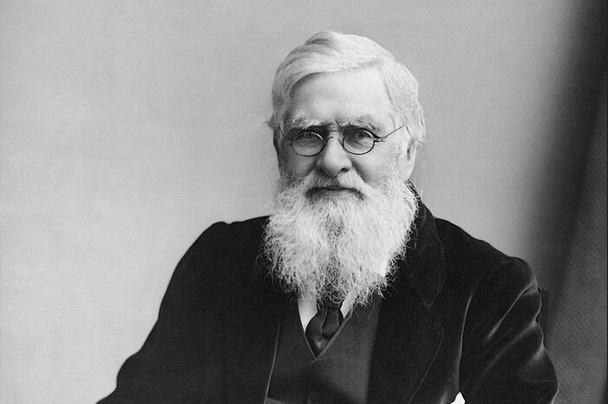

Alfred Russel Wallace (1823–1913) was a British naturalist, explorer, and co-discoverer of the theory of evolution by natural selection. His independent work on the subject, outlined in a manuscript sent to Charles Darwin in 1858, prompted the joint presentation of their ideas to the Linnean Society of London. Wallace’s extensive travels in the Amazon and Southeast Asia contributed significantly to biogeography, a field he is considered to have pioneered. He identified the “Wallace Line,” a boundary separating the distinct animal species of Asia and Australia.
Unlike Darwin, Wallace openly addressed the social implications of evolutionary theory and was an advocate for spiritualism, diverging from his peers. His ecological insights, such as the interconnectedness of species and their environments, were ahead of their time. Wallace’s contributions to science, though overshadowed by Darwin, remain critical to evolutionary biology and biodiversity studies. His legacy underscores the value of global exploration and interdisciplinary thinking.




Leave a Reply