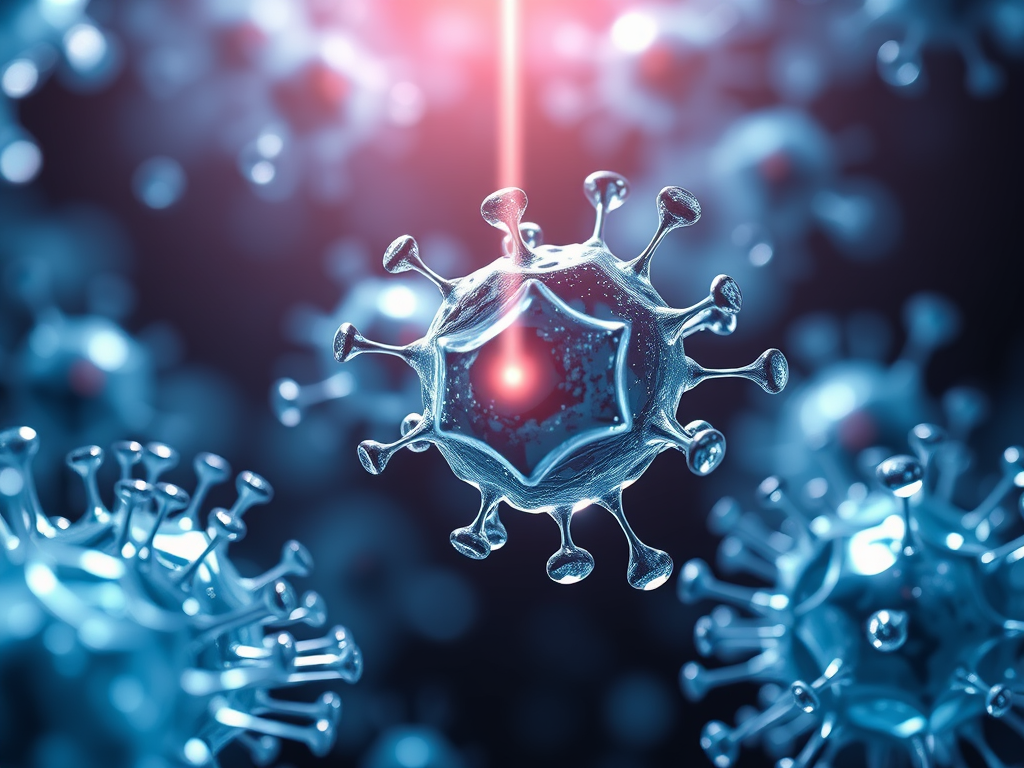
A new paper by a team of Concordia researchers from the departments of Biology and Physics proposes a novel method of fighting cancer tumours that uses ultrasound-guided microbubbles — a technology already widely used in medical imaging and drug delivery.
Writing in the journal Frontiers in Immunology, the researchers describe a process that uses ultrasound to modify the behaviour of cancer-fighting T cells by increasing their cell permeability. They examined how this can influence the release of more than 90 kinds of cytokines, a type of signalling molecule crucial for immune response.
The researchers targeted freshly isolated human immune cells with tightly focused ultrasound beams and clinically approved contrast agent microbubbles. When hit with the ultrasound, the bubbles vibrate at extremely high frequency, acting as a push-pull on the walls of the T cell’s membranes. This can mimic the T cell’s natural response to the presence of an antigen. The T cell then begins to secrete vital signalling molecules that would otherwise be restricted by the tumour’s hostile microenvironment. The process does not damage the cell itself.
“We’re combining the use of ultrasound and microbubbles to help modulate brain immunology with the emerging field of cancer immunotherapy, which is the harnessing of our own immune cells to fight cancer,” says Brandon Helfield, an associate professor of biology and physics and the paper’s supervising author.
This approach directly confronts one of the major challenges to the body’s natural response to cancer: the tumour’s ability to deactivate T cells from producing cytokines and other proteins of interest once they enter the tumour itself.
“The microbubbles can re-activate the cells that have been turned off inside the tumour,” says the paper’s lead author, PhD candidate Ana Baez. “This process will help them release the proteins that are needed to grow additional immune and blood cells, which creates a positive feedback loop.”
Sign up for the Daily Dose Newsletter and get every morning’s best science news from around the web delivered straight to your inbox? It’s easy like Sunday morning.
The changes to cytokine secretion were found to be time dependent. The amount of cytokines increased between 0.1 to 3.6 times compared to untreated cells over 48 hours. Additionally, the researchers noticed that when the ultrasound made the cell membranes more permeable, the amount of cytokines released generally went down.
While only preliminarily shown through benchtop experiments, the authors hope that this study will deepen their understanding of the different pathways chemicals in the body’s immune system use to fight cancer. At the same time, they believe this avenue of research will improve and complement existing cancer treatments and cellular therapies.
“We already use microbubbles clinically as image-guided tools,” says Helfield, Tier II Canada Research Chair in Molecular Biophysics in Human Health. “In the future, we could manipulate the beam to go from imaging to a therapeutic sequence. This would localize the effect on the T cells so you are only activating the ones where the beam is.”
“We may also be able to include cancer-fighting drugs that target the tumour in the treatment,” Baez adds. “The technique is completely non-invasive, so we can always repeat it.”



Leave a Reply