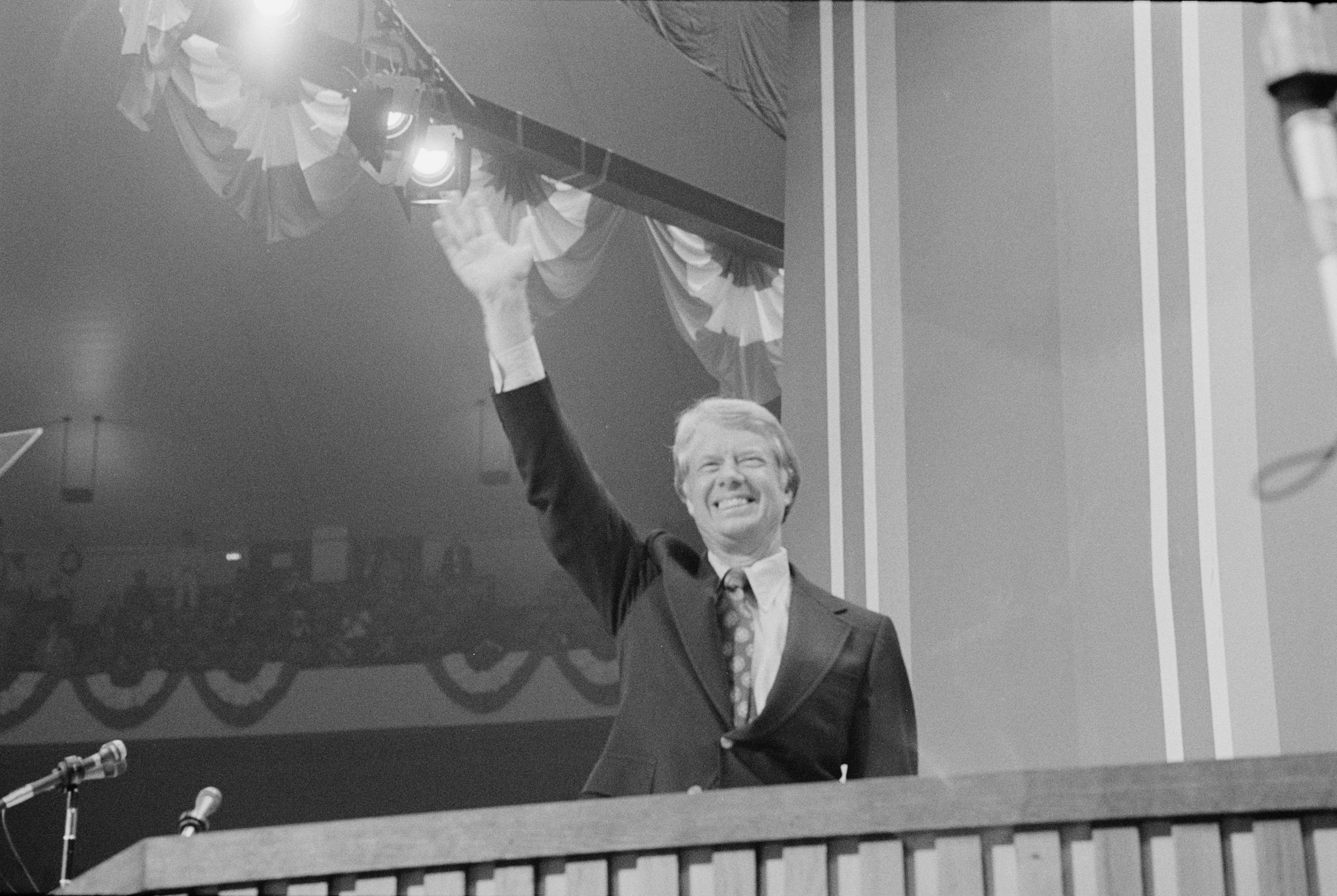
JIMMY CARTER LEAVES LEGACY IN SPACE EXPLORATION AND PEACE
Former U.S. President Jimmy Carter, who passed away on December 29, 2024, at the age of 100, left a lasting legacy in space exploration. In 1977, during his presidency, Carter recorded a message for the Voyager Golden Record, a phonograph record containing sounds and images intended to represent humanity to potential extraterrestrial life. His message, “We are attempting to survive our time so we may live into yours,” continues to travel beyond our solar system aboard the Voyager probes. NASA officials have acknowledged that Carter’s message of peace endures as the probes journey through interstellar space. Additionally, Carter’s administration provided crucial funding for the development of the Space Shuttle program, ensuring its continuation and eventual success. This support was instrumental in the shuttle’s extended operational history, allowing for numerous missions that advanced human spaceflight. (space.com)
NIH PILOT PROGRAM SEEKS TO VERIFY BIOMEDICAL RESEARCH RELIABILITY
In 2023, the National Institutes of Health (NIH) launched a pilot program to fund replication studies of high-impact biomedical research to verify the reliability of key findings. Researchers were invited to nominate their studies, with NIH providing up to $50,000 in funding for contract labs to repeat the experiments. While the program aims to address concerns over the reproducibility of scientific research, particularly in light of past cases of fraud, it has faced challenges in attracting interest, with only a modest response from the scientific community. Additionally, NIH has decided not to publicly release the results to protect intellectual property, which limits the potential transparency of the program. Despite skepticism over the effectiveness of contract labs in handling complex studies, the initiative has been praised as a step toward improving research integrity. The NIH aims to learn from this pilot, with plans to evaluate its success and expand in the future. (Science)
2024 MARKS HIGHEST GLOBAL TEMPERATURES WITH URGENT CLIMATE CRISIS
In 2024, the world experienced a decade of unprecedented heat, with the past ten years—including 2024—ranking as the hottest on record. This alarming trend has been linked to human activities, leading to more frequent and severe weather extremes. United Nations Secretary-General António Guterres emphasized the urgency of addressing this crisis, stating, “We must exit this road to ruin and we have no time to lose.” He called for a significant reduction in greenhouse gas emissions and a transition to renewable energy sources. The World Meteorological Organization (WMO) reported that 2024 is set to be the warmest year on record, exacerbating climate-related disasters such as floods, droughts, and wildfires. WMO Secretary-General Celeste Saulo noted that every degree of warming contributes to increased climate extremes, underscoring the critical need for immediate action to mitigate climate change impacts. (The Guardian)
CHIMPANZEES DEMONSTRATE REMARKABLE SPATIAL MEMORY IN FORAGING STRATEGIES
A recent study by the Jane Goodall Institute Spain and the University of Barcelona has revealed that savannah chimpanzees possess remarkable spatial memory, enabling them to locate underground ant nests despite their invisibility. Conducted in Dindefelo, Senegal, the research observed chimpanzees, such as Hiila, repeatedly visiting the same ant nests over five years, with Hiila returning to a particular nest 25 times. This behavior suggests that chimpanzees can remember the exact locations of these hidden resources, highlighting their advanced cognitive abilities. The study also noted that chimpanzees use tools to extract ants from these nests, indicating a sophisticated understanding of their environment and the ability to plan and execute complex foraging strategies. This research provides valuable insights into the cognitive capabilities of chimpanzees and their capacity to adapt to challenging environments. (El Pais)

NICOTINE POUCHES LIKE ZYN GAIN POPULARITY AMONG TEENS DESPITE RISKS
Nicotine pouches, such as Zyn, have rapidly gained popularity among young people, raising concerns for parents and educators. These smokeless products, available at gas stations and convenience stores, are easy to conceal, making them hard to detect. The pouches, which contain nicotine and flavoring like mint or fruit, are often marketed to adults, but have become increasingly popular with teens. Despite being legally restricted to those over 21, the rise of “Zynfluencers” on platforms like TikTok has helped spread their use. These products deliver nicotine in varying amounts, which can be addictive, especially for young users whose brains are more vulnerable to its effects. Health risks include nicotine poisoning, addiction, and long-term cognitive issues. As teen use rises, experts urge parents to talk to their children about the dangers and monitor for signs of use. Some states are moving to restrict these products, but enforcement remains a challenge. (CNN)
AI REVOLUTIONIZES STUDY OF ANCIENT TEXTS INCLUDING VESUVIUS PAPYRUS
In October 2023, Federica Nicolardi, a papyrologist at the University of Naples, received an image of a legible fragment from a papyrus scroll burned in the AD 79 eruption of Mount Vesuvius. This breakthrough, achieved through artificial intelligence (AI), allowed scholars to read a text that had been inaccessible for 2,000 years. The Vesuvius Challenge is part of a broader trend where AI, using deep neural networks, is revolutionizing the study of ancient texts. AI is helping researchers decode fragmented or damaged documents in languages like Greek, Latin, and Chinese, offering unprecedented access to historical data. Notably, AI has been used to read the Herculaneum scrolls and ancient Korean archives, as well as decipher Mycenaean scripts. These tools allow scholars to ask new questions and discover patterns across vast amounts of data. While challenges remain, AI is transforming how we understand ancient cultures and texts, enabling discoveries that were once unimaginable. (Nature)
Thanks for reading. Let’s be careful out there.
WORDS: The Biology Guy.



Leave a Reply