PHARMACY MIDDLEMEN PROFITED FROM OPIOIDS WHILE ENABLING EPIDEMIC
In 2017, Express Scripts, a pharmacy benefit manager (P.B.M.), announced steps to curb opioid abuse, following pressure from federal health regulators. However, a New York Times investigation reveals that P.B.M.s, including Express Scripts, CVS Caremark, and Optum Rx, had long accepted payments from opioid manufacturers, including Purdue Pharma, to avoid restricting access to dangerous amounts of painkillers. These middlemen control drug formularies and profit from rebates negotiated with pharmaceutical companies. Purdue, for example, paid millions in rebates to ensure broad access to OxyContin, even as the opioid epidemic worsened. The P.B.M.s’ actions, driven by profit, prioritized rebates over patient safety, allowing widespread over-prescription and contributing to the epidemic. Although the P.B.M.s later introduced safety measures, internal documents show they were slow to act, often renegotiating deals to maintain rebates. The middlemen’s role in the opioid crisis remained largely overlooked, even as other parties, like drugmakers and doctors, faced legal consequences. (New York Times)
TIKTOK FACES EU INVESTIGATION OVER ELECTION RISKS AND FAKE CONTENT
TikTok is facing two investigations under the European Union’s Digital Services Act (DSA), one of which focuses on election risks related to recent elections in Romania. The EU will examine TikTok’s recommender systems for coordinated inauthentic manipulation and the platform’s policies on political advertisements and paid content. This follows concerns about TikTok’s role in potentially amplifying fake content that supported a pro-Russian, far-right candidate in Romania’s presidential election. Intelligence reports and TikTok’s own risk assessments have raised alarms about its failure to address these risks effectively. The investigation could lead to penalties if TikTok is found non-compliant. TikTok has claimed it took action by removing fake accounts and content, stating its commitment to election integrity. The EU’s president emphasized the need for swift action to protect democracies from foreign interference, and TikTok’s response includes working with authorities to address concerns. The outcome of this investigation remains pending. (Tech Crunch)
CHINA CHALLENGES US IN AI DEVELOPMENT WITH ADVANCED MODELS
China is making significant strides in artificial intelligence (AI) and is now competing with the U.S. in terms of AI model performance. Chinese AI firms are developing large language models (LLMs) similar to those used by U.S. companies like OpenAI, with some models such as Alibaba’s Qwen gaining popularity. These models are open-source, making them freely available to global developers, which could help Chinese firms expand their influence worldwide. The U.S. has restricted China’s access to advanced AI chips, such as Nvidia’s, citing national security risks, but China has been stockpiling chips and developing its own alternatives, notably through companies like Huawei. Despite these restrictions, Chinese firms have continued to improve their models and infrastructure. The development of AI models is seen as crucial for future technology ecosystems, and Chinese companies view LLMs as central to dominating future markets, similar to how Microsoft, Google, and Apple dominate mobile and PC platforms. (CNBC)
US RESEARCHERS FACE DRONE BAN THREAT DUE TO SECURITY CONCERNS
Iain Kerr, CEO of Ocean Alliance, uses DJI drones equipped with Velcro and petri dishes to collect biological data from whale snot, offering a non-invasive and cost-effective research method. However, rising tensions between the U.S. and China threaten the future of such drones. Provisions in the U.S. National Defense Authorization Act (NDAA) may soon restrict the use of Chinese-made drones like DJI due to security concerns, as critics fear these devices could be used for espionage. DJI dominates the U.S. drone market, with few alternatives that match its performance and affordability. Many researchers, including those tracking microbes in wildfire smoke and mapping carbon in coastal ecosystems, rely on DJI drones for their durability and capabilities. With the potential for a ban, researchers face higher costs for less effective alternatives. They argue that research drones don’t pose a security risk, as their data is publicly available, and call for more U.S. investment in competitive drone technology. (Science)

US RESEARCHERS FACE DRONE BAN THREAT DUE TO SECURITY CONCERNS
China has launched the first batch of satellites for its Guowang megaconstellation, a project to build up to 13,000 satellites for global internet coverage. The launch took place on a Long March 5B rocket from the Wenchang Space Launch Site, deploying 10 satellites into orbit. The Guowang fleet will compete with SpaceX’s Starlink, although details on service specifications remain scarce. The project is managed by China SatNet, a government-backed company, which has kept a low profile, unlike other Chinese satellite initiatives like Qianfan. These constellations raise concerns due to their potential military uses, as they could enhance China’s global communications and military operations. The US Space Force monitors such developments closely, particularly China’s rapid space advancements and the integration of satellite networks into military exercises. The Guowang constellation will require more rocket launches and will push China’s space capabilities, with half of the fleet due by 2032. (Ars Technica)
NEW STUDY SUGGESTS SATURN’S RINGS ARE AS OLD AS PLANET ITSELF
New research suggests Saturn’s rings may be as old as the planet itself, possibly around 4.5 billion years old, rather than the previously believed 100 to 400 million years. A Japanese-led team, using computer modeling, challenged the “baby rings” theory, proposing that Saturn’s rings remain pristine not because they are young, but because they are dirt-resistant. NASA’s Cassini spacecraft had previously shown no evidence of darkening from micrometeoroid impacts, leading scientists to think the rings formed after the planet. However, the new study by Ryuki Hyodo and his team found that micrometeoroids vaporize upon impact, preventing residue buildup and keeping the rings clean. This suggests that the rings may have formed early in the solar system’s chaotic history, possibly around 2.25 billion years ago, or even closer to Saturn’s formation, in line with the planet’s earliest times. The results were published in Nature Geoscience. (AP)
RESEARCHERS CALL FOR PRESERVING MARS ARTIFACTS AS SPACE HERITAGE
Researchers argue that human activity on Mars, including NASA’s rovers, landing sites, and discarded equipment, should be preserved as part of the archaeological record of space exploration. Dr. Justin Holcomb from the University of Kansas emphasizes that these items represent humanity’s first steps across the solar system. In a study published in Nature Astronomy, Holcomb and colleagues warn that natural weathering, meteoroid impacts, and accidents could permanently destroy these “space heritage” sites. They advocate for designing missions with preservation in mind, rather than specific preservation-focused missions. While some see human material on Mars as potential “space trash,” the team believes it is crucial to protect these artifacts to document humanity’s space legacy. The researchers also highlight the importance of preserving sites like the Apollo 11 landing and Venera 7’s Venus landing. However, they acknowledge that the issue of preservation is cultural, with no clear consensus on which sites should be protected. (The Guardian)
JAPANESE BREWER TO MAKE SAKE ON SPACE STATION AHEAD OF MOON BREWERY PLANS
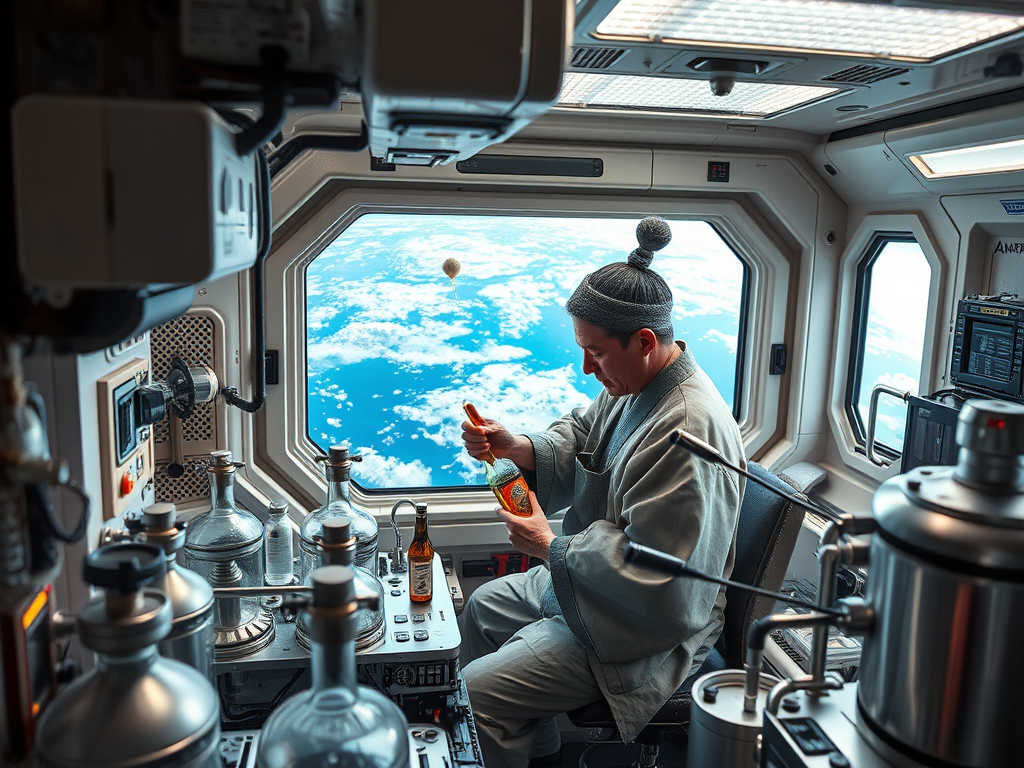
Asahi Shuzo Co., renowned for its “Dassai” brand, is embarking on an ambitious project to brew rice wine on the International Space Station (ISS) in late 2025, with future plans to establish a brewery on the moon. The Iwakuni-based company will collaborate with Mitsubishi Heavy Industries and the Aichi Center for Industry and Science Technology, and pay the Japan Aerospace Exploration Agency to use the Japanese Kibo module on the ISS. Astronauts will mix rice, koji mold, and yeast with water to begin the fermentation process, monitored by automated systems. The resulting unrefined sake, or moromi, will be frozen and returned to Earth, where it will be used to produce a limited 100-milliliter bottle of “Dassai MOON–Space Brew.” Priced at 100 million yen ($653,000), the proceeds will fund space development projects. Asahi Shuzo believes sake brewing is more suited to space than winemaking due to rice’s lighter weight and lower water content. (Asahi Shunbun)
Thanks for reading. Let’s be careful out there.
WORDS: The Biology Guy.




Leave a Reply