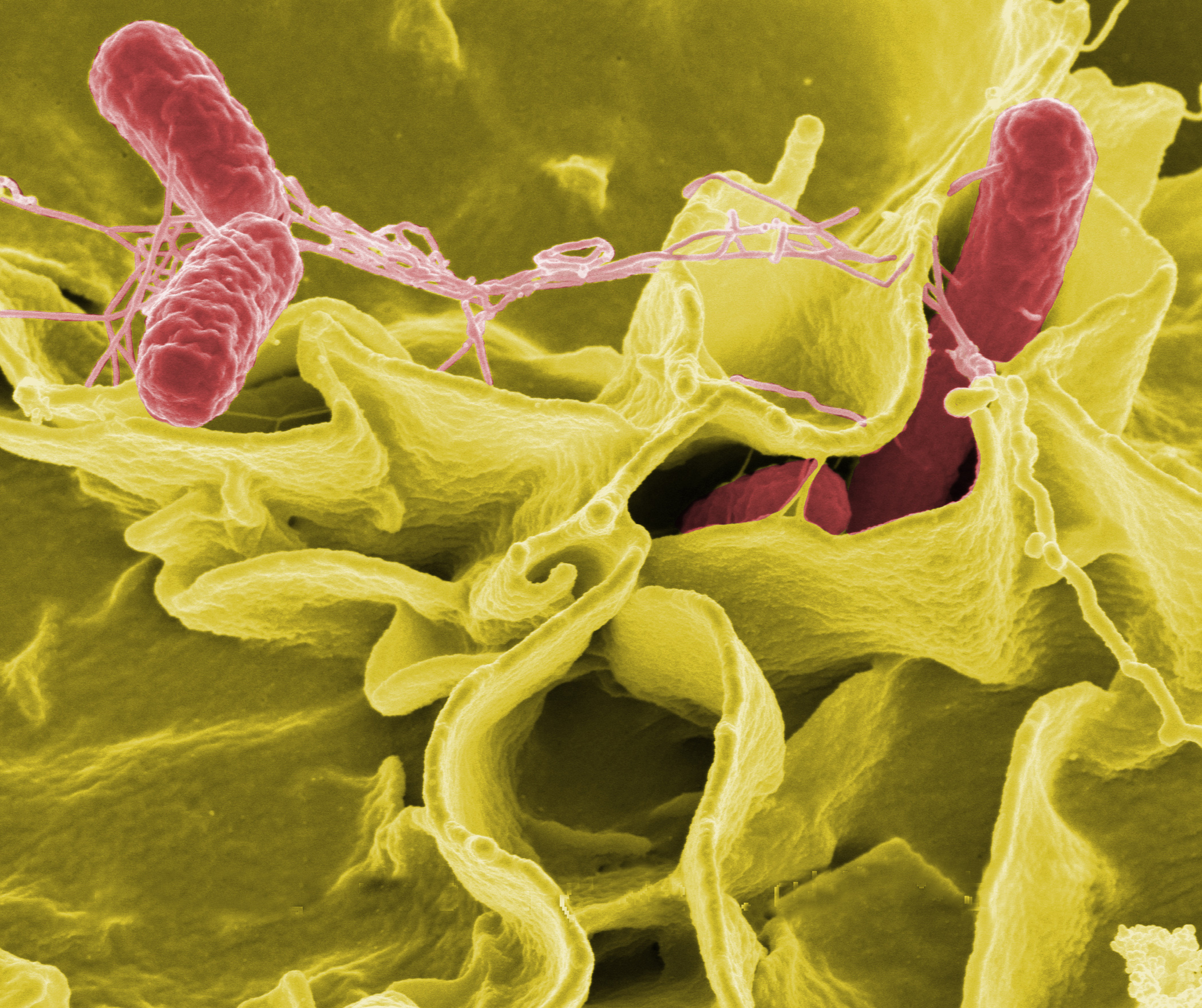
A new UC Davis Health study has uncovered how Salmonella bacteria, a major cause of food poisoning, can invade the gut even when protective bacteria are present. The research, published in the Proceedings of the National Academy of Sciences, explains how the pathogen tricks the gut environment to escape the body’s natural defenses.
The digestive system is home to trillions of bacteria, many of which produce short-chain fatty acids (SCFAs) that help fight harmful pathogens. But Salmonella manages to grow and spread in the gut, even though these protective compounds are present. The study asks: How does Salmonella get around this defense?
“We knew that Salmonella invades the small intestine, although it is not its primary site of replication. The colon is,” said the lead author of the study Andreas Bäumler. Bäumler is a UC Davis distinguished professor and vice chair of research in the Department of Medical Microbiology and Immunology.
Bäumler and his team discovered that the answer lies in how the pathogen changes the gut’s nutrient balance. When Salmonella enters the small intestine, it causes inflammation in the gut lining and disrupts the normal absorption of amino acids from food. This creates an imbalance in nutrients in the gut.
The imbalance gives Salmonella the resources it needs to survive and multiply in the large intestine (colon), where beneficial bacteria usually curb its growth. The study showed that salmonella causes inflammation in the small intestine in order to derive nutrients that fuel its replication in the colon.
Sign up for the Daily Dose Newsletter and get every morning’s best science news from around the web delivered straight to your inbox? It’s easy like Sunday morning.
Using a mouse model, the team looked closely at how Salmonella changed the chemical makeup of the gut. They traced amino acid absorption in the small and large intestines.
They found that in mice that were infected with Salmonella, there was less absorption of amino acids into the blood. In fact, two amino acids, lysine and ornithine, became more abundant in the gut after infection. These amino acids helped Salmonella survive by preventing the growth-inhibiting effects of SCFAs. They did this by restoring Salmonella’s acidity (pH) balance, allowing the pathogen to bypass the microbiota’s defenses.
“Our findings show that Salmonella has a clever way of changing the gut’s nutrient environment to its advantage. By making it harder for the body to absorb amino acids in the ileum, Salmonella creates a more favorable environment for itself in the large intestine,” Bäumler said.
In the study, the team showed that Salmonella uses its own virulence factors (disease causing molecules) to activate enzymes that break down key amino acids like lysine. This helps the pathogen avoid the SCFAs’ protective effects and grow more easily in the gut.
New insights could lead to better gut infection treatments
The new insights potentially explain how the gut environment changes during inflammatory bowel disorders , such as Crohn’s disease and ulcerative colitis, and could lead to better treatments for gut infections. By understanding how Salmonella changes the gut environment, researchers hope to develop new ways to protect the gut microbiota and prevent these infections.
“This research uses a more holistic approach to studying gut health. It not only gives us a better understanding of how Salmonella works, but also highlights the importance of maintaining a healthy gut microbiota,” said Lauren Radlinski, the study’s first author and postdoctoral fellow in the Bäumler Lab. “Our findings could lead to new treatments that help support the microbiota during infection.”
The study’s results could inspire future treatments, including probiotics or dietary plans designed to strengthen the body’s natural defenses against harmful pathogens.
“By learning how a pathogen manipulates the host’s system, we can uncover ways to boost the host’s natural defenses,” Radlinski said.
IMAGE CREDIT: Rocky Mountain Laboratories, NIAID, NIH
.



Leave a Reply