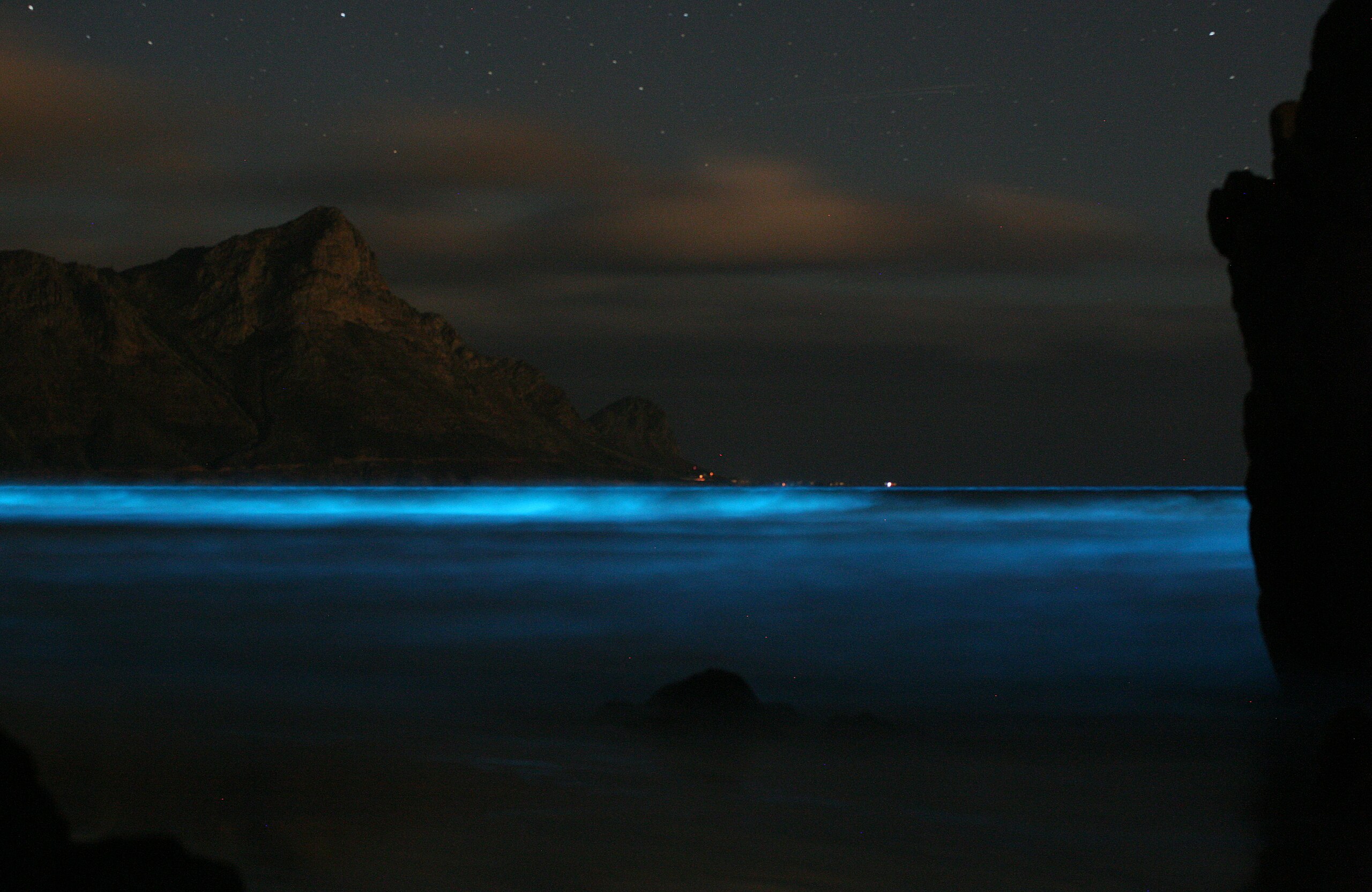
In the vast expanse of our world’s oceans, few phenomena capture the imagination quite like the ethereal glow of a “blue tide.” While its crimson counterpart, the red tide, is more widely known, the blue tide presents a mesmerizing display of nature’s bioluminescent capabilities, orchestrated by microscopic organisms responding to environmental cues.
This spectacular phenomenon begins with the seasonal winds that sweep across our oceans. These winds initiate a crucial process called upwelling, where deeper, nutrient-rich waters are drawn to the surface. This natural fertilization of surface waters creates ideal conditions for explosive growth in marine microorganism populations, particularly among species of dinoflagellates – single-celled organisms that bridge the gap between plants and animals.

Among these remarkable creatures, Noctiluca species stand out for their ability to transform the darkened waters into a living light show. Unlike the toxic red tides caused by some of their relatives, these dinoflagellates specialize in producing a stunning blue luminescence. When disturbed by wind-driven waves, these microscopic organisms undergo a fascinating chemical reaction within their cellular machinery. The process involves a substrate called luciferin interacting with the enzyme luciferase, resulting in the release of energy in the form of blue light – a process remarkably similar to the one that allows fireflies to illuminate summer evenings.
What makes this phenomenon particularly intriguing is its ecological purpose. Scientists believe this luminous display is far from arbitrary. The blue light serves as a sophisticated defense mechanism, operating through an indirect but ingenious pathway. When Noctiluca cells are threatened by small predators, their light display acts as a beacon, attracting larger fish to the area. These fish then feed on the smaller predators that would otherwise consume the dinoflagellates, creating a biological security system through illumination.
This evolutionary strategy, known as the “burglar alarm” hypothesis, demonstrates the complex interconnections within marine ecosystems. By recruiting larger predators through their light show, these microscopic organisms have developed a remarkable method of survival that transforms our oceans into living light displays, reminding us of the incredible adaptations that exist in the natural world.
COPY II (2-3 PARAGRAPHS)
IMAGE CREDIT: NASA.




Leave a Reply