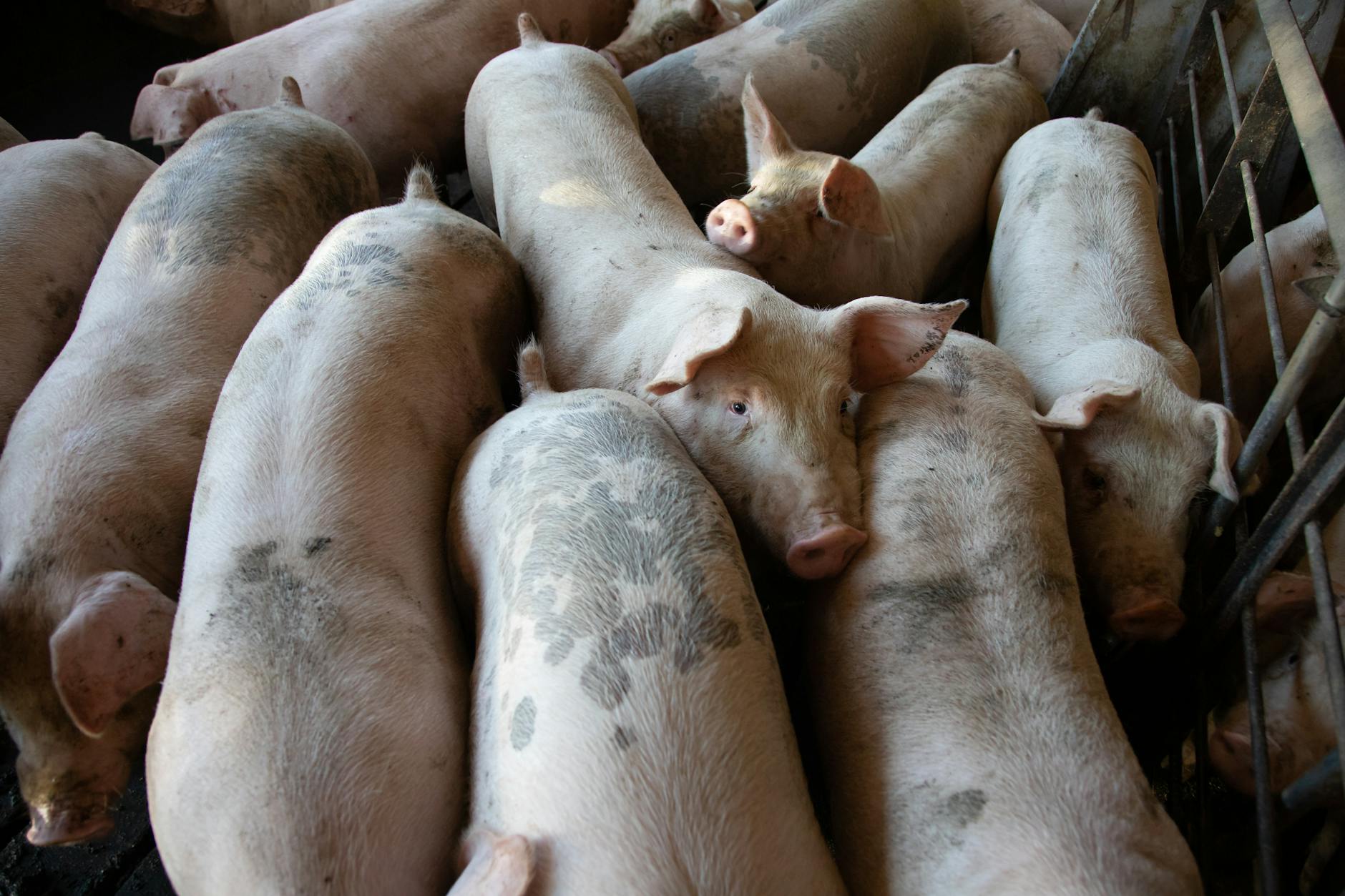
H5N1 AVIAN FLU FIRST DETECTED IN OREGON PIGS
Federal officials announced the first detection of H5N1 avian flu in pigs on a backyard farm in Crook County, Oregon, where an outbreak in poultry was recently reported. The farm, which also houses sheep and goats, had five pigs that shared water sources and equipment with sick poultry, raising concerns about transmission. Although the pigs showed no signs of illness, they were tested and subsequently euthanized for diagnostic analysis. Test results revealed two pigs tested negative, while results for the other two are pending. The U.S. Department of Agriculture (USDA) emphasized that the farm is non-commercial and there is no threat to the nation’s pork supply. Initial genetic testing indicated no changes in the virus that would suggest increased transmissibility to humans. Experts caution that it remains unclear whether the pigs were truly infected or merely contaminated, and further examination is needed to confirm any infection. (CIDRAP)
CONCERNS GROW OVER TRUMP’S POTENTIAL IMPACT ON PUBLIC HEALTH
Concerns regarding the potential impact of a second Donald Trump presidency on public health and biomedical research intensified this week after Robert F. Kennedy Jr. revealed Trump promised him “control” over key agencies within the Department of Health and Human Services (HHS), including the FDA and NIH. Kennedy, who recently joined Trump’s campaign after dropping out of the presidential race, stated Trump would allow him significant authority over public health agencies. Public health researchers are particularly alarmed given Kennedy’s history of opposing vaccines and promoting debunked claims linking vaccines to autism. Experts warn that Kennedy’s influence could lead to detrimental changes in health policies, particularly in vaccine promotion and agency funding priorities. While Kennedy may face challenges in Senate confirmation for any official position, his potential sway without formal authority raises concerns among health advocates, with many expressing fears about the ramifications for national health. (Science)
PUBLIC OPINION ON ABORTION SHIFTING IN WAKE OF ROE
More than 80% of abortions in the U.S. occur before 10 weeks, but political discourse often focuses on the rarer, later abortions. This has become particularly pronounced in the wake of the Supreme Court’s overturning of Roe v. Wade, with ten states voting on abortion rights measures this election year. Republicans allege Democrats advocate for late-term abortions, while Democrats share poignant stories of women facing medical emergencies. Polls indicate widespread support for abortion in the first trimester, but opinions vary for later stages. Historically, discussions about late-term abortions have swayed public opinion against abortion rights, though recent polls show increasing support for abortion, even beyond the first trimester, particularly when informed by women’s experiences. Most late-term abortions occur due to serious medical issues, yet anti-abortion activists misrepresent data to suggest otherwise. Overall, while public support for abortion remains, it is often qualified by specific circumstances surrounding the procedure. (New York Times)
BUTTERFLY AND BIRD POPULATIONS DECLINE DUE TO CLIMATE CHANGE
A study conducted by Japan’s Environment Ministry and the Nature Conservation Society revealed significant declines in butterfly and bird populations in human habitats from 2005 to 2022, largely attributed to rising temperatures. The report, part of the Monitoring Site 1,000 program, analyzed data from 325 locations nationwide. Over 30% of the 103 butterfly species experienced annual population declines of 3.5% or more, with certain species like the “restricted demon” and Celastrina sugitanii facing declines of 20% annually, indicating an urgent risk of extinction. Additionally, bird populations, including the azure-winged magpie, fell by 3.5% or more annually, particularly affecting species in agricultural and open areas since 2015. Invasive species and agricultural chemicals were identified as contributing factors to the declines. Despite the negative trends, researchers noted an increase in tropical and subtropical butterfly species in Japan, highlighting a complex ecological shift amid climate change. (Asahi Shinbun)

CRITICAL NOAA DATA UNDER THREAT AMID PROPOSED CUTS
As the Popo Agie River flows from Wyoming’s Wind River Mountains into a limestone cave, it mysteriously disappears before resurfacing as the Rise, a vital water source for local agriculture and recreation. This unique phenomenon was first noted in 1983 and is linked to the river’s passage through small crevices in the rock. However, this summer, the Heritage Foundation’s Project 2025 proposed eliminating the National Oceanic and Atmospheric Administration (NOAA), which collects crucial data on streamflow and climate change. Critics warn that dismantling NOAA could severely impact agriculture, wildfire management, and national security. NOAA’s data is essential for farmers planning crops in arid conditions and for firefighters tracking wildfires, which have become more destructive due to climate change. The proposal to privatize weather forecasting raises concerns about equitable access to critical information, especially for rural communities. Experts fear that such changes would undermine the scientific foundation needed to address climate challenges in the West. (Ars Technica)
NASA’S VOYAGER 1 RESUMES COMMUNICATION USING BACKUP TRANSMITTER
NASA’s Voyager 1 spacecraft has begun using a backup radio transmitter that has been inactive since 1981, following communication issues triggered by a recent command. On October 16, the spacecraft entered a protective state to conserve power after being instructed to activate a heater, leading to a shutdown of its primary X-band radio transmitter. The mission team first noticed problems on October 18 when Voyager 1 failed to respond to commands. It was later discovered that the spacecraft had switched to its secondary S-band transmitter to conserve power, which sends a weaker signal. On October 22, a command was sent to the S-band transmitter, and by October 24, communication was reestablished. The team will investigate the cause of the fault protection system’s activation, as Voyager 1 should have had sufficient power. Launched in 1977, Voyager 1 has been in interstellar space since 2012 and continues to provide valuable data despite its age and distance. (space.com)
NASA STUDY REVEALS TURBULENCE’S ROLE IN STAR FORMATION
A new NASA-funded study published in Science Advances explores the role of turbulence in star formation within giant molecular clouds in the Milky Way. Scientists conducted simulations to understand how turbulence interacts with the density of these clouds, which contain “lumps” where new stars are born. Lead author Evan Scannapieco from Arizona State University emphasizes that turbulence shapes the structures that create stars. The study found that turbulent motions, driven by gravity and various stellar phenomena, generate shocks that alter the cloud’s density. By using tracer particles to map the density changes over time, the researchers discovered that shocks slow down in high-density gas and speed up in low-density gas, similar to ocean waves strengthening in shallow water. This research enhances understanding of star formation by revealing how dense regions evolve and why they are optimal for star birth. The findings will also complement observations from NASA’s James Webb Space Telescope, which is investigating molecular cloud structures and their chemistry. (Science)
Thanks for reading. Let’s be careful out there.
WORDS: The Biology Guy.
IMAGE CREDIT: Mark Stebnicki.



Leave a Reply