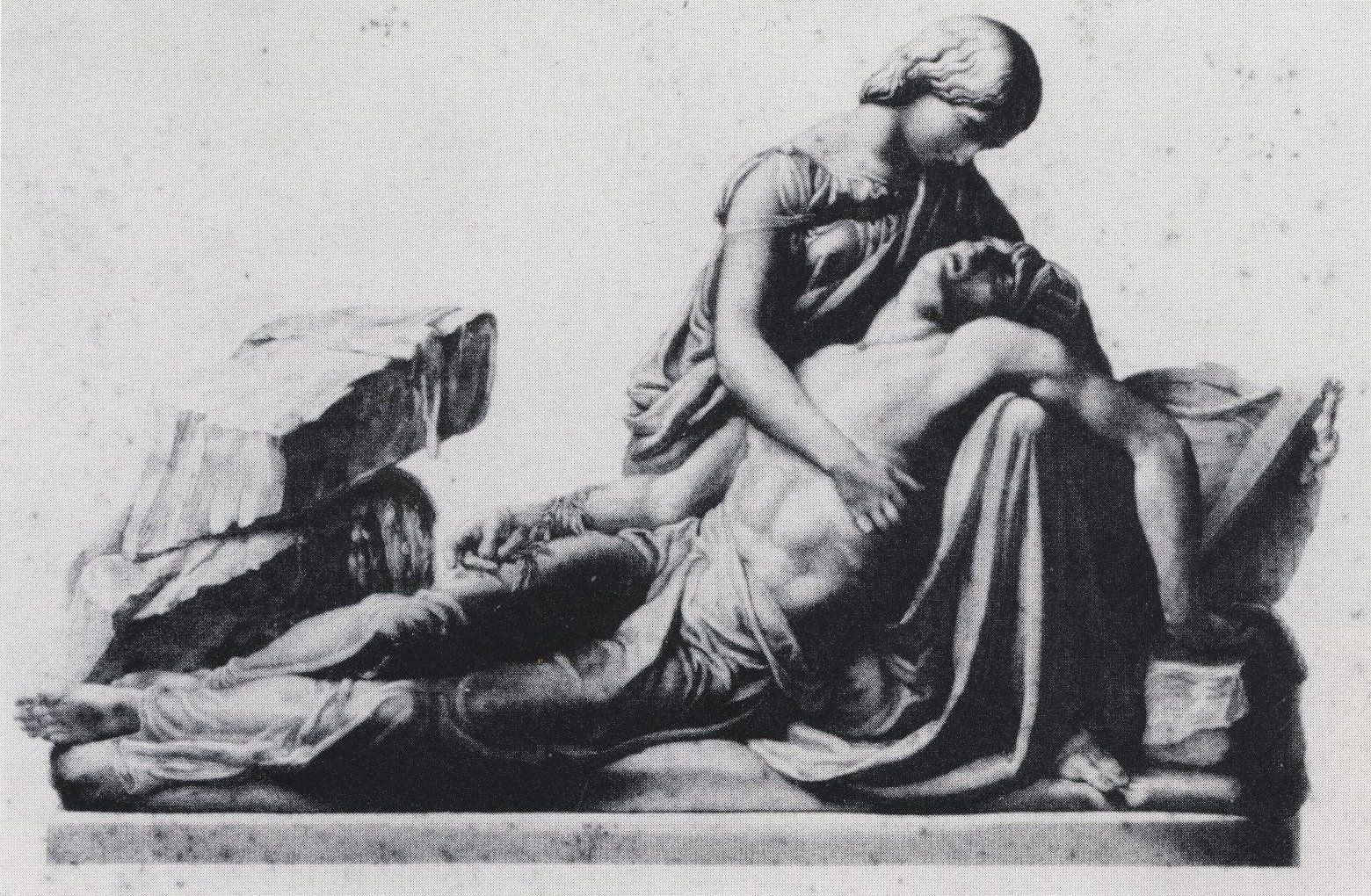
Among the many legends surrounding the Romantic poets, few are as haunting as the tale of Percy Bysshe Shelley’s heart.
According to legend, during Shelley’s cremation, his heart refused to burn—a phenomenon that blends documented history with Gothic romanticism, creating a narrative that seems simultaneously too fantastical to believe yet too perfect to dismiss. This tale of a preserved heart would later echo through the pages of his wife Mary Shelley’s masterpiece “Frankenstein,” where matters of the heart—both scientific and emotional—take center stage.
The tragic events began on July 8, 1822, when Shelley’s small sailboat, the Don Juan, succumbed to a sudden storm off the Italian coast. His body, along with those of Edward Williams and a boat boy, washed ashore near Viareggio ten days later. Tuscan quarantine laws initially required the bodies to be buried in the sand where they were discovered. However, Shelley’s close friend Edward Trelawny, accompanied by Lord Byron and others, secured permission for a proper cremation on August 16, 1822.
During the beach-side cremation, witnesses reported several extraordinary occurrences, most notably that Shelley’s heart remained intact amid the flames. According to Trelawny’s account, he reached into the pyre and retrieved the unburned heart—a macabre relic that would eventually find its way to Mary Shelley, who reportedly kept it wrapped in silk within her desk drawer until her death.

Modern science offers fascinating explanations for this seemingly supernatural occurrence. The phenomenon of cardiac calcification—the accumulation of calcium phosphate deposits in heart tissues—provides a scientific framework for understanding how a heart might resist fire. This process involves complex biochemical transformations that effectively turn living tissue into mineral deposits.
The calcification process begins at the cellular level. When cardiac tissue experiences trauma or chronic inflammation, damaged cells release specialized proteins called cytokines. These proteins trigger a cascade of events: the activation of macrophages (immune cells), followed by the transformation of smooth muscle cells and fibroblasts into osteoblast-like cells. These transformed cells then secrete matrix vesicles containing calcium and phosphate, ultimately leading to the formation of hydroxyapatite crystals—the same mineral found in bones and teeth.

Calcium phosphate deposits can accumulate in cardiac tissues—a process known as heart tissue calcification. These deposits commonly form in the heart valves, myocardium, and coronary arteries, typically emerging as part of the aging process or in conjunction with conditions like atherosclerosis or kidney disease. The buildup can severely compromise heart function by making affected tissues less flexible and mobile.
This process typically begins when cardiac tissue experiences trauma or ongoing inflammation. The body’s natural healing response can paradoxically trigger calcification. When heart cells become damaged or stressed, they emit inflammatory signals and cytokines that summon macrophages. These immune cells can transform the heart’s smooth muscle cells and fibroblasts into cells resembling osteoblasts, which then begin depositing calcium phosphate crystals in a process mirroring bone development.
Various health conditions can speed up cardiac calcification. Patients with chronic kidney disease often show elevated blood calcium or phosphate levels, increasing their susceptibility. Additionally, conditions such as diabetes, high blood pressure, and elevated cholesterol levels can intensify tissue inflammation and cellular stress, further promoting calcification.
As cardiac tissues become calcified, they grow increasingly rigid, compromising the heart’s ability to function properly. A prime example is calcified heart valves, which can become stiff and restrict blood flow, forcing the heart to exert more effort and potentially triggering heart failure. Scientists continue to search for new therapeutic approaches to prevent or delay calcification, particularly focusing on high-risk patients. Meanwhile, maintaining a healthy lifestyle and properly managing underlying health conditions remains essential for reducing calcification risk.

Bruce Fouke and Mayandi Sivaguru are researchers who explore the mechanisms behind heart calcification, a major health issue often requiring invasive surgery. Their interdisciplinary research combines geology and biology to examine mineral transformations in heart tissue, highlighting the roles of amorphous calcium phosphate (ACP) and hydroxyapatite (HAP) in calcification. This research opens possibilities for treatments that could slow calcification.
The team also investigates biological defenses, like proteins and minerals that delay calcification, revealing potential for non-surgical interventions. They envision applications across medicine, particularly in managing and possibly reversing heart calcification.
During the conversation with them, I asked them whether a heart could become so calcified that it wouldn’t burn during cremation. Sivaguru explained this phenomenon by referencing mummies: “When they open mummies, all the organic matter is gone. But they’re left with stone hearts or stone kidneys… These stones don’t dissolve or go away.”
Regarding how someone could live with such extreme heart calcification, Sivaguru explained that it depends on the aortic valve’s functionality. “Although the rest of the heart might be calcified and change to HAP and other minerals, the aortic valve will still contain ACP. As long as that valve functions – and there are normally three valves in there – life can continue. Sometimes two valves connect, leaving only one opening instead of three slits. You might first end up with two openings, then one at the end. As long as that small portion functions, you can still be alive. But the moment it stops functioning, that’s when death occurs.”
The researchers acknowledged the severe impact on patients: “It must have been excruciating for these people,” with Sivaguru adding, “A slow death.”
When I asked whether the story about Shelley’s heart surviving the fire were possible, they replied that it was absolutely possible.
The preservation of Shelley’s heart exists within a rich tapestry of Gothic literary tradition, where science and supernatural horror intertwine. This was the age that gave birth to not only “Frankenstein” but also John William Polidori’s “The Vampyre”—the first modern vampire story—and Charles Maturin’s “Melmoth the Wanderer,” tales where death proves surprisingly mutable. The era’s fascination with death, preservation, and reanimation reflected both scientific advancement and spiritual uncertainty.
Mary Shelley’s “Frankenstein” serves as the perfect lens through which to view Percy’s preserved heart. The novel, conceived during the famous ghost story competition at the Villa Diodati, explores themes of scientific preservation and reanimation that would become tragically relevant to Mary’s own life. Like Victor Frankenstein laboring in his laboratory to unlock the secrets of life and death, Mary would spend years preserving her husband’s memory—and his literal heart—in her desk drawer.

The timing of these events adds another layer of Gothic significance. “Frankenstein” was conceived during the “Year Without a Summer” (1816), when volcanic ash from Mount Tambora created an atmospheric darkness that seemed to presage the Gothic tales it inspired. Percy’s death and cremation occurred in the heat of August 1822, creating a striking contrast between natural forces—water and fire—that failed to destroy his heart.
The modern celebration of Halloween owes much to the Gothic tradition that flourished during the Romantic period. The ghost story competition that produced “Frankenstein” took place in June, not October, but it embodied the spirit of Halloween storytelling that would later become tradition. Today, the tale of Shelley’s heart joins a Halloween canon that includes not only the obvious connections to “Frankenstein” but also the broader themes of death, preservation, and the blurring of scientific and supernatural boundaries.
The image of Mary Shelley keeping her husband’s calcified heart wrapped in silk in her desk drawer reads like a detail from one of her own Gothic stories. This preservation of Percy’s heart mirrors Victor Frankenstein’s scientific pursuits while adding a layer of romantic devotion that transforms the potentially macabre into something poignant. It’s a story often shared at Halloween gatherings of literary enthusiasts, alongside retellings of that fateful summer at Villa Diodati when Mary first conceived her masterpiece.
The very language used to describe calcified hearts in medical literature—terms like “stone heart syndrome” and “porcelain heart”—seems borrowed from Gothic fiction, yet describes actual medical conditions. This intersection of scientific reality and Gothic imagination perfectly captures the spirit of Halloween, a holiday that celebrates the thin line between the natural and supernatural worlds.


The endurance of Percy’s heart, like the endurance of the Gothic literary tradition, speaks to humanity’s eternal fascination with death, preservation, and the possibility of immortality. As Percy himself wrote in “Ode to the West Wind”: “Drive my dead thoughts over the universe Like withered leaves to quicken a new birth! And, by the incantation of this verse, Scatter, as from an unextinguished hearth Ashes and sparks, my words among mankind!”
His words proved prophetic—his heart, like his poetry, refused to be extinguished. In this way, the legend itself achieves what Shelley sought in his poetry: the transformation of mortal experience into eternal truth, bridging the gap between scientific reality and poetic metaphor, between Halloween horror and enduring love.

Perhaps most fittingly, the final lines of “Adonais” seem to foretell his own immortality: “The soul of Adonais, like a star, Beacons from the abode where the Eternal are.” In Shelley’s case, it wasn’t just his soul that achieved immortality, but his heart as well—preserved through both physical calcification and literary legend, a perfect union of scientific process and poetic justice, a tale worthy of both scientific journals and Halloween nights.
This extraordinary convergence of science, poetry, and Gothic romance continues to captivate audiences, particularly during the Halloween season when the boundaries between the natural and supernatural world grow thin. The story of Shelley’s heart reminds us that sometimes the most incredible tales are those that hover in the twilight space between scientific fact and Gothic fiction—a space that both the Shelleys explored throughout their lives and works.
WORDS: Marc Landas


Leave a Reply