The relationship between science and art has always been a fertile ground for innovation and creativity. In the modern era, scientific discoveries and concepts have profoundly influenced artistic expression, leading to new movements, techniques, and ways of perceiving reality. This exploration reveals how ten key scientific concepts have shaped modern artistic practice, demonstrating the powerful connection between scientific understanding and cultural expression.

Quantum Mechanics and Abstract Expressionism
Perhaps no scientific concept has had a more profound impact on modern art than quantum mechanics. The discovery that reality at its most fundamental level exists in states of probability rather than certainty deeply influenced artists of the Abstract Expressionist movement. Jackson Pollock’s famous drip paintings, with their seemingly random but deeply structured patterns, reflect quantum mechanical concepts of uncertainty and probability. The artist’s technique of allowing paint to fall naturally onto canvases mirrors the probabilistic nature of quantum events, creating works that exist between chaos and order.
Willem de Kooning and Mark Rothko similarly embraced this quantum-inspired abstraction, creating works that reject definitive forms in favor of shifting, ambiguous spaces that seem to exist in multiple states simultaneously. This approach to art-making reflected the revolutionary scientific understanding that the act of observation affects the observed phenomenon, a key principle of quantum mechanics.

Relativity and Cubism
Einstein’s Theory of Relativity, with its radical reconception of space and time, found its artistic expression in Cubism. Pablo Picasso and Georges Braque’s revolutionary artistic movement, which depicted objects from multiple perspectives simultaneously, paralleled Einstein’s revelation that time and space are relative to the observer. Cubist paintings, with their fragmented and multi-viewpoint representations, effectively visualized the concept that there is no single, absolute perspective – a direct artistic response to Einstein’s scientific revolution.
The movement’s technique of showing multiple angles of an object simultaneously on a two-dimensional surface perfectly embodied the four-dimensional space-time continuum that Einstein described. Artists like Juan Gris and Fernand Léger further developed these ideas, creating works that challenged traditional notions of perspective and spatial relationships.


DNA Structure and Bio Art
The discovery of DNA’s double helix structure by Watson and Crick has inspired countless artists to explore the intersection of biology and art. Contemporary bio-artists like Eduardo Kac create works that directly incorporate genetic material and living organisms. His famous “GFP Bunny” project, featuring a fluorescent rabbit created through genetic modification, raised profound questions about the relationship between scientific capability and artistic expression.
Artists like Lynn Hershman Leeson and Patricia Piccinini create works that explore genetic manipulation, cloning, and the implications of biotechnology. Their sculptures and installations often blur the line between natural and artificial life, reflecting society’s complex relationship with genetic science.

Chaos Theory and Fractal Art
The mathematical concept of chaos theory, which reveals the hidden patterns within apparently random systems, has given rise to an entire genre of fractal art. Artists like Benoit Mandelbrot, who discovered the mathematical principles of fractals, demonstrated how complex patterns emerge from simple mathematical rules. Digital artists have embraced these principles, creating intricate works that showcase the beauty of mathematical recursion and self-similarity.
Contemporary artists like Keith Peters and Scott Draves use algorithmic processes to create art that reflects the natural world’s fractal patterns, from coastlines to cloud formations. Their work demonstrates how mathematical concepts can generate aesthetically compelling visual experiences.

Neuroscience and Digital Art
Advances in neuroscience, particularly our understanding of visual perception and consciousness, have influenced how digital artists create immersive experiences. Artists like Refik Anadol use neural networks and machine learning to create data-driven artworks that respond to human perception patterns. His large-scale installations often incorporate real-time data processing, creating dynamic works that mirror the complexity of neural networks.
The field of neuroaesthetics, which studies the neural bases of aesthetic experiences, has led artists to create works that deliberately engage with how our brains process visual information. Artists like Olafur Eliasson create installations that play with perception, light, and space, informed by scientific understanding of how the brain constructs reality.

String Theory and Sculptural Forms
The complex mathematical concepts of string theory, suggesting multiple dimensions beyond our observable four-dimensional space-time, have inspired sculptors and installation artists to explore multidimensional forms. Artists like Tomas Saraceno create intricate web-like installations that suggest the interconnected nature of space and dimension proposed by string theory.
These works often incorporate tension and suspension to create forms that seem to defy conventional three-dimensional space, offering viewers a glimpse of the complex geometric relationships that might exist in higher dimensions.

Electromagnetic Spectrum and Light Art
Scientific understanding of the electromagnetic spectrum has revolutionized how artists work with light as a medium. Artists like James Turrell create installations that explore the properties of visible and invisible light, challenging viewers’ perceptions of space and color. His Skyspaces series demonstrates how controlled manipulation of light can alter our experience of reality.
Artists like Olafur Eliasson and Leo Villareal use scientific principles of light and color to create immersive environments that transform public spaces. Their work often incorporates advanced understanding of how human perception processes different wavelengths of light.

Climate Science and Environmental Art
The growing scientific understanding of climate change has given rise to a powerful movement in environmental art. Artists like Olafur Eliasson and Agnes Denes create works that directly engage with environmental data and ecological processes. Denes’s “Wheatfield – A Confrontation,” which transformed two acres of Manhattan landfill into a wheat field, dramatically illustrated the tension between urban development and natural systems.
Contemporary artists increasingly incorporate climate data into their work, creating visual representations of environmental change that make abstract scientific concepts tangible and emotionally resonant.

Particle Physics and Kinetic Art
The discovery of subatomic particles and their interactions has influenced artists working with motion and energy. Alexander Calder’s mobiles, while predating many modern particle physics discoveries, set the stage for artists exploring movement and interaction in three-dimensional space. Contemporary artists like Tomás Saraceno create kinetic sculptures that reflect the complex interactions of particles and forces at the quantum level.
These works often incorporate principles of balance, energy transfer, and interaction, creating dynamic systems that mirror the fundamental forces studied in particle physics.

Artificial Intelligence and Generative Art
The development of artificial intelligence has given rise to entirely new forms of artistic expression. Artists like Mario Klingemann and Refik Anadol use neural networks and machine learning algorithms to create works that blur the line between human and machine creativity. Their pieces often incorporate vast datasets, creating visual representations of how AI systems process and interpret information.
This emerging field raises profound questions about creativity, consciousness, and the nature of artistic expression in an age of intelligent machines. Artists working with AI often explore themes of human-machine collaboration, digital consciousness, and the future of creative practice.
The intersection of scientific concepts and artistic expression continues to generate new forms of creative practice and ways of understanding the world. These ten examples demonstrate how scientific ideas can inspire and inform artistic innovation, creating works that both illuminate scientific principles and explore their cultural implications. As science continues to advance, artists will undoubtedly find new ways to interpret and express these discoveries, maintaining the vital dialogue between scientific understanding and artistic creativity.
This ongoing interaction between science and art serves multiple purposes: it makes complex scientific concepts more accessible to the public, provides new tools and perspectives for artistic expression, and creates a bridge between objective scientific observation and subjective human experience. As we face increasingly complex challenges in the 21st century, this synthesis of scientific understanding and artistic expression becomes ever more crucial in helping us comprehend and respond to our changing world.
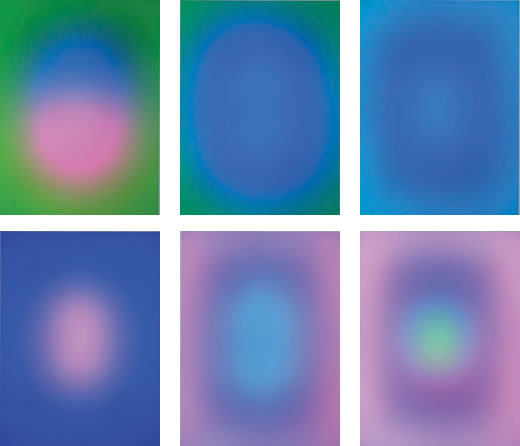
IMAGE CREDIT: James Turrell


Leave a Reply