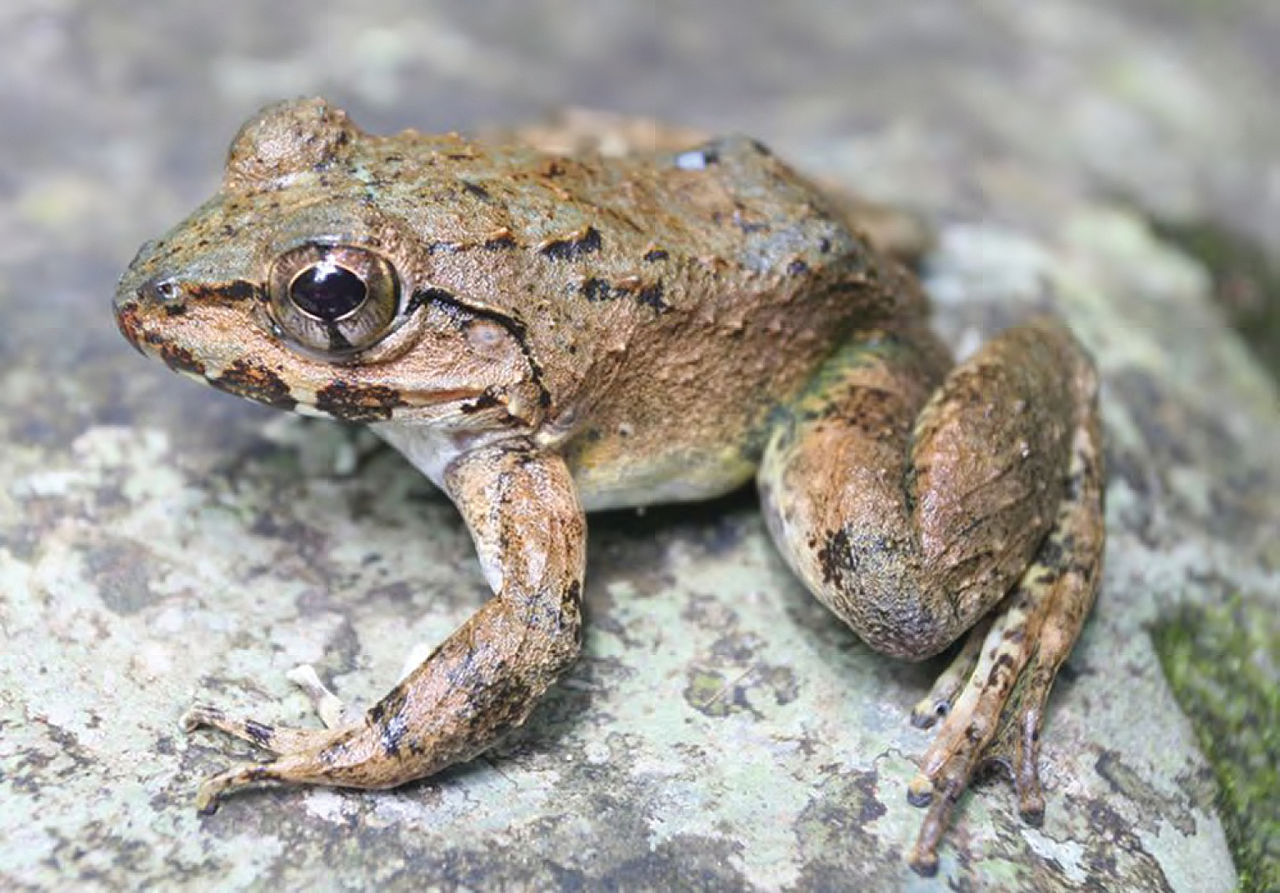

Limnonectes macrocephalus, commonly known as the giant Philippine frog or large-headed frog, is a species of frog native to the Philippines. It belongs to the family Dicroglossidae and is known for its distinctive large head, which is especially prominent in males. This species inhabits a variety of environments, including primary and secondary forests, grasslands, and agricultural areas, typically near streams, rivers, or other freshwater sources. The frog’s range is predominantly on the islands of Luzon, Leyte, and Mindanao.
One of the most interesting features of L. macrocephalus is its reproductive behavior. Males are known to engage in territorial combat, using their enlarged heads as weapons in head-to-head battles with rivals. This unique adaptation is thought to enhance their chances of securing mates during the breeding season.
L. macrocephalus has faced various threats due to habitat destruction, agricultural expansion, and urbanization. While it is not currently classified as endangered, ongoing deforestation and environmental degradation in the Philippines could pose significant risks to its populations in the future. Additionally, the species is hunted for food in some parts of the country, which may further impact its numbers.
Conservation efforts aimed at preserving the natural habitats of this species are essential for its long-term survival. Research on the ecology and behavior of Limnonectes macrocephalus continues to offer insights into the diverse and unique amphibian fauna of the Philippines.

.jpg)


Leave a Reply