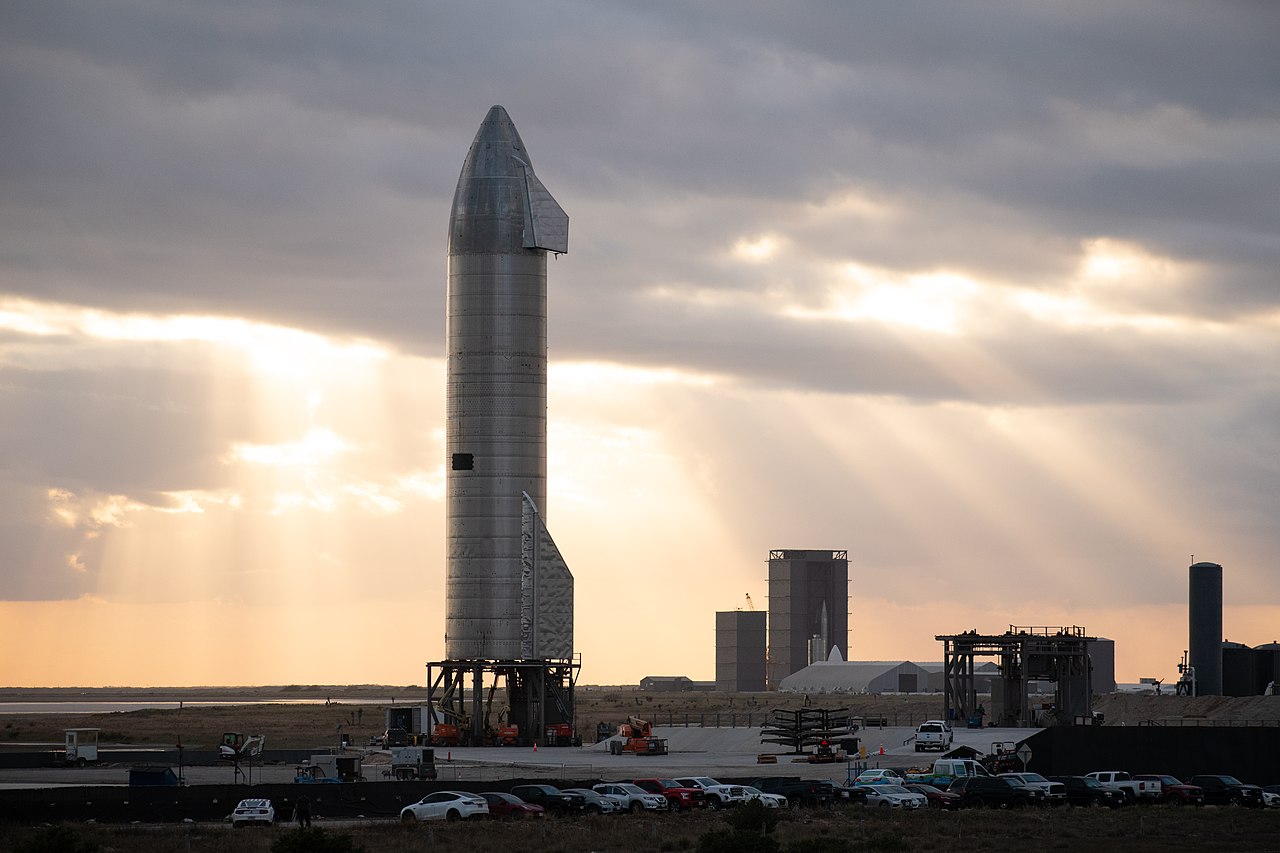
MASSIVE SPACEX ROCKET EXPLOSIONS CREATE HUGE IONOSPHERIC DISTURBANCE
The massive explosions from SpaceX’s Starship rocket last year created one of the largest disturbances ever detected in the ionosphere, a layer of the upper atmosphere. The explosions resulted in a “hole” stretching thousands of kilometers and lasting nearly an hour. Researchers used data from over 2,500 ground stations to analyze the impact, revealing that shockwaves from the rocket’s explosions were more influential than chemical reactions alone. This disturbance, which surpassed the ionospheric hole caused by the 2013 Chelyabinsk meteor but was smaller than the one from the 2022 Tongan volcanic eruption, underscores our limited understanding of atmospheric processes. Such ionospheric disruptions could affect satellite navigation, communications, and radio astronomy, particularly as rocket launches become more frequent. The findings suggest a need for further study to mitigate potential impacts on future technologies reliant on precise satellite data. (Nature)
WHO SEEKS MPox TESTS AS OUTBREAK SPREADS GLOBALLY
In recent developments regarding mpox, the WHO has invited manufacturers to apply for emergency use listing (EUL) for diagnostic tests and has already received its first application. This follows a similar call for mpox vaccines in August, with two manufacturers already applying. WHO Director-General Tedros Adhanom Ghebreyesus highlighted challenges in the Democratic Republic of the Congo (DRC) where the outbreak is exacerbated by local instability. Despite this, WHO personnel are working to control the spread, supported by a $10 million commitment from the DRC’s president. Additionally, Kenya reported its third mpox case involving a woman recently traveled to Uganda. In the U.S., the FDA has approved an expanded use for the ACAM2000 vaccine, previously used for smallpox, now authorized for high-risk mpox cases. Emergent BioSolutions, which developed the vaccine, sees this as a crucial step in the global response to the mpox outbreak. (CIDRAP)
If you’re enjoying the Daily Dose, sign up for the Daily Dose Newsletter and get the morning’s best science news from around the web delivered straight to your inbox? It’s easy like Sunday morning.
NASA ASTRONAUTS STRANDED AFTER STRANGE STARLINER NOISE
NASA astronaut Butch Wilmore recently reported a “strange noise” from the Boeing Starliner space capsule, which has left him and fellow astronaut Suni Williams stranded in orbit for six additional months. Wilmore described the noise as a pulsing sound emanating from a speaker inside the capsule, prompting a search for its source. The Starliner, plagued by issues like helium leaks and propulsion problems, is now scheduled to return to New Mexico on autopilot on September 6, as NASA deemed it too risky for manned return. Wilmore and Williams will instead return to Earth in a SpaceX capsule in February. NASA suspects the noise may be due to a speaker feedback loop between the space station and Starliner. Audio anomalies in spacecraft are not uncommon; a similar issue was reported by Chinese astronaut Yang Liwei in 2003. (The Guardian)
BLUE ORIGIN READIES NEW GLENN ROCKET FOR FINAL TESTS
Blue Origin is gearing up for the final phase of its New Glenn rocket launch preparations, with plans to roll the vehicle’s second stage to Launch Complex 36 in Florida on Monday, weather permitting. The New Glenn, a powerful rocket with a fully reusable first stage and a 45 metric ton lift capacity to low-Earth orbit, aims for a hot fire test of its upper stage within the week. NASA has contracted Blue Origin for the rocket’s debut flight, targeting a launch window from October 13 to 21 for the ESCAPADE mission to Mars, which will study the Martian magnetic field. The company must complete several key tests and integrations before this window. Under CEO Dave Limp, Blue Origin is accelerating its efforts to bring New Glenn to fruition. The rocket’s success or failure will provide valuable data for its future reusability and contribute to the growing commercial spaceflight sector. (Ars Technica)

CHINA FACES FISCAL BURDEN FROM RISING OBESITY RATES
China’s rising obesity rates pose a significant fiscal challenge as the country transitions to a more technologically advanced economy. With fewer jobs in physically demanding sectors and an economic slowdown prompting consumers to choose cheaper, less healthy food, the obesity problem is exacerbating. Urban job stress, sedentary lifestyles, and inadequate healthcare in rural areas contribute to this trend. The National Health Commission has launched a three-year public awareness campaign to address the issue, promoting balanced diets and regular physical activity. The World Health Organization estimates that more than half of China’s adults are overweight or obese. Obesity-related healthcare costs are projected to consume a larger share of the health budget, adding strain to local governments and limiting resources for economic growth. Structural changes, such as increased urbanization and the “996” work culture, further aggravate the problem, highlighting the need for comprehensive public health strategies and lifestyle adjustments. (Channel News Asia)
JOSHUA LU INVESTS IN FUTURE OF GAMING WITH AI INNOVATIONS
Joshua Lu, partner at Andreessen Horowitz, is a seasoned veteran in the video game industry, having worked on popular titles like Words with Friends and Diablo Immortal, and at Meta on the VR game Horizon Worlds. Now, as an investor, he’s focused on the future of gaming through the firm’s Speedrun accelerator, which funds gaming startups with $750,000 each. Lu has observed significant shifts in the industry, particularly with AI and new distribution platforms transforming game development. AI is enabling startups to produce high-quality games with lower budgets and smaller teams. Examples include Clementine, which uses AI to create interactive mystery games, and Echo Chunk, known for its AI-driven game Echo Chess. Lu is also promoting game development on Discord, which he sees as a new platform for social gaming, helping developers reach audiences in a crowded market. (Tech Crunch)
MEZCAL’S HERITAGE FACES CHALLENGES FROM CLIMATE CHANGE
Santa Catarina Minas, a small village near Oaxaca, Mexico, may seem unremarkable but is renowned for its mezcal, often called the “cradle of mezcal.” This area, historically a gold and silver mining hub, is now a pilgrimage site for mezcal enthusiasts. Real Minero, a prominent local palenque, features a diverse agave garden, crucial for producing distinct mezcal flavors. Agave’s life cycle includes flowering stalks called quiotes, which attract migratory bats essential for pollination. However, climate change is disrupting this cycle, impacting bat populations and agave growth. Mezcal’s surge in popularity has led to over-harvesting and reliance on cloned agave, compromising biodiversity and sustainability. Traditional mezcal production, often done in artisanal backyards, faces challenges from industrialization and environmental strain. Despite recent growth, some producers are advocating for sustainable practices and a return to traditional methods to preserve the spirit’s heritage and ecological balance. (Smithsonian)
Thanks for reading. Let’s be careful out there.
WORDS: The Biology Guy.
IMAGE CREDIT: Jared Krahn.




Leave a Reply