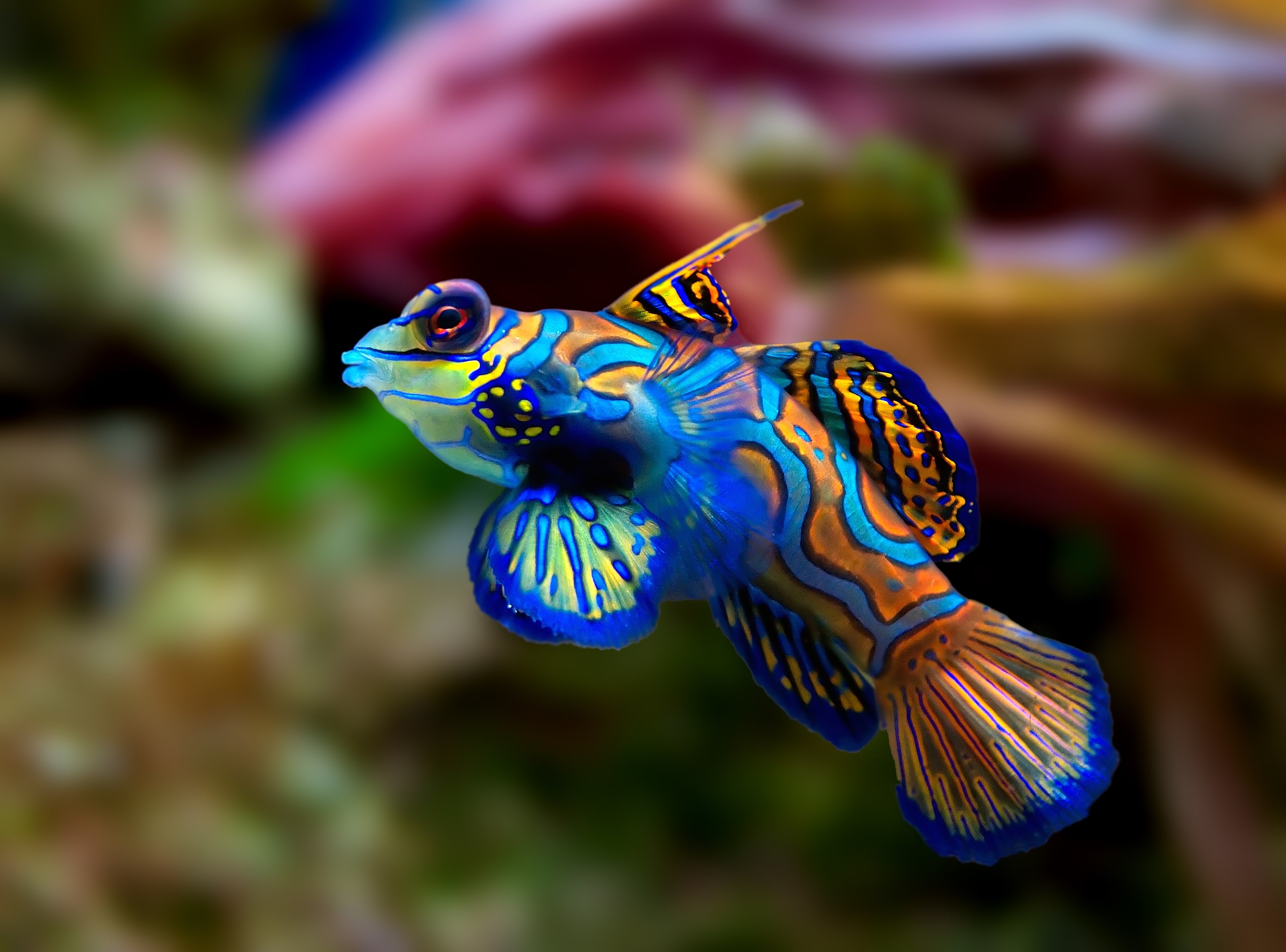

The mandarin dragonet (Synchiropus splendidus) is renowned for its extraordinary coloration and intricate patterns, which have fascinated scientists and enthusiasts alike. Native to the shallow coral reefs of the Western Pacific, this small, brightly colored fish exhibits a striking combination of blues, oranges, and greens, arranged in mesmerizing patterns that function in various ways within its ecosystem.
The vivid colors of the mandarin dragonet are primarily due to specialized cells called chromatophores. These cells contain pigments and are responsible for the wide range of hues observed in the fish. Additionally, iridophores, which reflect light through microscopic platelets, contribute to the iridescence seen on the dragonet’s scales. Together, these cells create the mandarin dragonet’s dazzling appearance, which serves both camouflage and communication purposes.
The vibrant coloration is not just for show; it plays a role in the fish’s behavior and survival strategies. The bright patterns can act as a warning to potential predators about the fish’s toxicity or unpalatability. Moreover, the vivid colors are thought to facilitate mating displays, helping individuals identify and attract suitable partners.
From an ecological perspective, the mandarin dragonet’s diet consists mainly of small invertebrates like copepods and amphipods, which it skillfully hunts among the coral and rock crevices. Its feeding behavior is closely tied to its anatomy; the dragonet’s large, protruding pectoral fins and specialized jaw structure allow it to forage effectively in its complex reef habitat.


Leave a Reply