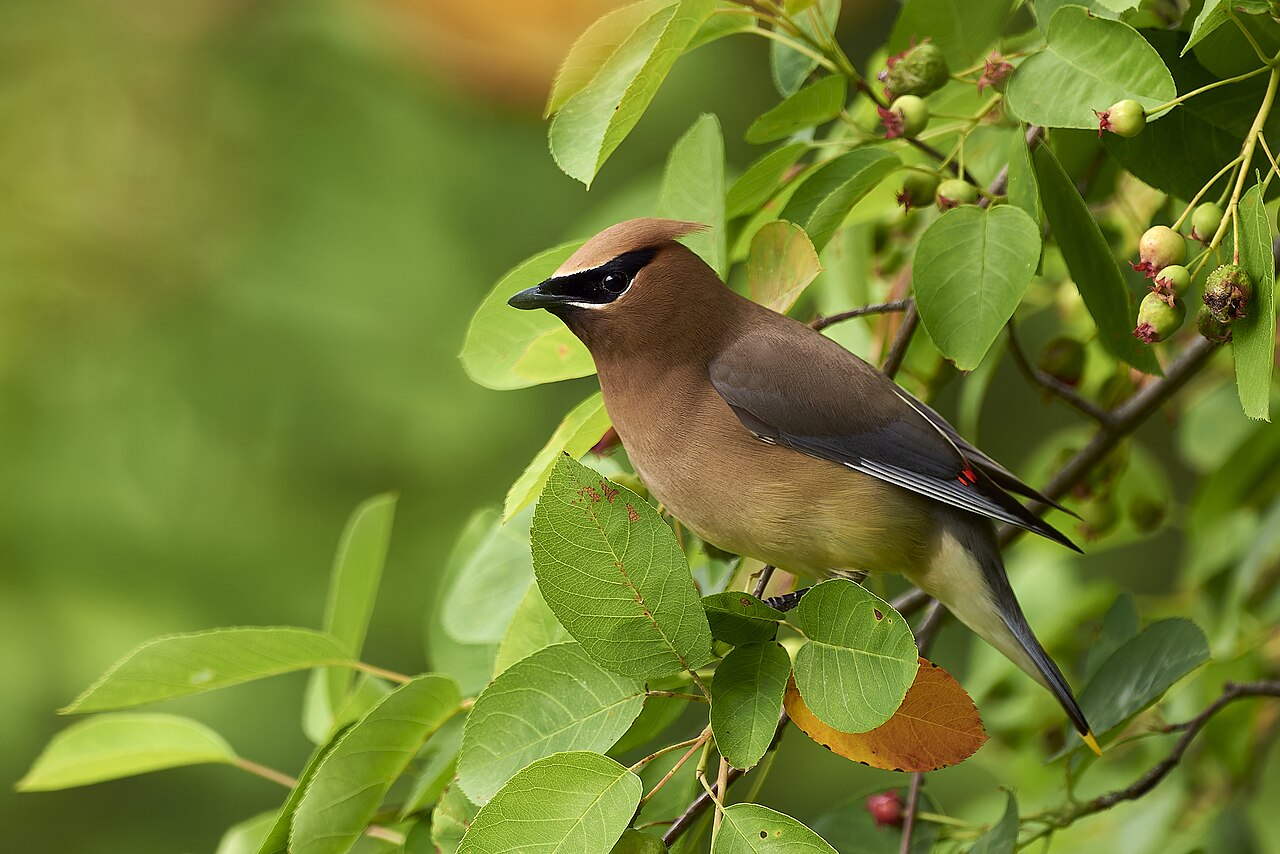

The cedar waxwing (Bombycilla cedrorum) is a striking and distinctive bird found across North America. This medium-sized songbird is known for its sleek, crested appearance and unique coloration.
Cedar waxwings have a pale brown body with a yellowish tinge on the belly. Their most notable features include a black mask across the eyes, a crest atop their head, and bright yellow tips on their tail feathers. The wings are adorned with waxy red tips, which give the species its name. These red tips become larger and more numerous as the bird ages.
These birds are primarily fruit eaters, with a diet consisting of berries and small fruits. This frugivorous diet influences their habitat preferences and behavior. Cedar waxwings are often found in open woodlands, orchards, and suburban areas where fruit-bearing trees and shrubs are plentiful. They are particularly fond of cedar trees, hence their common name.
Cedar waxwings are social birds, typically seen in flocks. They have a nomadic lifestyle, moving from place to place in search of abundant food sources. This behavior allows them to adapt to seasonal changes in fruit availability across their range.
During breeding season, which occurs in late spring and summer, cedar waxwings construct cup-shaped nests in trees. They lay 3-5 pale blue or gray eggs, which both parents help to incubate and care for once hatched.
The cedar waxwing’s unique appearance, social behavior, and fruit-centric lifestyle make it a fascinating subject for bird enthusiasts and casual observers alike.




Leave a Reply