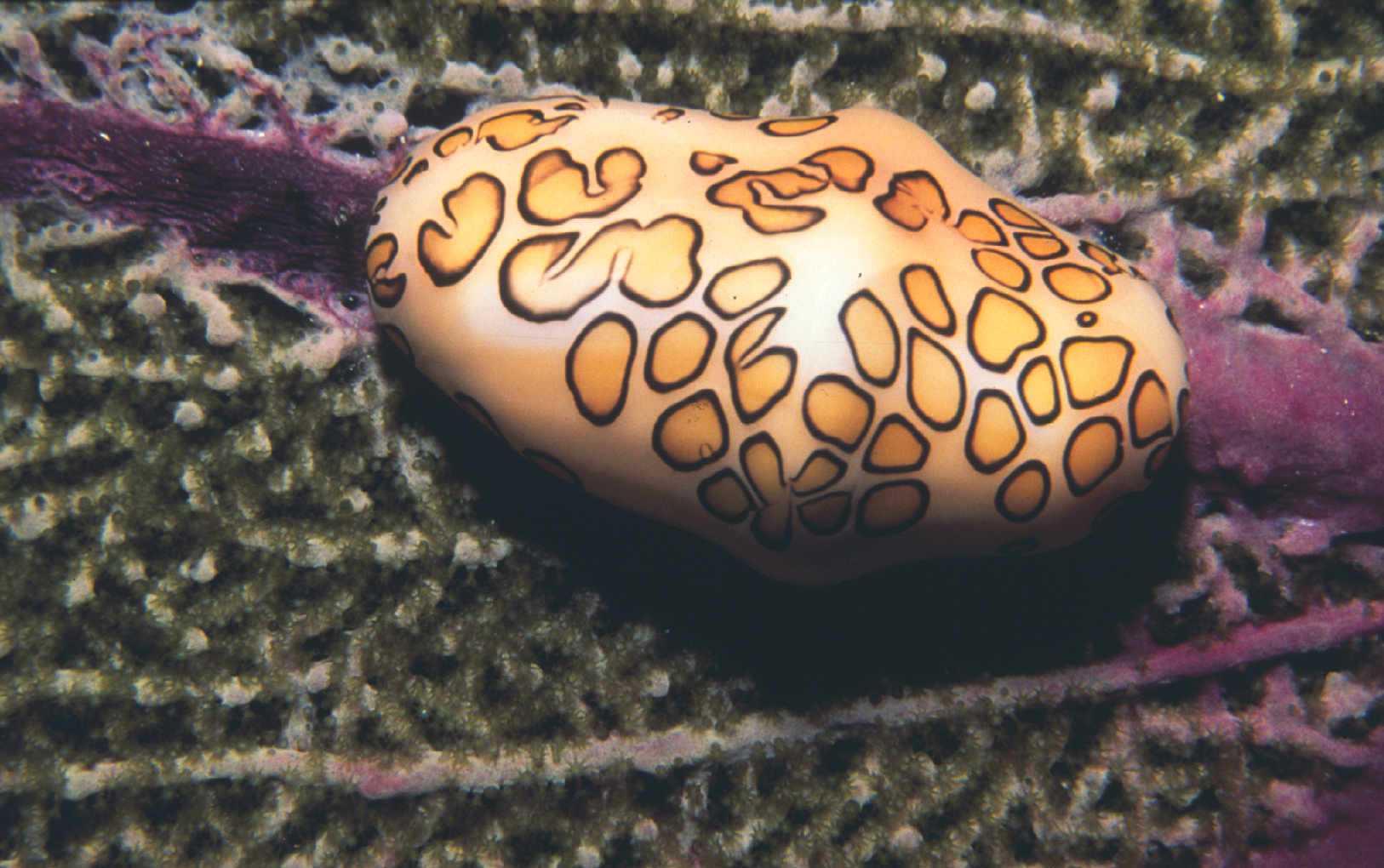

The flamingo tongue snail (Cyphoma gibbosum) is a vibrant and fascinating marine gastropod found in the warm waters of the Caribbean and Western Atlantic. Known for its striking appearance, the snail’s shell is covered with a bright, leopard-like pattern that is actually part of its soft tissues rather than the shell itself. This unique feature serves as both camouflage and a warning to potential predators.
Flamingo tongue snails are specialized feeders, primarily consuming gorgonian corals. They use a specialized radula, a toothed, tongue-like organ, to scrape off the soft tissues of these corals. This feeding behavior not only provides them with nutrition but also contributes to their vibrant coloration. The bright patterns of the snail are derived from the pigments of the gorgonian corals they consume.
Interestingly, the flamingo tongue snail’s coloration serves a dual purpose: it acts as camouflage among the similarly colored corals and also as a warning signal to potential predators. The bright patterns indicate the presence of toxic chemicals acquired from the corals, making the snail less palatable. These chemicals, known as secondary metabolites, are sequestered in the snail’s tissues, providing a chemical defense mechanism.
Reproduction in flamingo tongue snails involves internal fertilization, where males transfer sperm to females using a specialized appendage. Females then lay clusters of small eggs on the surface of gorgonian corals. After hatching, the larvae go through a planktonic stage before settling on corals and developing into adult snails.
Research on flamingo tongue snails offers insights into the complex interactions between marine organisms and their environments. Understanding their feeding habits, reproductive strategies, and chemical defenses provides valuable information about the ecological roles they play in coral reef ecosystems. Moreover, studying their chemical defense mechanisms may have potential applications in biotechnology and medicine.




Leave a Reply