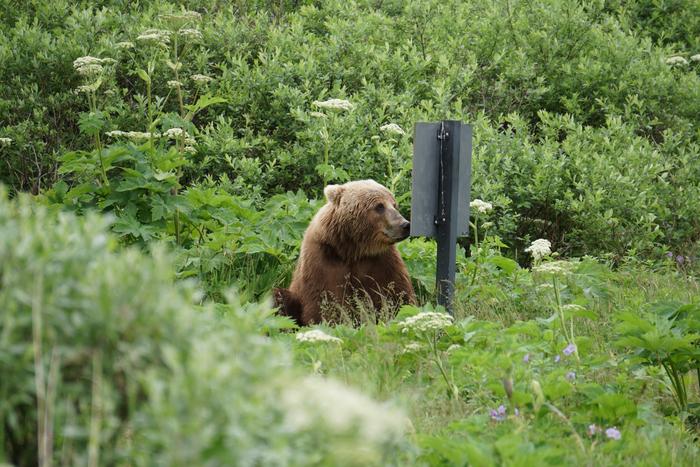
Humans are outsized actors in the world’s wild places where there are struggles to preserve and protect vital natural resources and animals, birds and plants. Yet people and their plus-sized footprint are rarely discussed in models seeking to predict and plan for trajectories of endangered species.
Sustainability scholars at Michigan State University in this week’s journal Nature Ecology and Evolution reveal the decades-long gaps in research and propose a new way of creating accurate visions for endangered species.
To map and predict species geographic distributions around the globe and understand the factors that drive them, ecologists, conservation biologists and others use powerful computational tools called species distribution models (SDMs). These tools are used for conservation, understanding disease spread, food security, policy planning, and many other applications. To inform their predictions, scientists typically include the surrounding environment, such as climate and natural habitat.

But according to PhD candidate Veronica Frans, “we have a new reality that must be recognized if we want SDM predictions to be realistic and most helpful: we live in a human-dominated world.”
Frans and her advisor Jianguo “Jack” Liu, Rachel Carson chair in sustainability and director of MSU’s Center for Systems Integration and Sustainability, reviewed and synthesized 12,854 published studies covering over 58,000 species around the world, modeled across local to global spatial scales. They found that only 11 percent of those studies included human activities – which Frans said doesn’t reflect reality.
“Nearly half the articles projecting to future climates held human predictors constant over time,” Frans said. “That’s risking false optimism about the effects of human activities compared to climate change.”
Sign up for the Daily Dose Newsletter and get every morning’s best science news from around the web delivered straight to your inbox? It’s easy like Sunday morning.
They also found how scientists have been considering the future: nearly half of the SDM studies predicting species distributions have used different future climate scenarios but left data related to human activities constant over time. This means that modelers trying to understand where species will be distributed in the next 50 to 100 years were assuming human activities, development, infrastructure, and other human pressures will not change in the future.
“In our current era, human influence is pervasive and human-species interactions are diversifying and amplifying, and yet it is not being well accounted for in one of the most popular modeling tools in ecology,” Frans said.
They noted that modelers haven’t had a choice in the matter: geographic data on future human development have been sparse.
“This is an important aspect we must work to improve, since nature and humans are tightly linked, not only locally, but also across long distances” Liu said. “They form metacoupled human and natural systems. We will only be able to make significant and swift progress toward global sustainability when we consider all aspects of our real world.”
IMAGE CREDIT: Veronica Frans, Michigan State University
If you enjoy the content we create and would like to support us, please consider becoming a patron on Patreon! By joining our community, you’ll gain access to exclusive perks such as early access to our latest content, behind-the-scenes updates, and the ability to submit questions and suggest topics for us to cover. Your support will enable us to continue creating high-quality content and reach a wider audience.
Join us on Patreon today and let’s work together to create more amazing content! https://www.patreon.com/ScientificInquirer



Leave a Reply