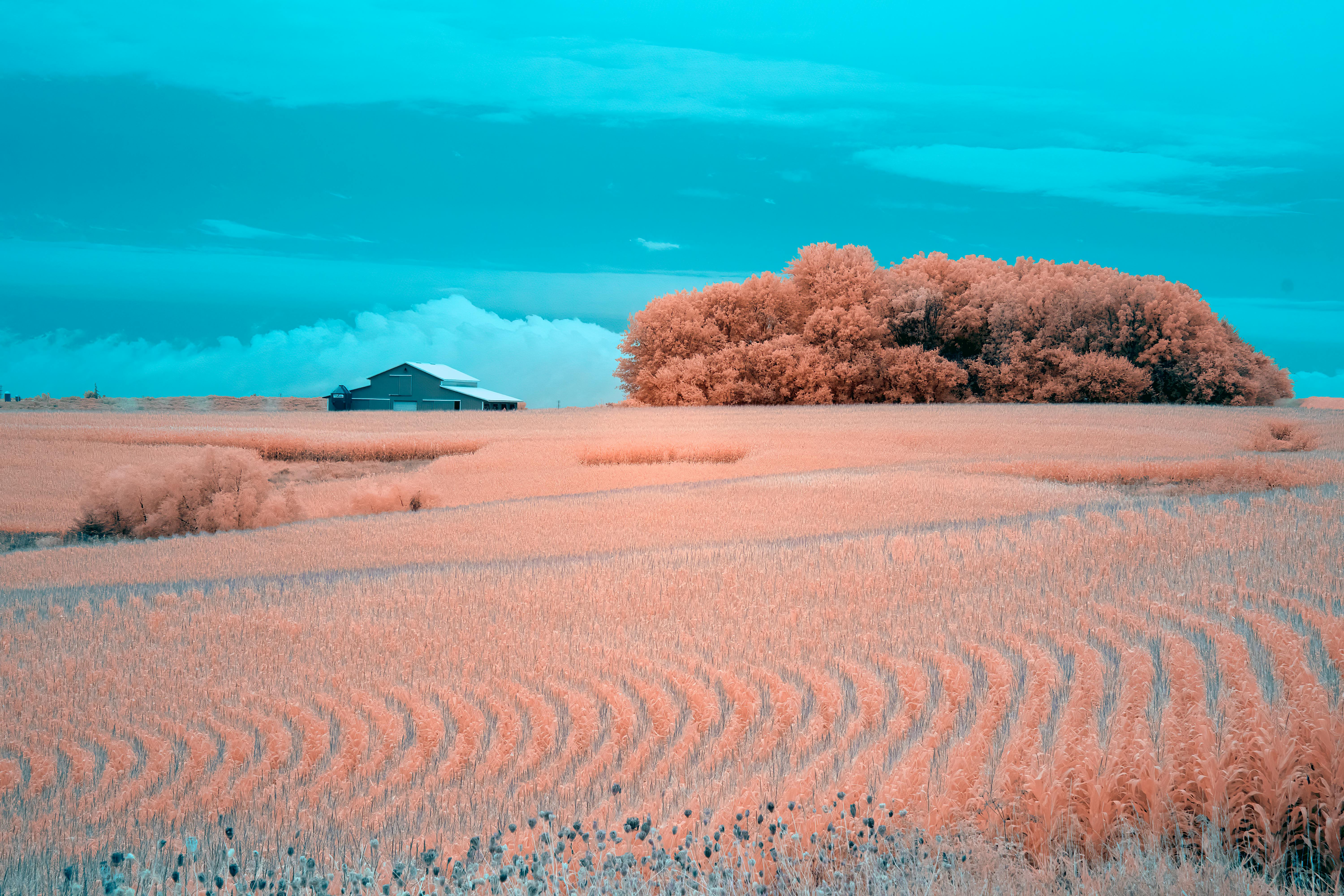

Infrared photography is a captivating and unique form of imaging that captures light from the infrared spectrum, which is invisible to the human eye. By using specialized cameras or filters that block visible light and allow infrared wavelengths to pass through, photographers can create striking and surreal images that reveal a world beyond our normal perception.
One of the most remarkable aspects of infrared photography is how it transforms familiar landscapes into otherworldly scenes. Foliage, which typically appears green to the human eye, reflects a significant amount of infrared light, causing it to appear bright and almost white in infrared images. In contrast, bodies of water and sky, which absorb infrared light, appear dark and dramatic. This reversal of tones creates a dreamlike quality that can evoke a sense of mystery and wonder.
Infrared photography also has scientific applications, particularly in the fields of astronomy, ecology, and remote sensing. Astronomers use infrared imaging to study celestial objects that are too cool to emit visible light, such as interstellar dust clouds and distant galaxies. Ecologists employ infrared cameras to monitor the health and growth of vegetation, as well as to track the movements of nocturnal animals. Remote sensing satellites equipped with infrared sensors can provide valuable data on Earth’s surface temperature, moisture content, and land use patterns.
In artistic contexts, infrared photography allows creators to explore new aesthetic possibilities and challenge viewers’ perceptions of reality. By revealing the unseen world of infrared light, photographers can create images that are both visually striking and conceptually thought-provoking. Some artists use infrared photography to create abstract compositions that emphasize form, texture, and contrast, while others use it to imbue familiar subjects with a sense of mystery and otherworldliness.
To create infrared photographs, photographers must use specialized equipment and techniques. Digital cameras can be modified to remove the infrared-blocking filter that is typically placed in front of the sensor, allowing them to capture a wider range of infrared wavelengths. Alternatively, photographers can use infrared filters that attach to the front of a lens, blocking visible light and allowing only infrared light to pass through. Infrared photography often requires longer exposure times and careful post-processing to achieve the desired effect.



Leave a Reply