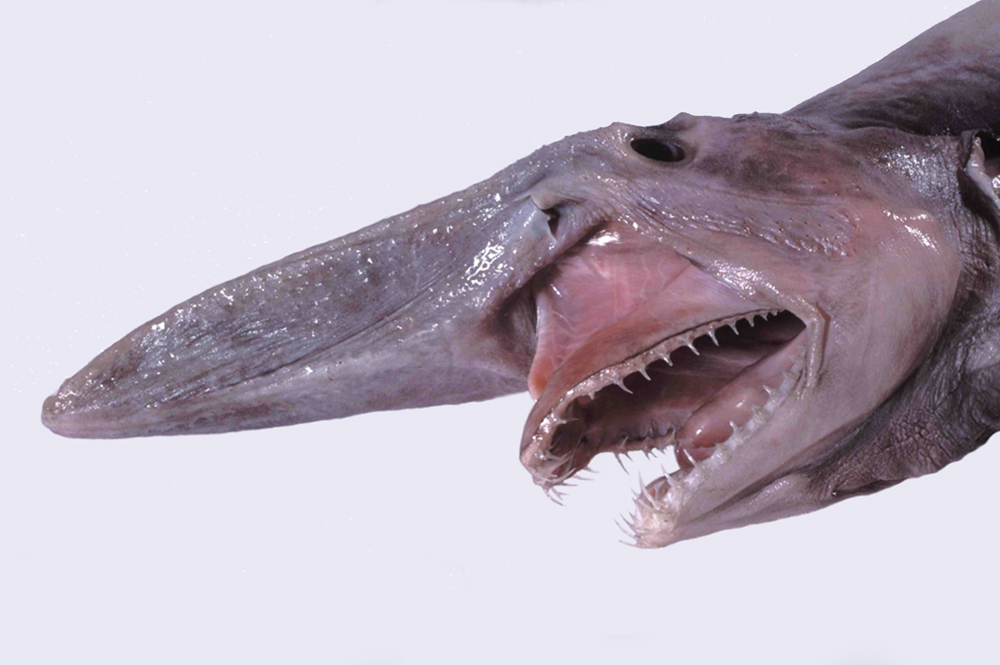

The goblin shark (Mitsukurina owstoni) is a rare and enigmatic species of deep-sea shark that has captured the imagination of scientists and the public alike. With its unique appearance and elusive nature, the goblin shark is a fascinating creature that has adapted to survive in the harsh conditions of the deep ocean.
One of the most striking features of the goblin shark is its unusual appearance. It has a long, flattened snout that protrudes far beyond its mouth, giving it a distinctive “goblin-like” appearance. The shark’s skin is a pale pinkish-gray color, and its body is covered in small, tooth-like scales called dermal denticles. The goblin shark’s eyes are small and located on the sides of its head, indicating that it relies more on other senses, such as smell and electro-reception, to navigate and locate prey in the dark depths of the ocean.
The goblin shark is known to inhabit deep waters, typically between 100 and 1,300 meters (330 to 4,300 feet) below the surface. It has been found in various locations around the world, including the Atlantic, Pacific, and Indian Oceans. However, due to its deep-sea habitat and elusive nature, much of the goblin shark’s life history and behavior remains a mystery.
One of the most interesting aspects of the goblin shark is its feeding mechanism. The shark’s jaws are highly protrusible, meaning that they can extend far beyond the mouth to capture prey. When the shark detects potential prey, it rapidly extends its jaws forward, creating a powerful suction that draws the prey into its mouth. This unique feeding adaptation allows the goblin shark to capture fast-moving prey in the deep sea, where food is often scarce.
Despite its fearsome appearance, the goblin shark is not considered a threat to humans. Its deep-sea habitat and rare encounters with humans make it an unlikely candidate for human-shark interactions. However, the goblin shark’s unique adaptations and elusive nature make it a fascinating subject for scientific research and public interest, as it provides a glimpse into the incredible diversity and resilience of life in the deep ocean.



Leave a Reply