
12-YEAR-OLD SICKLE CELL PATIENT RECEIVES GROUNDBREAKING GENE THERAPY.
Kendric Cromer, a 12-year-old from a Washington suburb, is the world’s first patient with sickle cell disease to receive a commercially approved gene therapy, offering hope to over 20,000 eligible patients in the U.S. Kendric’s treatment journey, beginning at Children’s National Hospital, aims to correct his mutated gene and potentially cure his condition. Bluebird Bio, a Massachusetts-based company, will modify his bone marrow stem cells in their lab, a process taking months. Although the treatment is priced at $3.1 million and involves arduous preparation and recovery, Kendric’s family secured insurance coverage. The therapy offers hope for a normal life after years of debilitating pain that often confined him to the hospital. Kendric dreams of becoming a geneticist and playing basketball. Despite the challenges ahead, his parents, Deborah and Keith, remain cautiously optimistic, grateful for the opportunity and praying the treatment leads to a life without constant pain. (New York Times)
CHINA LAUNCHES HISTORIC MISSION TO COLLECT MOON FAR-SIDE SAMPLES.
China’s Chang’e-6 mission has successfully launched, marking a historic milestone as it seeks to collect the first samples from the Moon’s far side. The eight-tonne spacecraft, carried by a Long March 5 rocket, launched from the Wenchang Space Launch Centre in southern China. This 53-day mission aims to explore the South Pole-Aitken basin, the largest and oldest impact basin on the lunar surface, potentially revealing critical insights into the Moon’s geologic differences and the solar system’s early history. The mission relies on the Queqiao-2 relay satellite to maintain communication between Earth and the lunar probe. The lander will drill and scoop up to two kilograms of samples, which an ascender will transport back to the orbiter for its return to Earth. If successful, the collected samples will land in Inner Mongolia and offer scientists around the world invaluable information, providing clues to the Moon’s distinct far-side geology and volcanic history. (Nature)
If you’re enjoying the Daily Dose, sign up for the Daily Dose Newsletter and get the morning’s best science news from around the web delivered straight to your inbox? It’s easy like Sunday morning.
PHILIPPINE COURT HALTS GOLDEN RICE OVER SAFETY CONCERNS.
Golden Rice, a genetically modified variety developed to combat vitamin A deficiency, seemed poised to fulfill its promise when the Philippine government approved its commercial cultivation in 2021. However, in April 2024, a Philippine Court of Appeals revoked the permit due to safety concerns, halting the plan to have the rice variety make up 10% of the nation’s harvest. The ruling, following a lawsuit by Greenpeace and other groups, cited the absence of scientific consensus on the safety of Golden Rice. The court emphasized the precautionary principle, requiring consensus on the crop’s environmental impact before approval. Advocates lament the setback, fearing it will hinder efforts to alleviate the widespread vitamin A deficiency affecting 15% of Filipino children. The government plans to appeal, potentially to the Supreme Court, but the process may take years. Meanwhile, the decision disrupts ongoing research and could influence anti-GMO movements beyond the Philippines. (Science)
BIOTECH IPO WINDOW REOPENS AS INVESTORS GAIN CONFIDENCE.
Delegates at the LSX World Conference in London concurred that the biotech IPO window reopened this year, despite a slowdown in public offerings by spring. Francesco De Rubertis, co-founder of Medicxi, views the current lull as natural and anticipates a new wave of IPOs in the summer. He believes market dynamics will activate investors in public markets, fueling a surge of IPOs. Recent secondary stock offerings signal market health, as investors are showing renewed enthusiasm. Medicxi launched a $400 million fund in 2023 to support biotech entrepreneurs. Despite mixed results in the year’s initial wave of biotech IPOs, with only CG Oncology trading above its IPO price, De Rubertis remains optimistic. He attributes stock fluctuations to market dynamics and not long-term trends. While some companies like Metagenomi have faced challenges, he sees promising opportunities as banks prepare for more biotech IPOs. (FierceBiotech)

NASA’S ORION SPACECRAFT FACES CRITICAL ISSUES BEFORE CREWED MOON MISSION.
NASA’s Orion spacecraft, which will transport astronauts to the Moon, faced several issues during its uncrewed Artemis 1 test flight in 2022, according to a report by NASA’s Office of the Inspector General (OIG). The report highlights critical problems, including heat shield anomalies, bolt erosion, and power distribution malfunctions. The heat shield’s “char layer” unexpectedly wore away during reentry, creating a trail of debris that could jeopardize crew safety and damage parachutes. Separation bolts melted and eroded due to heat, while electrical system issues were linked to radiation. NASA is investigating these problems and implementing corrective measures before the crewed Artemis 2 mission, set for no sooner than September 2025. The launch of Artemis 1 also damaged the mobile launcher, incurring $26 million in repairs. Despite these setbacks, NASA remains optimistic about landing astronauts on the Moon by 2026 after resolving the identified issues and ensuring crew safety. (Smithsonian)
EXPERTS URGE MARS EXPLORATION CAUTION TO PRESERVE GEOLOGICAL SITES.
Experts are urging caution regarding the potential impact of human exploration on Mars due to the risk of damaging crucial geological and astrobiological sites. A new research paper advocates for the implementation of “exogeoconservation” principles, akin to geoconservation on Earth, to protect these key locations from the adverse effects of exploration. The field is currently underdeveloped, and there’s an urgent need for international agreements to safeguard Mars’ geological and palaeoenvironmental heritage. Drawing from examples on Earth where significant damage has occurred to comparable sites, the paper emphasizes that geological landmarks on Mars must be protected, balancing scientific pursuits with preservation. While the Artemis Accords aim to establish common principles, there’s a push for clearer norms and frameworks to align global conservation efforts. Lead researcher Clare Fletcher stresses that protecting these vital sites is critical for understanding Mars’ history and astrobiological potential without hindering future exploration. (space.com)
EXPERIMENTAL VACCINE OFFERS BROAD PROTECTION AGAINST CORONAVIRUSES.
Scientists have developed an experimental vaccine that could protect against a broad range of coronaviruses, even those not yet identified. The proactive approach involves creating and preparing vaccines ahead of potential pandemics. The vaccine is made by attaching harmless coronavirus proteins to nanoparticles, which stimulate the immune system to recognize and target proteins common across various coronaviruses. Tested in mice, the vaccine prompted a broad immune response, including to SARS-CoV-1, the virus behind the 2003 SARS outbreak, without specific SARS-CoV-1 proteins. The project, a collaboration among Cambridge, Oxford, and Caltech, is designed to facilitate scalable production in existing fermentation facilities. Regulatory frameworks for proactive vaccines are still needed, but if successful in humans, the vaccine could potentially be used as a COVID-19 booster with added protection against other coronaviruses. Alternatively, countries could stockpile it for rapid deployment in future pandemics, minimizing the global impact of emerging pathogens. (The Guardian)
Thanks for reading. Let’s be careful out there.
WORDS: The Biology Guy.
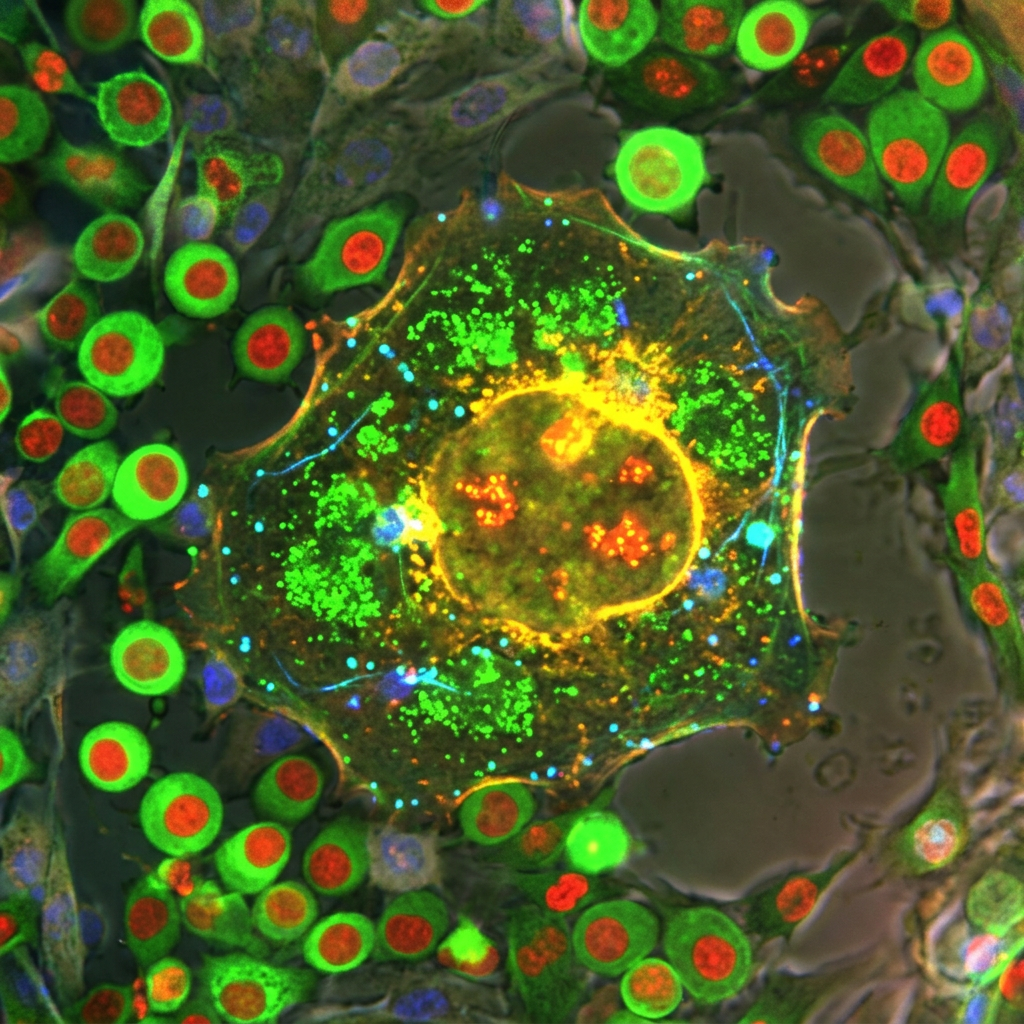
IMAGE CREDIT: Ed Uthman.



Leave a Reply