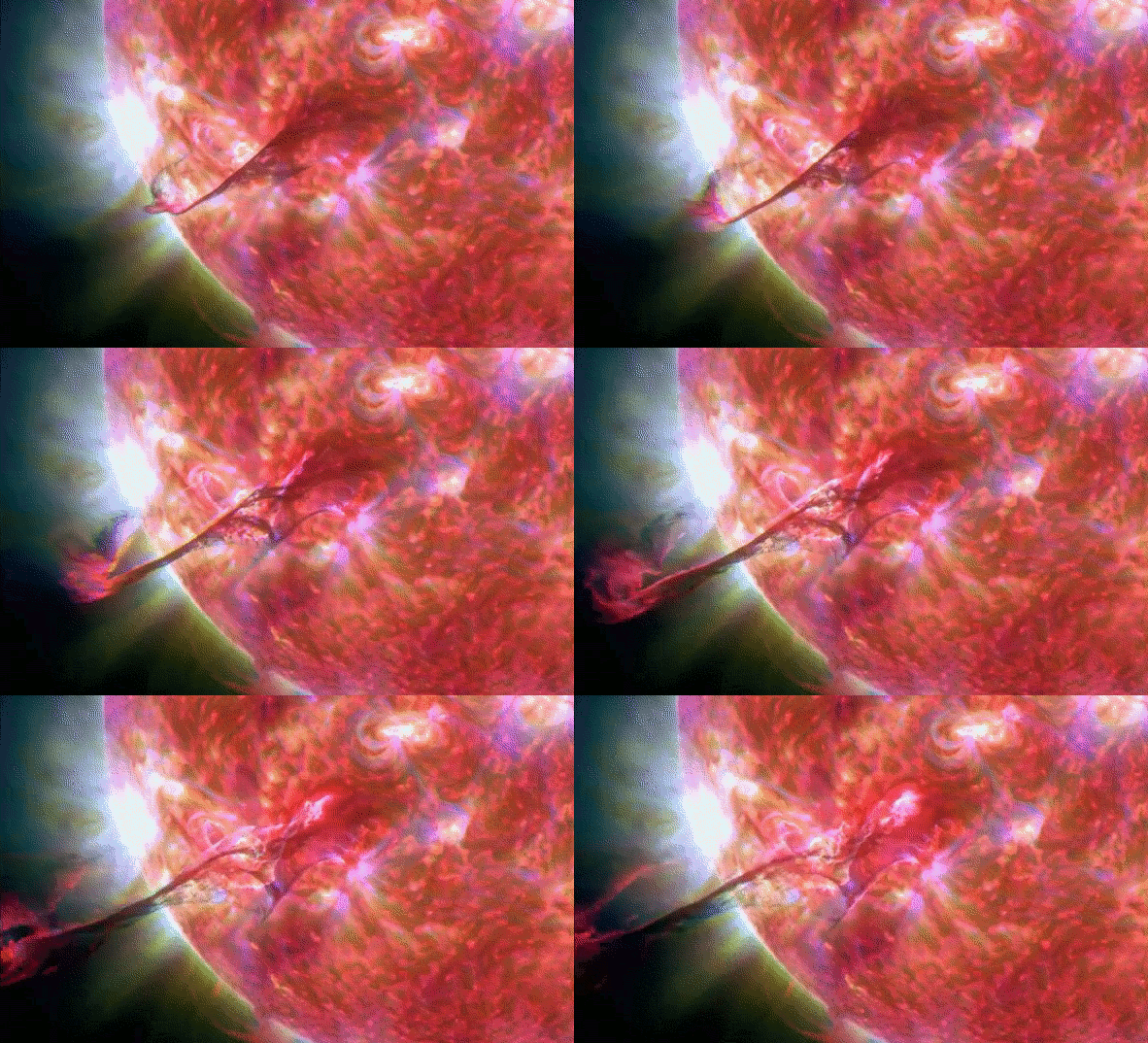

Coronal Mass Ejections (CMEs) are powerful eruptions of plasma and magnetic fields from the Sun’s corona, the outermost layer of its atmosphere. These ejections occur when the Sun’s magnetic field lines become twisted and tangled, storing an immense amount of energy. Eventually, the magnetic field lines snap and reconnect, releasing this stored energy and propelling a massive cloud of solar material into space at speeds that can reach millions of miles per hour.
The exact trigger mechanism for CMEs is not yet fully understood, but it is believed to involve the destabilization of magnetic field structures in the corona, such as solar prominences or filaments. These structures can become unstable due to various factors, including changes in the Sun’s magnetic field, the emergence of new magnetic flux from beneath the surface, or the interaction between different magnetic field regions.
CMEs can have significant impacts on Earth and other planets in the solar system. When a CME reaches Earth, it can interact with our planet’s magnetic field, causing geomagnetic storms. These storms can disrupt satellite communications, GPS navigation, and power grids, as well as produce stunning auroral displays. Studying CMEs is crucial for understanding and predicting space weather, which has important implications for protecting our technological infrastructure and ensuring the safety of astronauts in space.



Leave a Reply