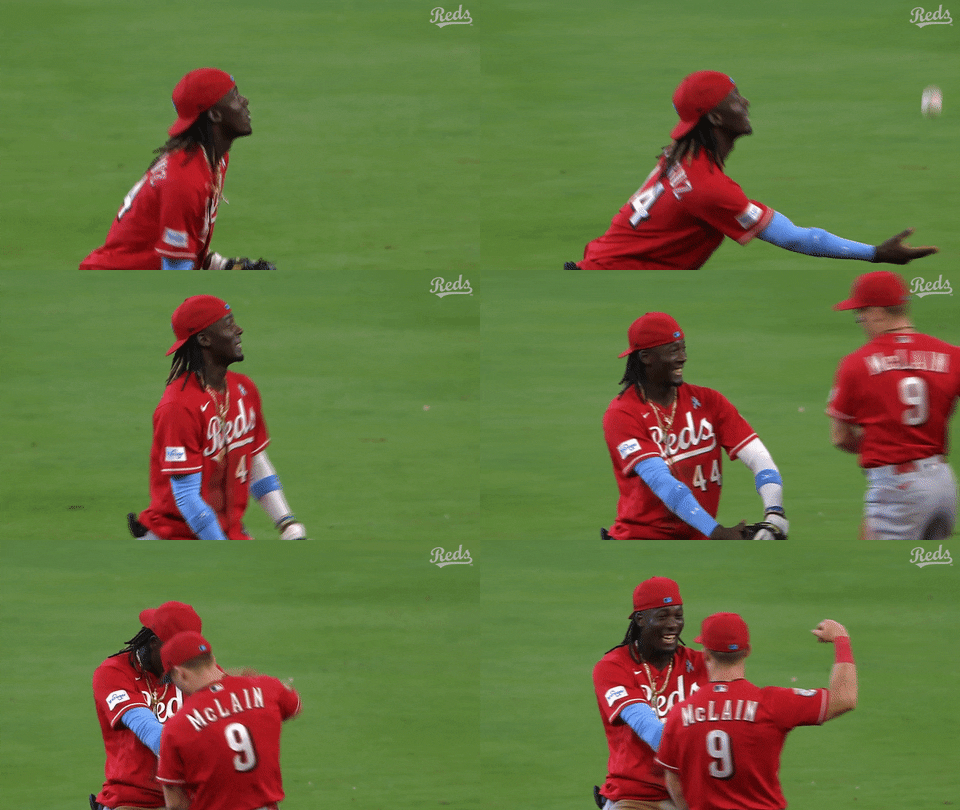
Labral tears in baseball, particularly among pitchers, are a common yet complex injury that merits attention from both players and coaches. Understanding this condition is crucial for maintaining peak performance and ensuring a player’s longevity in the sport. The injury is often so vexing, an article in Slate one labeled it “Baseball’s most fearsome injury.“. Recently, Cincinatti Reds infielder Matt McLain underwent surgery to repair a damaged labrum. Torn labrum are words nobody in the dugout wants to hear. The following is a guide to navigating the murky waters of labral tears.
Understanding the Labrum and Its Role in Baseball
The labrum is a ring of fibrous cartilage surrounding the shoulder socket, known technically as the glenoid. It serves to deepen the socket, thereby enhancing the stability of the shoulder joint and playing a significant role in shock absorption. The biceps tendon attaches to the labrum, making it susceptible to injuries from trauma, repetitive motions, shoulder dislocation, or the wear and tear of age. The repetitive, high-velocity movements inherent to pitching can place significant stress on this area, making labral tears a notable concern for baseball players.
Types and Causes of Labral Injuries
Labral injuries can manifest in various forms, such as detachment from the bone, edge tears, or at the biceps tendon attachment. They are classified by location (superior, inferior, anterior, posterior) and type, with SLAP (superior labrum anterior to posterior) lesions and Bankart tears being the most common among athletes. SLAP lesions, occurring at the top of the glenoid, can lead to bicep tendon issues, while Bankart lesions, found at the lower front of the socket, often result from shoulder dislocation and contribute to increased shoulder instability.
Preventing Labral Tears
Preventive measures are key to reducing the risk of labral tears. Proper warm-up routines, shoulder stability-focused strength training, and attention to pitching mechanics can all play a vital role. Educating players on these strategies, along with regular physical assessments, can help identify potential vulnerabilities and address them proactively.

Symptoms to Watch For
Common symptoms include pain during overhead activities, a sensation of popping or clicking, and a feeling of the shoulder locking up. For baseball players, these symptoms may manifest as decreased pitching velocity or accuracy, underscoring the need for prompt attention and management.
Diagnosis: Beyond the Surface
Given the deep location of the cartilage involved, diagnosing labral tears requires more than a physical exam. MRI scans or CT-arthrograms offer 80-85% accuracy, but their effectiveness is limited for complex areas like SLAP tears. Arthroscopy, though invasive, remains the gold standard for diagnosis, allowing for a direct look inside the joint.

Treatment Options: From Rest to Surgery
Treatment may range from conservative to surgical, depending on the tear’s severity. Initial strategies include rest and rehabilitation, with a focus on physical therapy exercises designed to restore strength and stability. When conservative measures fall short, surgical intervention, such as labral repair or debridement, may be necessary. The recovery timeline varies, with a phased approach to rehabilitation aiming for a gradual return to play.
Labral tears, while a significant concern for baseball players, especially pitchers, are manageable with the right approach. Early detection, informed treatment choices, and adherence to preventive measures can help minimize their impact. By staying informed and proactive, players can navigate the challenges of labral tears and enjoy a long, successful career in the sport they love.



Leave a Reply