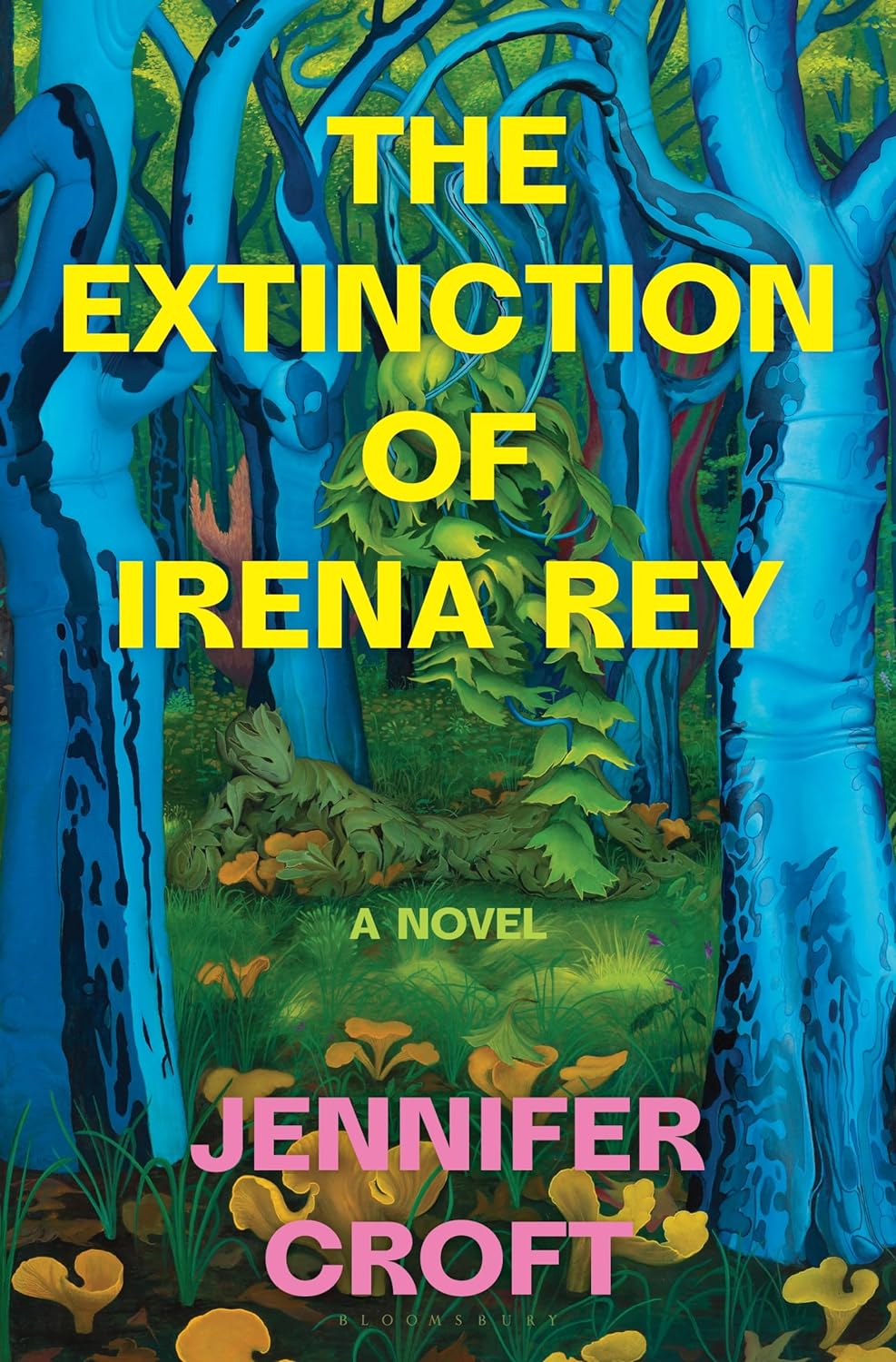
“The Extinction of Irena Rey” is a whirlwind novel that vividly brings the Polish Białowieża Forest to life, offering readers a peek behind the curtain of the intense world of translation.
Authored by Jennifer Croft, a translator herself, the narrative explores the highs and lows of life as a translator, taking an abstract form in this captivating story. Croft starts the novel with intrigue, employing unique and imaginative language to convey the awe-inspiring beauty of the Białowieża Forest.
Set in a quaint Polish town on the edge of the forest, eight translators converge to work on what they believe to be the author’s magnum opus. They anticipate translating her finest work, one that will secure her legacy and, they believe, earn her a Nobel Prize.

However, on the first morning of their summit, they collectively notice something off about their beloved author, Irena Rey. The usually charismatic Rey appears as a shadow of her former self.
In the first chapter, the narrator describes Rey’s condition: “She was ghost-white, seemingly immune to shadow, yet her eyes were like black holes, making direct eye contact painful, as if we were being torn apart. Thus, we focused on her crossed arms, which no longer seemed like her own, but more like twigs buried by her overly heavy, sludge-colored dress.”
Early in the novel, Croft’s use of intricate and elegant language is noticeable. Yet, as a reader, I found it somewhat confusing to grasp the narrative direction initially. At times, the vocabulary seemed pulled from a thesaurus, feeling unnatural and making the plot challenging to follow. Despite this, I encourage readers to persevere, as the narrative intensity increases significantly in the latter half.

Following the first night of the summit, Irena Rey vanishes from her forest home, leaving the translators to fend for themselves. The development of each character’s background resembles a game of Clue, with each introduced by their language and distinguishing features, adding to the anticipation of the unfolding story.
Initially, characters are identified solely by their native languages—English, French, German, Serbian, Slovenian, Swedish, and Ukrainian. As the story progresses, their real names and the reason behind Rey’s strict rule of anonymity are revealed.
Adding another layer of intrigue, the novel is fictionally penned as a memoir by the Spanish translator and translated from Polish to English by the English translator. Their rivalry adds humor and absurdity to the narrative, especially in the footnotes.
Moreover, the morally flawed and seemingly insane narrator introduces unexpected twists to every event. For example, one of English’s footnotes states, “Literally no one else alleged this other than her [the narrator], and she is insane.”
While I find some aspects of the writing flawed, the story of this cult of translators navigating the Białowieża Forest is one I’d recommend. The novel weaves together themes of admiration, lust, language, and nature, creating a compelling read. Croft’s depiction of the magnetic pull of nature and its interplay with human desires is particularly enjoyable.
WORDS: Kaitlin Graham.
IMAGE CREDIT: (ENTER NAMES)
Sign up for the Daily Dose Newsletter and get the morning’s best science news from around the web delivered straight to your inbox? It’s easy like Sunday morning.



Leave a Reply