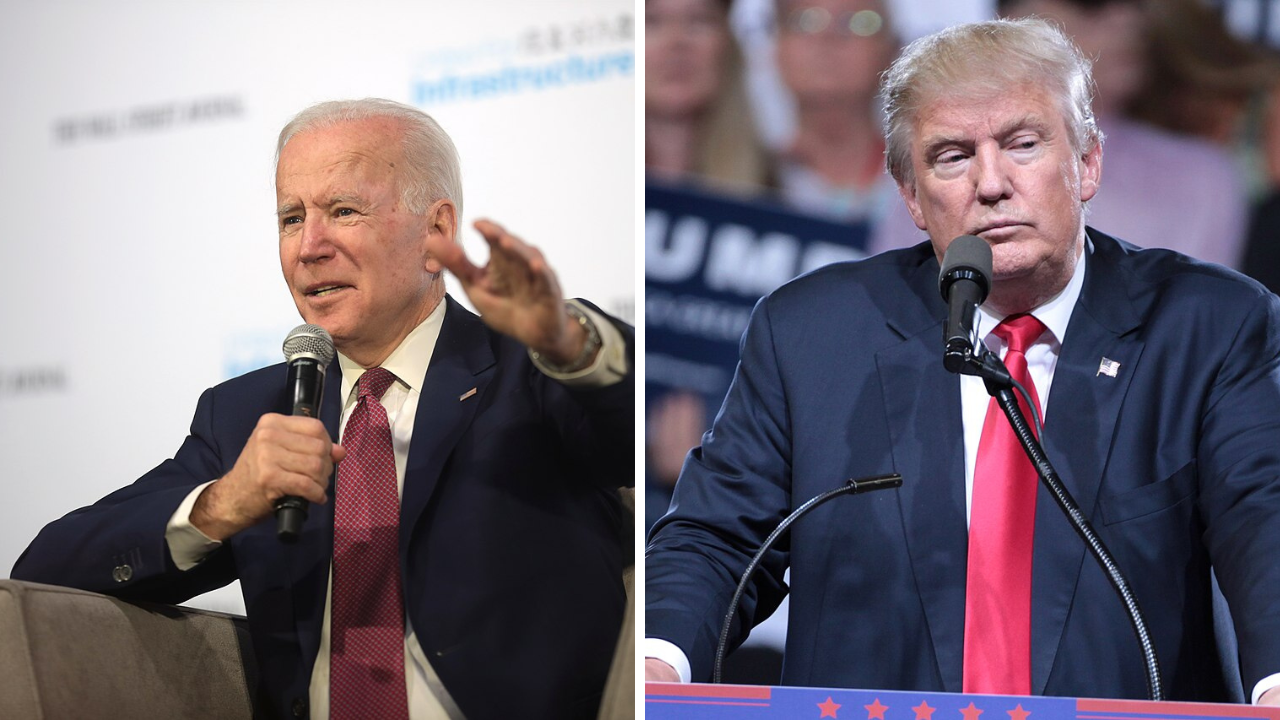
TRUMP BIDEN REMATCH SHAPES FUTURE OF U.S. DEMOCRACY… AND SCIENCE.
In the upcoming U.S. presidential election, voters will see a rematch between Republican Donald Trump and Democrat Joe Biden, with implications for the environment, public health, international scientific collaborations, and potentially U.S. democracy itself. Trump, despite facing 91 criminal charges, secured the Republican nomination by defeating Nikki Haley. His presidency could lead to the United States withdrawing again from the Paris climate accord and dismantling Biden’s climate policies, although significant obstacles exist, such as the Inflation Reduction Act’s provisions. Biden’s re-election could solidify progress towards reducing U.S. emissions by 2030 and achieving net zero by mid-century. The candidates also diverge on public health, with Trump previously attempting to cut NIH and CDC funding and indicating support for anti-vaccine movements, while Biden has bolstered biomedical research and defended public health agencies. Abortion rights, immigration policies, and U.S.-China relations are also pivotal issues, reflecting vastly different approaches between Trump and Biden. The election’s outcome could have lasting effects on science policy and the broader societal landscape. (Nature)
TRUMP WINS SUPER TUESDAY; SUPPORTERS ALLEGE FRAUD CLAIMS.
On Super Tuesday, Donald Trump’s significant victories in 14 out of 15 states did not quell the fervor of his most zealous supporters, who are deep in election denial theories. Despite a smooth voting process with minimal issues, these groups latched onto any hint of a conspiracy, notably during a temporary outage of major tech platforms like Facebook and Instagram. They prematurely claimed this was a deliberate act to suppress communication about election fraud, suggesting it was a rehearsal for the November elections. Election-denial influencers and channels, including far-right figures and QAnon promoters, recycled and spread unfounded allegations of election tampering and fraud, drawing parallels with past elections. Misinterpretations and misinformation regarding voting machine errors and celebrity endorsements further fueled their narratives. Even the victory of Nikki Haley in Vermont was disputed as fraudulent by these groups, illustrating their commitment to propagating voter fraud claims ahead of and likely beyond the 2024 election. (Wired)
If you’re enjoying the Daily Dose, sign up for the Daily Dose Newsletter and get the morning’s best science news from around the web delivered straight to your inbox? It’s easy like Sunday morning.
SEC APPROVES FIRST CLIMATE DISCLOSURE RULES FOR PUBLIC COMPANIES.
After two years of debate, the U.S. Securities and Exchange Commission (SEC) has approved the first national climate disclosure rules, mandating publicly listed companies to report climate-related risks and, for larger firms, their Scope 1 and 2 emissions, which are direct emissions from their operations and energy use. This requirement is contingent on the company’s assessment of the financial materiality of these emissions to investors. The rules, effective from 2025, were scaled back from initial proposals, notably excluding the requirement for companies to report Scope 3 emissions, which are indirect emissions from a company’s value chain. The decision came after receiving a record 24,000 comments, reflecting intense public interest and opposition concerning the potential cost implications for companies. This move aligns the U.S. with global trends toward enhanced transparency in corporate climate-risk disclosures, albeit in a less stringent manner compared to the European Union and California’s more robust requirements. Critics argue the pared-back rules may not fully capture the breadth of climate risks, particularly those related to Scope 3 emissions, which often represent the bulk of a company’s carbon footprint. (The Conversation)
FLUORIDE SAFETY DEBATE IGNITES IN U.S. COURT, MAY AFFECT MILLIONS.
In a San Francisco federal courtroom, debates have reignited over the safety of adding fluoride to drinking water, a practice affecting approximately 210 million Americans and celebrated for significantly reducing tooth decay. Critics argue it poses health risks, prompting a lawsuit that could potentially end water fluoridation in the U.S. The lawsuit shines a light on scientific disagreements, with recent studies suggesting fluoride could negatively impact human brain development, especially in fetuses, though most research has focused on higher doses than those found in U.S. tap water. Some scientists call for more research, reflecting a division among experts on how to communicate uncertainties to the public. The case also draws attention to alleged efforts by proponents of fluoridation to dismiss and obstruct research indicating potential harms. Central to the dispute is a pending government report on fluoride’s neurotoxicity, delayed by bureaucratic challenges and criticism from dental organizations. This controversy not only emphasizes the scientific quest for clarity on fluoride’s safety but also reflects broader concerns about public health policies, scientific integrity, and the influence of vested interests on research and public health recommendations. (Undark)

REALITY TV’S MENTAL HEALTH RISKS GROW; INDUSTRY FACES SCRUTINY.
The mental health risks for reality TV participants are escalating as broadcasters strive to captivate audiences with boundary-pushing content. Despite the engagement of psychologists to advise on productions, concerns arise over the qualifications of these professionals and the implementation of their advice. The industry faces scrutiny following participant suicides on shows like Love Island and The Jeremy Kyle Show, driving efforts to safeguard mental health amidst increasing competition and financial pressures. The British Psychological Society has launched a directory to help find qualified psychologists, addressing challenges such as the lack of protection around the title “media psychologist.” High-profile shows are now better at managing risks, employing strategies to support participant resilience. However, unpredictable elements in production settings and undisclosed motivations of participants add complexity to ensuring their well-being. Additionally, the effectiveness of psychological input is undermined if not fully integrated throughout production or if recommendations are ignored, highlighting a broader need for comprehensive duty of care practices across all levels of production. (The Guardian)
ANCIENT STONE TOOLS IN UKRAINE PUSH BACK EUROPEAN HUMAN SETTLEMENT.
Archaeologists in Ukraine have discovered stone tools dating back 1.4 million years, suggesting early humans settled in Europe earlier than previously believed, based on a study published in Nature. This finding challenges the conventional timeline of human migration out of Africa by 200,000 to 300,000 years. The artifacts, found at Korolevo, indicate Homo erectus, known for spreading from Africa to Eurasia, might have reached Europe’s northern regions at an earlier date. Despite the potential significance, some experts critique the study’s chronology and artifact descriptions. The dating methods, focusing on beryllium and aluminum decay in quartz cobbles, pinpoint the tools’ age but face skepticism regarding their reliability and the description of artifacts. This discovery could reshape understanding of early human migrations, though ongoing research and additional dating methods are necessary to confirm these findings, especially in light of Eastern Europe’s often underappreciated role in human history. However, research is currently paused due to the conflict in Ukraine. (Science)
Thanks for reading. Let’s be careful out there.
WORDS: The Biology Guy.



Leave a Reply