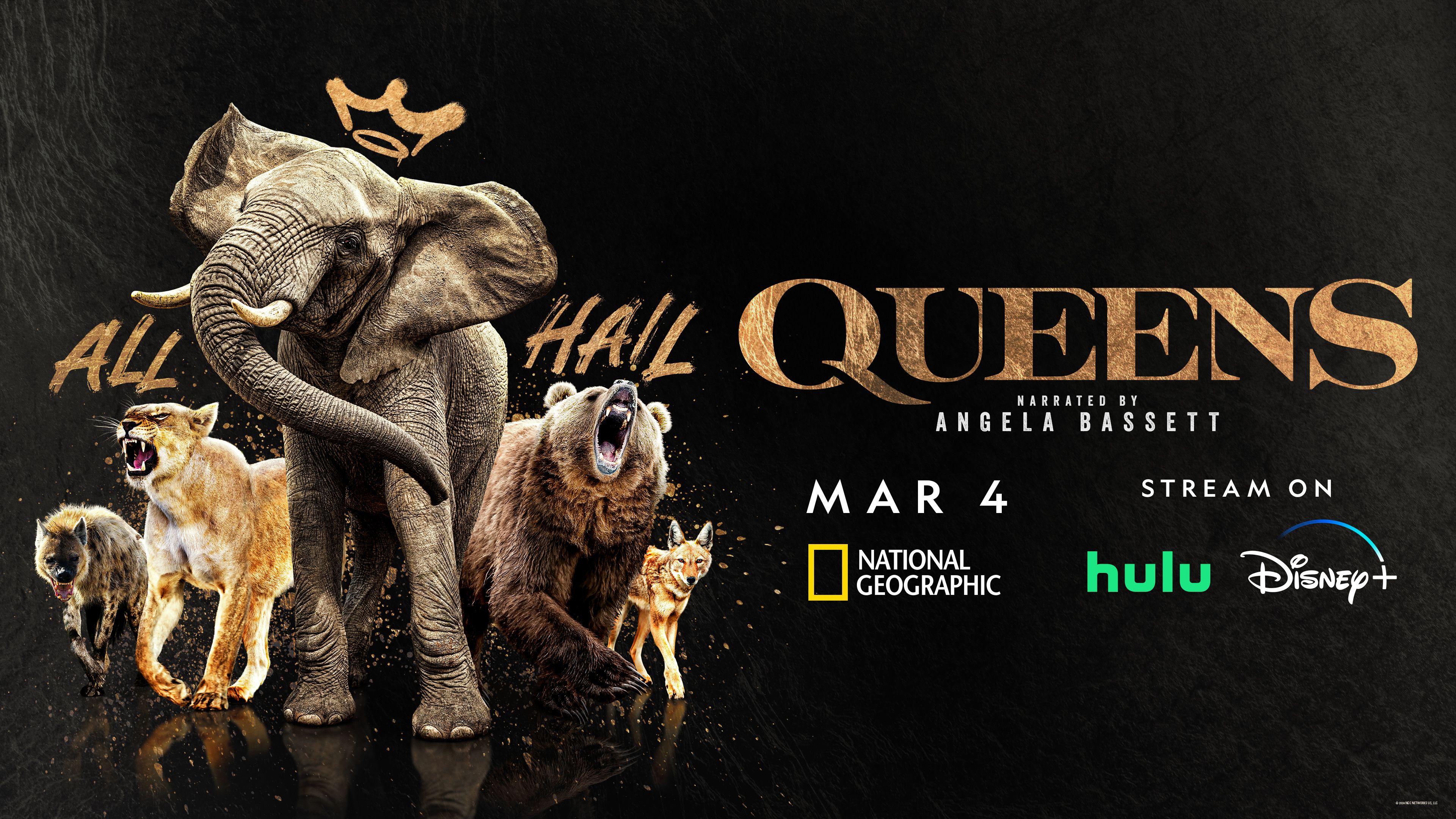
Queens is a captivating National Geographic series that explores the remarkable lives of female leaders across six distinct and remote natural environments on our planet. Each episode delves into the stories of resilience, strength, love, and loss among animal matriarchs, including sisters, single mothers, and grandmothers, showcasing their roles as powerful leaders within their respective domains. The series spans diverse habitats—from the vast Ngorongoro crater in Tanzania, where lion prides and hyena clans vie for dominance, to the secretive world of bonobos in the Congo forest, emphasizing the importance of female alliances for survival. It also ventures into the rainforest canopy of Central America, ruled by insect queens, the African savanna home to a close-knit elephant family, the challenging Ethiopian mountains, and the coastal realms of orcas and grizzly bears. The final episode pays tribute to the dedicated women behind the camera and in the field—scientists, conservationists, and activists working tirelessly to document and protect these extraordinary animal queens and their habitats.
Through stunning visuals and compelling storytelling, Queens aims to bridge the gap between viewers and the natural world, highlighting the intricate and often overlooked dynamics of female leadership in the wild. The series not only brings to light the struggles and triumphs of these animal matriarchs but also reflects on broader themes of leadership, family, and survival that resonate across species. By celebrating both the animal queens and the women who have gone to great lengths to tell their stories, “Queens” hopes to inspire, educate, and foster a deeper appreciation for the diversity and complexity of life on Earth, encouraging conservation efforts and a greater respect for our planet’s natural wonders.
SCINQ caught up with the series’ executive producer, Vanessa Berlowitz, to discuss the ground breaking documentary series.
Queens is groundbreaking for its female-led production team. Can you share some of the unique challenges and triumphs you faced while assembling and working with this team, especially in a field that may not have had enough women at the right level?
Facing unique challenges in striving for a female-led production team presents a distinct set of obstacles, particularly in the realm of wildlife filmmaking—a field I have been part of for 30 years. Early in my career, there were a few women collaborators, but as I advanced, the number of female colleagues dwindled, especially at senior levels. For instance, at the BBC Natural History Unit, I often found myself as the sole woman in high-ranking positions.
When I took the helm of a company, it was exhilarating to propose a project to a female commissioner at National Geographic that not only featured female animal leaders but also aimed to highlight and support female talent within the industry. However, assembling a team with the requisite experience and skill proved difficult due to the scant number of women in parallel or subsequent positions. This scarcity was often exacerbated by talented women leaving the industry to start families, hindered by a lack of support for those unable to travel due to familial responsibilities.
On the cinematography front, the challenge was similar: there were few top-tier female cinematographers. To address this, we recruited Sophie Darlington and Justin Evans, two of the industry’s best, to transform our project into a training ground, nurturing a new generation of talent over four years. This initiative successfully introduced several outstanding new cinematographers, marking a significant shift in industry practice by ensuring every series featured a lead female cinematographer.
For production, I persuaded Chloe Suresh, a talented young series producer who had recently had a baby, to join the project. Her involvement was crucial in redefining our production model to accommodate and support those facing similar challenges. This approach facilitated collaboration between experienced producers unable to travel and eager, less experienced field directors, creating a synergistic and innovative working environment.
Reflecting on the team we’ve built and what we’ve accomplished fills me with immense pride. This endeavor not only produced groundbreaking work but also pioneered a more inclusive and supportive framework for female talent in wildlife filmmaking.

The series leverages cutting-edge technology to capture never-before-seen moments in the animal kingdom. Could you elaborate on some of the specific technologies and filming techniques used and how they contributed to the storytelling?
We utilized every cinematic tool available to enhance the visual storytelling of landmark wildlife shows. This arsenal included drones for aerial shots, ground and aerial gimbals for stable footage, and night vision drones to capture scenes in complete darkness. We embraced thermal imaging and advanced full-color techniques for night filming, alongside progressive macro photography to reveal intricate details of natural phenomena.
A particularly remarkable endeavor involved collaborating with a microscopy expert to capture stunning time-lapse footage of orchid bee eggs developing and emerging fully formed, showcasing their delicate beauty and complexity. To follow the intricate movements of these bees, especially as they return to their nests, we developed motion control macro tracks. This innovation allowed us to smoothly track movements over hundreds of feet with precision, ensuring that every frame felt cinematic and immersive.
These technological advancements enabled us to bring viewers closer to the world of these extraordinary queens, providing a unique glimpse into their lives with unparalleled clarity and depth. The combination of these tools not only elevated the visual experience but also underscored our commitment to pushing the boundaries of wildlife filmmaking.
Angela Bassett’s narration is a significant aspect of Queens. How did her involvement shape the series, and what was it like working with her to bring the stories of these animal matriarchs to life?
From the outset, Chloe and I—Chloe being the showrunner—harbored the hope of involving Angela Bassett in our project. Recognizing her distinguished role as a queen in the “Black Panther” franchise and her regal presence, we were convinced she was the perfect voice for our series. Her exceptional acting prowess, capable of conveying drama, strength, tenderness, and humor, made her our ideal choice. Angela’s ability to embody these varied emotions, coupled with her commanding voice, aligned perfectly with our vision for a dramatic storytelling approach.
Upon viewing the first cut of the show, Angela expressed genuine excitement about the project. It wasn’t just the quality of the film that captivated her but also the ethos behind its creation and our commitment to leaving a lasting impact on the industry. Our focus on training and empowering diverse women resonated deeply with her, particularly highlighted by the final episode, “Queens Behind the Queens,” which underscored our dedication to meaningful change, not just superficial commitments.
Angela’s decision to join the series as a partner and ambassador has been profoundly beneficial. Her growing engagement and enthusiasm have not only elevated the project but have also been an honor for us, underscoring the transformative power of aligning with individuals who share a commitment to innovation and inclusivity in storytelling.
Queens aims to bring the natural world into focus through a female lens. How did this perspective influence the selection of stories and the way they were told? Were there any stories that particularly resonated with you or the team?
The incorporation of a female perspective in natural history filmmaking has introduced a transformative lens through which we observe and interpret animal behavior. Diverging from the traditional, predominantly male viewpoints, our team’s approach—enriched by varying backgrounds and experiences—has unveiled unique and previously unnoticed aspects of wildlife.
A pivotal moment highlighting this fresh perspective was our discovery of infanticide within a hyena clan, a behavior not documented before. This insight was a direct result of our focused study on a specific clan, guided by a female researcher’s observations of an unusual power dynamic and the ambition of a subordinate queen. The intricacies of hyena social structure, where the youngest daughter is the successor, allowed us to capture this dramatic event. While the act itself was stark and brutal, it underscored a harsh reality: female leadership in the animal kingdom can entail ruthless decisions that, ultimately, benefit the clan’s prosperity.
Our exploration extended beyond singular events to encompass broader themes of female leadership, resonating deeply with our experiences as women balancing professional responsibilities with personal lives. One narrative that stood out was the Bruce effect among gelada baboons, where an aging queen faced a heart-wrenching decision affecting her lineage and her unborn offspring. This story, set against the backdrop of gelada society’s complex dynamics, illustrated the severe choices female leaders sometimes must make for the greater good of their community.
These stories, viewed through a female lens, not only enrich our understanding of animal behavior but also mirror the multifaceted challenges and decisions faced by women in leadership roles. Capturing these intimate moments of animal life offers profound reflections on resilience, sacrifice, and the complexities of maternal instincts, shedding light on the universal themes of leadership and survival in the natural world.
Capturing intimate moments of animal life, such as hyena infanticide and the first filming of bonobos in the canopy, must have presented significant challenges. How did you feel the first time you saw moments like that?
The inaugural filming within the canopy unveiled extraordinary moments, particularly through Tanya’s lens, offering a unique, eye-level perspective into the world of our subjects that was previously uncharted. Witnessing Zoey’s direct gaze into the camera was profoundly moving; it felt as though she was communicating directly with us, sharing her emotions and her innate desire for acceptance and belonging—a sentiment universally understood and deeply relatable.
This unprecedented intimacy and connection, I believe, were significantly influenced by Tanya’s presence—a petite, young woman who seamlessly integrated into their realm. Contrary to our initial uncertainties about how the group might react, they quickly accepted her, almost overlooking her presence as if she were a natural part of their community. This acceptance facilitated moments of remarkable closeness and authenticity, allowing us to capture scenes of genuine interaction and behavior.
Notably, the sequence where Zoey actively participates in a bonobo hunt—showcasing behaviors unknown to us—was a testament to the intricate social dynamics at play. Her strategic involvement in the hunt, employing a distraction technique, not only emphasized her intelligence and adaptability but also underscored her crucial role within the group dynamics. Such moments underscore the series’ capacity to illuminate the complex, often unseen aspects of animal societies, bridging the gap between human and animal understanding through shared emotions and social interactions.
These experiences, captured on film, are not just visually stunning; they are a window into the souls of our subjects, offering viewers a deeply immersive and empathetic journey into the natural world. Through such intimate storytelling, we aim to foster a greater appreciation for the nuanced and richly emotional lives of animals, encouraging a deeper connection and respect for the natural world around us.
With Queens set to premiere soon, what impact do you hope the series will have on viewers’ understanding of the natural world and the role of females in it? Are there any specific takeaways or messages you hope the audience will grasp?
The aspiration is for the series to profoundly impact viewers’ perceptions of the natural world, particularly highlighting the often overlooked roles of female leaders in animal societies. The series aims to showcase that leadership in the animal kingdom, much like in human societies, can be characterized by compassion, emotion, wisdom, experience, and democratic principles, rather than brute force alone.
By focusing on matriarchs, the series intends to illuminate the remarkable ways in which female leaders navigate the complexities of their environments and social structures. This perspective is hoped to inspire viewers, drawing parallels between animal behaviors and human societal challenges, particularly in terms of leadership styles and the value of nurturing and intelligent decision-making.
The ultimate goal is for viewers to see a reflection of themselves and their relationships—recognizing mothers, daughters, sisters, and friends in the behaviors and social dynamics of these animal leaders. Such a connection is aimed at fostering a deeper empathy and understanding between humans and the natural world, encouraging a sense of unity and shared identity as part of the broader tapestry of life on Earth.
In bringing these stories to light, Queens seeks not only to entertain but also to educate and provoke thought about the roles of female leadership across species, including our own. By doing so, it hopes to contribute to a more nuanced appreciation of the natural world and the diverse forms of leadership that sustain it, offering valuable lessons for human societies grappling with issues of leadership and social organization.
IMAGE CREDIT: National Geographic.
If you enjoy the content we create and would like to support us, please consider becoming a patron on Patreon! By joining our community, you’ll gain access to exclusive perks such as early access to our latest content, behind-the-scenes updates, and the ability to submit questions and suggest topics for us to cover. Your support will enable us to continue creating high-quality content and reach a wider audience.
Join us on Patreon today and let’s work together to create more amazing content! https://www.patreon.com/ScientificInquirer

Leave a Reply