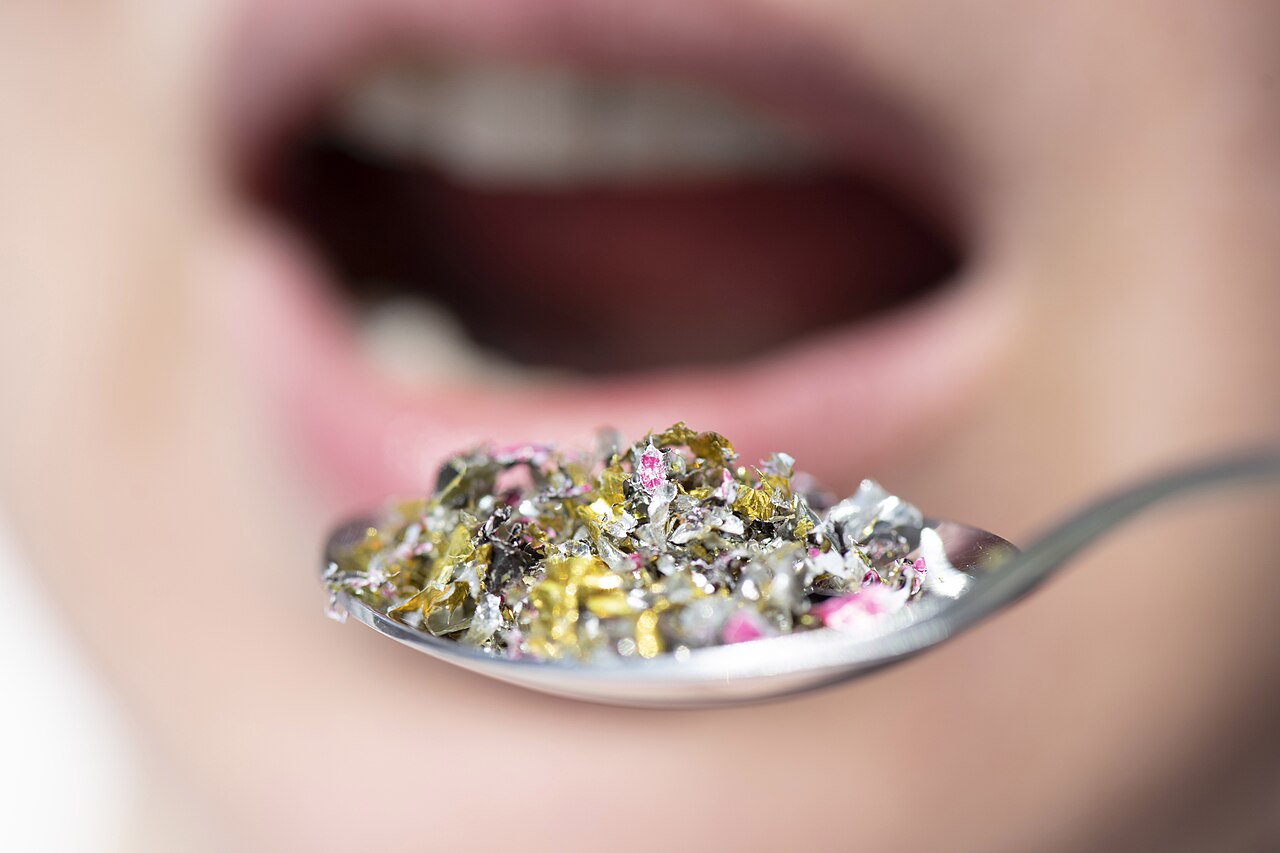
MICROPLASTICS FOUND IN HUMAN BODIES RAISES ALARMING CONCERNS.
Recent studies have raised concerns about the pervasive presence of microplastics in human bodies, including placentas, arteries, blood, breast milk, and even faeces. Researchers found microplastics in every placenta sample tested, predominantly polyethylene—a material used in plastic bags and bottles. Another study detected these particles in all human artery samples examined, suggesting a possible link to vascular blockages. The implications of microplastic contamination on human health are alarming but not fully understood, although there is evidence that they can cause cellular damage and inflammation, similar to air pollution particles. The findings, published in the Toxicological Sciences journal, underscore the extensive pollution caused by plastic waste, which now affects the entire planet and enters the human body through consumption and inhalation. The study’s lead, Prof. Matthew Campen from the University of New Mexico, highlights the potential for microplastics to explain certain health issues, such as inflammatory bowel disease, colon cancer in younger populations, and decreasing sperm counts. With global plastic production increasing, the problem of microplastic pollution is expected to worsen, making the discovery of their presence in placentas particularly concerning given the limited time frame for placental accumulation compared to other organs. (The Guardian)
LEAD POISONING IN CHILDREN TRACED TO CINNAMON APPLESAUCE POUCHES.
In 2023, hundreds of American children were poisoned by lead from cinnamon-flavored applesauce pouches sold in grocery and dollar stores, causing widespread concern among parents about potential brain damage, developmental delays, and seizures. The contamination was traced back to a spice grinder in Ecuador, prompting a recall of three million pouches. However, investigations by The New York Times and The Examination revealed failures in the food safety system, with the tainted product bypassing several safety checks. The cinnamon, originating from Sri Lanka and processed in Ecuador, likely became contaminated with lead chromate, a substance sometimes illegally used to enhance spices. The producer, Austrofood, did not test the cinnamon or applesauce for lead, relying instead on a supplier’s certification of safety. The incident underscores the limitations of the FDA’s oversight, especially for international suppliers, and highlights the need for more stringent food safety measures. Despite regulations intended to prevent such occurrences, the system’s reliance on self-policing by companies and inadequate inspection resources contributed to this significant oversight, leading to calls for reform and greater accountability within the food supply chain. (New York Times)
If you’re enjoying the Daily Dose, sign up for the Daily Dose Newsletter and get the morning’s best science news from around the web delivered straight to your inbox? It’s easy like Sunday morning.
HUMAN-TOOL SYMBIOSIS.
In the verdant Welsh countryside, Nantclwyd Hall, a 400-year-old peach-painted manor with a slate-gray roof and geometric gardens, was the birthplace of lawn tennis. Introduced by Major Walter C. Wingfield during a garden party in 1873, the game evolved from indoor ball games to an outdoor sport with rubber balls and peculiar rackets. Wingfield patented the game, selling sets worldwide, leading to the first Wimbledon tournament in 1877. The phenomenon of wielding a tennis racket exemplifies the human-tool symbiosis, illustrating how tools become extensions of our bodies. This concept is supported by studies, including one where tennis players perceived their rackets as part of their bodies, reacting faster with familiar rackets. This embodiment extends beyond sports, encompassing everyday tools, and is rooted in our evolutionary history, suggesting an innate capacity for integrating tools into our physical and perceptual selves. The assimilation of tools, whether through the radical embodiment theory or the development of somatosensory maps, demonstrates our profound connection with the objects we use, extending our capabilities and enhancing our interaction with the world. (Smithsonian)
US-CHINA SCIENCE PACT DELAY HIGHLIGHTS COLLABORATION RISKS.
The ongoing delay in renewing the US-China Science and Technology Cooperation Agreement underscores both the potential for continued collaboration and the risk of a breakdown in relations. This agreement, in place for 45 years, has facilitated significant research collaboration and student exchanges, contributing to major advances and mutual benefits in various fields, including environmental protection, climate change, and nuclear proliferation risk reduction. The origins of this cooperation trace back to a strategic effort to bridge the gap between the two nations, marked by high levels of mistrust, through science and technology as a means of fostering diplomatic relations and mutual development. While the motivations of the US and China diverged, with the US aiming to influence China away from the Soviet Union and China seeking to enhance its development, the partnership has clearly yielded substantial benefits. However, recent years have seen a deterioration in the relationship, exacerbated by the Trump administration’s rhetoric, policies promoting decoupling, and increased suspicion of academic and research collaborations. Lessons from Germany’s balanced approach to managing risks and benefits in such international collaborations may provide a pathway forward, emphasizing the need for careful risk management and the potential for science to maintain open lines of communication amidst rising tensions. (Nature)

OSIRIS-APEX RESUMES MISSION AFTER CLOSE CALL WITH SUN.
The OSIRIS-APEX spacecraft, previously on a hiatus, has resumed operations after a perilous journey closer to the sun than initially intended, on its mission to the asteroid Apophis. During this period, it managed a critical maneuver to protect itself from the sun’s intensity by repositioning one of its solar panels, limiting its power and communication capabilities. As of early February, NASA confirmed the probe’s successful operation through this challenging phase, though a full assessment is pending. The spacecraft’s close approach to the sun, the first of seven before reaching Apophis in 2029, was a risky part of its extended mission after its successful sample return from asteroid Bennu. This mission, named OSIRIS-REx, had previously achieved remarkable success by delivering more sample material than expected. With sufficient fuel for continued exploration, OSIRIS-APEX now aims to study Apophis, a potentially hazardous asteroid, to gain insights into the early solar system, although NASA has deemed it not a threat for at least a century. (space.com)
THREE NEW MOONS DISCOVERED ORBITING URANUS AND NEPTUNE.
Astronomers have discovered three new moons in the solar system, adding to the celestial family of Uranus and Neptune. This marks the first discovery of a Uranus moon in nearly two decades, bringing its total to 28, and increases Neptune’s moon count to 16. The discoveries, announced by the International Astronomical Union’s Minor Planet Center, highlight these moons as the faintest observed around these planets with ground-based telescopes. Uranus’ new moon, destined to be named after a Shakespearean character, is just five miles wide, making it the smallest known moon of Uranus. Neptune’s additions include a 14-mile wide moon and another about 8.6 miles across, with names inspired by sea gods and nymphs from Greek mythology pending. These findings were made possible through advanced image processing and observations from multiple telescopes. The discoveries offer insights into the solar system’s outer realms and the early dynamics of moon capture and formation, enhancing the groundwork for future explorations of Uranus and Neptune. (Popular Science)
Thanks for reading. Let’s be careful out there.
WORDS: The Biology Guy.
IMAGE CREDIT: European Commission (Lukasz Kobus).


Leave a Reply