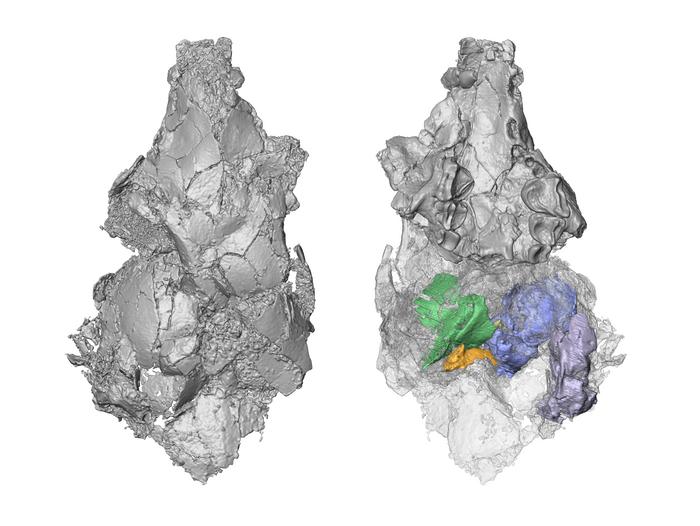
A research paper published in Royal Society’s Biology Letters on January 10 has revealed that picrodontids —an extinct family of placental mammals that lived several million years after the extinction of the dinosaurs—are not primates as previously believed.
The paper—co-authored by Jordan Crowell, an Anthropology Ph.D. candidate at the CUNY Graduate Center; Stephen Chester, an Associate Professor of Anthropology at Brooklyn College and the Graduate Center; and John Wible, Curator of Mammals at the Carnegie Museum of Natural History— is significant in that it settled a paleontological debate that has been brewing for over 100 years while helping to paint a more clear picture of primate evolution.

For the last 50 years, paleontologists have believed picrodontids, which were no larger than a mouse and likely ate foods such as fruit, nectar, and pollen, were primates, based on features of their teeth that they share with living primates. But by using modern CT scan technology to analyze the only known preserved picrodontid skull in Brooklyn College’s Mammalian Evolutionary Morphology Laboratory, Crowell, the lead author on the paper, worked with Chester, the paper’s senior author, and Wible to determine they are not closely related to primates at all.
“While picrodontids share features of their teeth with living primates, the bones of the skull, specifically the bone that surrounds the ear, are unlike that of any living primate or close fossil relatives of primates,” Crowell said. “This suggests picrodontids and primates independently evolved similarities of their teeth likely for similar diets. This study also highlights the importance of revisiting old specimens with updated techniques to examine them.”
Sign up for the Daily Dose Newsletter and get every morning’s best science news from around the web delivered straight to your inbox? It’s easy like Sunday morning.
Chester, who serves as Crowell’s Ph.D. adviser, has both a professional and personal interest in this research. It was Chester’s renowned colleague and “academic grandfather,” Professor Emeritus Frederick Szalay from CUNY’s Hunter College and the Graduate Center, who in 1968 first convincingly classified picrodontids as primates based on evidence from fossilized teeth. Szalay studied the teeth of the only known picrodontid skull, Zanycteris paleocenus, for his research—the same skull this team examined with the new technology that led to their discovery.
“The Zanycteris cranium was prepared and partially submerged in plaster around 1917, so researchers studying this important specimen at the American Museum of Natural History were not aware of how much cranial anatomy was hidden over the last 100 years” Chester said. “Micro-CT scanning has revolutionized the field of paleontology and allows researchers to discover so much more about previously studied fossils housed in natural history museum collections.”
The research was funded by grants Chester and Crowell secured through Brooklyn College from the National Science Foundation and The Leakey Foundation. Chester and Crowell are also currently working on several additional externally funded research projects focused on how primates and other mammals evolved following the extinction of the dinosaurs. They encourage undergraduates to contact them regarding funded research opportunities in the Mammalian Evolutionary Morphology Laboratory.
IMAGE CREDIT: Jordan Crowell
If you enjoy the content we create and would like to support us, please consider becoming a patron on Patreon! By joining our community, you’ll gain access to exclusive perks such as early access to our latest content, behind-the-scenes updates, and the ability to submit questions and suggest topics for us to cover. Your support will enable us to continue creating high-quality content and reach a wider audience.
Join us on Patreon today and let’s work together to create more amazing content! https://www.patreon.com/ScientificInquirer



Leave a Reply