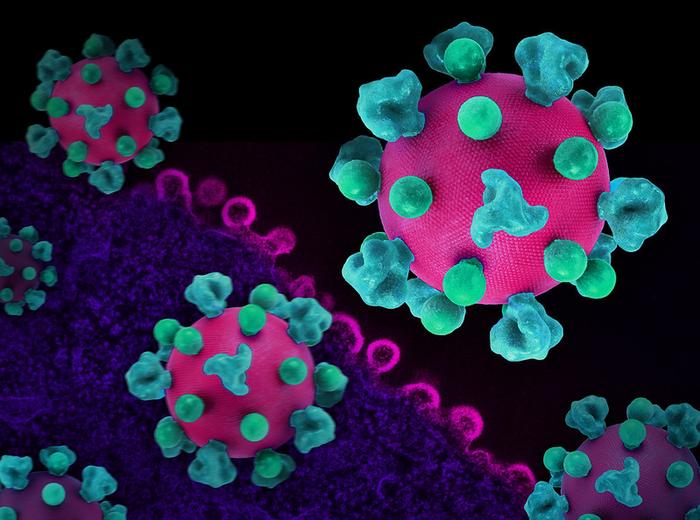
An effective HIV vaccine may need to prompt strong responses from immune cells called CD8+ T cells to protect people from acquiring HIV, according to a new study from researchers at the National Institute of Allergy and Infectious Diseases (NIAID), part of the National Institutes of Health, and colleagues. The study findings, appearing in Science, draw comparisons between the immune system activity of past HIV vaccine study participants and people with HIV who naturally keep the virus from replicating even in the absence of antiretroviral therapy (ART). The latter individuals are often called “long-term non-progressors” or “elite controllers” (LTNPs/ECs).
When HIV enters the body, the virus begins to damage the immune system by inserting itself into CD4+ T cells, which are white blood cells that help coordinate the immune response to pathogens. In most people, HIV continues to replicate and damage more and more CD4+ T cells unless controlled by ART. Among LTNPs/ECs, the immune system appears to promptly recognize CD4+ cells with HIV and activate other immune cells called CD8+ T cells. CD8+ T cells destroy CD4+ cells with HIV, enabling the suppression of HIV in a person’s blood.
The aim of an effective HIV vaccine is to provide durable protective immunity to HIV, or if initial defenses are bypassed, to help control HIV in the body long term, as happens with LTNPs/ECs. Although several preventive HIV vaccine candidates have been designed to stimulate CD8+ T-cell activity, they did not prevent HIV acquisition or control viral replication in clinical trials. Understanding and addressing this lack of effect is a scientific priority of HIV vaccine research.

Scientists in the HIV-Specific Immunity Section of NIAID’s Laboratory of Immunoregulation and colleagues designed their study to better understand which CD8+ T-cell functions were lacking in previous HIV vaccine recipients. They compared laboratory samples from previous HIV vaccine study participants with samples from LTNPs/ECs. They found that both HIV vaccine recipients and LTNPs/ECs generated large numbers of CD8+ T cells that recognized HIV. However, unlike the CD8+ T cells of LTNPs/ECs, HIV vaccine recipients’ CD8+ T cells failed to deliver the proteins necessary to destroy HIV-infected CD4+ T cells with HIV.
Further tests suggested this dampened response was due to reduced sensitivity to HIV of vaccine recipients’ T-cell receptors—the part of a CD8+ T cell that detects a CD4+ T cell with HIV. This reduced T-cell receptor sensitivity suggests the vaccine candidates from several prior studies did not sufficiently stimulate the maturation of CD8+ T cells to recognize, reach, and destroy all CD4+ T cells with HIV in a person’s body.
According to the authors, the study suggests that future HIV vaccine candidates may be more successful if they include additional doses or persist longer in the body to further stimulate the immune system. They also write that the potential of an HIV vaccine might be better judged by measuring how it affects CD8+ T-cell function and sensitivity in addition to just assessing the number of CD8+ T cells generated, which has been the usual practice.
These findings build on decades of research by the HIV-Specific Immunity Section of NIAID’s Laboratory of Immunoregulation to better understand the immune response to HIV. The insights from this work may help guide future preventive and therapeutic HIV vaccine design and development, as well as HIV immunotherapy approaches.
Editorial note: While the terms “elite controller” and “long-term non-progressor” are used in scientific settings, the HIV research community is working to identify person-first language as a possible alternative to these phrases.
IMAGE CREDIT: NIAID.
Sign up for the Daily Dose Newsletter and get the morning’s best science news from around the web delivered straight to your inbox? It’s easy like Sunday morning.




Leave a Reply to Ashely williamCancel reply