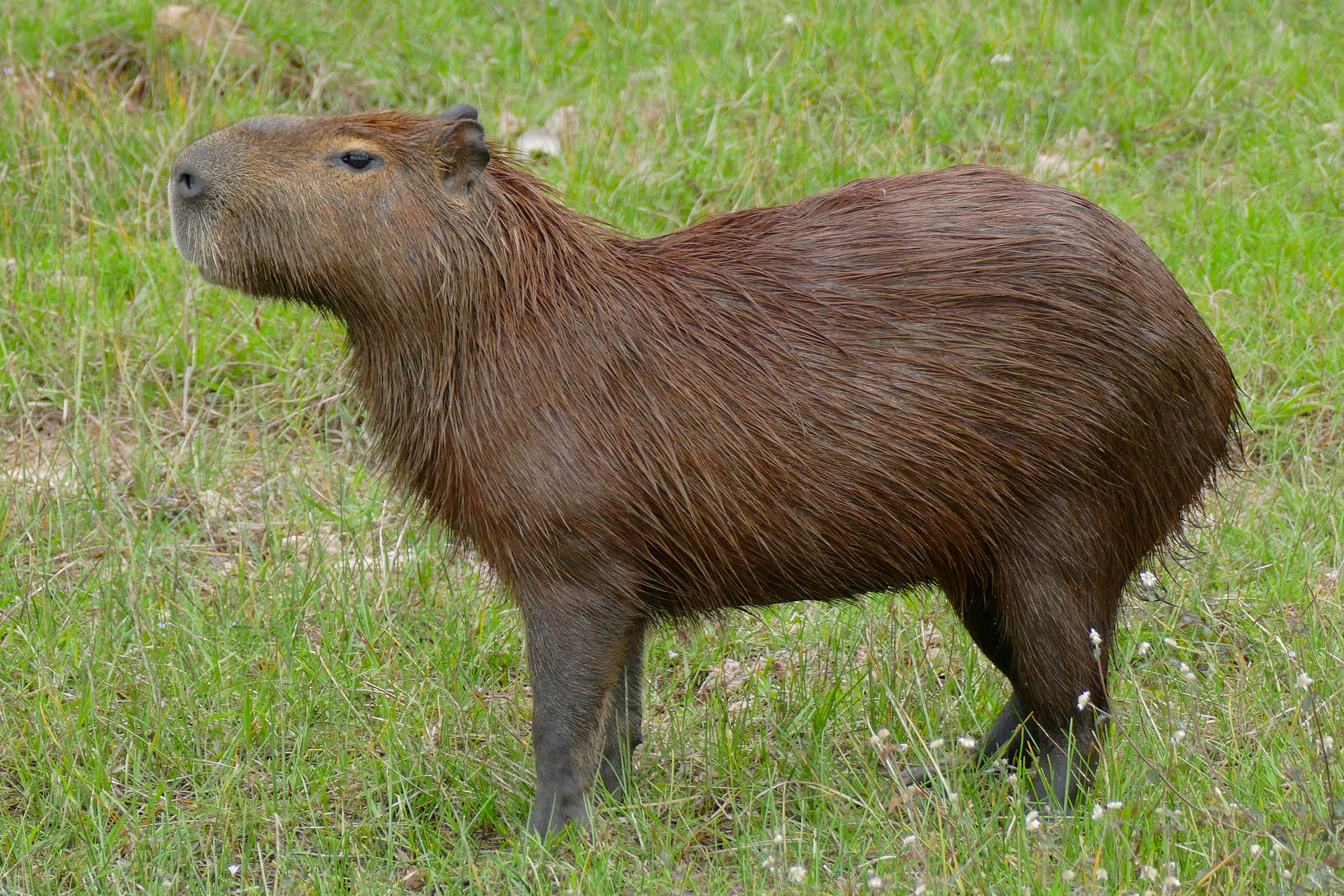

The capybara, a creature as unique as it is endearing, stands as a gentle giant in the rodent world. Native to South America, these remarkable animals hold the title of the world’s largest rodent, a fact that only adds to their charm and intrigue.
Measuring up to four feet in length and weighing as much as 145 pounds, capybaras are distinguished not just by their size but by their distinctive appearance. With a stout, barrel-shaped body, short head, and reddish-brown fur, they are a sight to behold. Their webbed feet, an adaptation for their semi-aquatic lifestyle, enable them to swim with grace and ease, a trait that plays a crucial role in their survival in the wild.
Capybaras exhibit a temperament that endears them to many. They are social animals, often found in groups, which can range from a few individuals to large bands of over 100. This social structure reflects a deep-seated sense of community and cooperation, with group members often seen engaging in social activities like grooming each other, a sign of their strong social bonds.
Their diet, primarily consisting of grasses and aquatic plants, showcases their adaptability to their environment. This herbivorous nature contributes to their gentle demeanor, as they pose no threat to other animals or humans. In fact, capybaras are known for their calm and placid nature, often seen lounging lazily by riverbanks, basking in the sun, or taking leisurely swims.
Another fascinating aspect of capybaras is their significance in their ecosystems. As a prey species for many predators, they play a vital role in the food chain. Moreover, their grazing habits help maintain the health and diversity of the grasslands and wetlands they inhabit.
IMAGE CREDIT: Bernard Dupont.




Leave a Reply