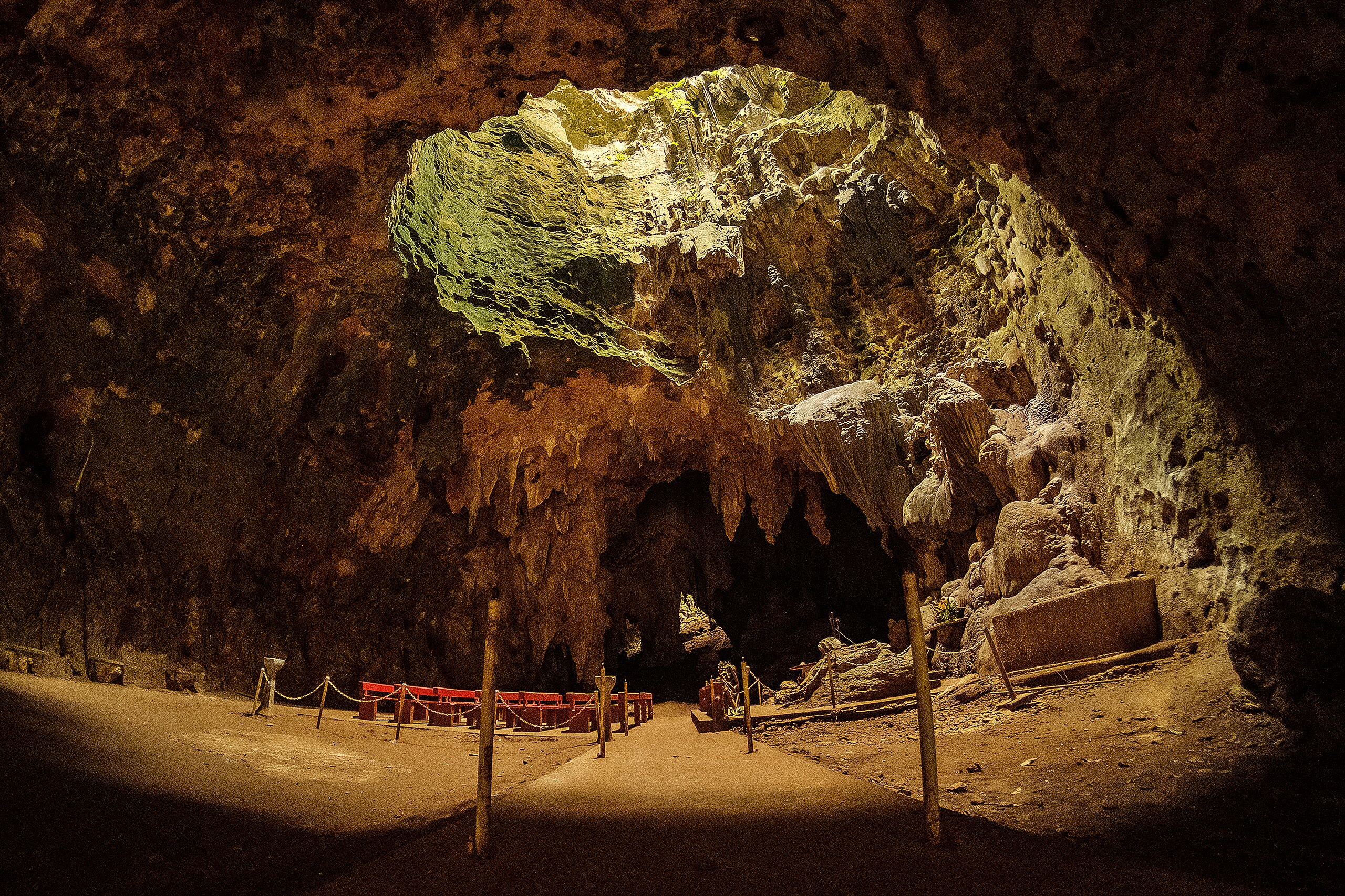

Callao Cave, situated in the northeastern part of Luzon Island in the Philippines, is a captivating site of archaeological and anthropological significance. This limestone cave has become a focal point of interest due to the discovery of a new human species, Homo luzonensis, shedding light on the complex evolutionary history of humans.
Discovered in 2007 by a Filipino archaeologist, Armand Salvador Mijares, the cave has since been a site of extensive research. Callao Cave is comprised of several chambers, each offering unique geological formations. The most famous of these is the first chamber, which houses a natural cathedral-like structure with an opening that allows sunlight to filter through, creating a serene and mystical ambiance. This chamber has been converted into a chapel by the local people, reflecting the cave’s cultural significance.
The discovery of Homo luzonensis, announced in 2019, was groundbreaking. The species, believed to have lived approximately 50,000 to 67,000 years ago, was identified through a collection of bones and teeth, which displayed a combination of primitive and modern traits not seen in other hominin species. These remains included a foot bone, hand bones, and teeth, which exhibited features resembling both Australopithecus and Homo erectus, yet distinct enough to warrant the classification of a new species.
This discovery challenged the prevailing models of human evolution. It suggested that the process was far more complex and regionally varied than previously thought. The presence of a small-bodied hominin in Luzon, an island that has never been connected to the mainland, raised intriguing questions about ancient human migration patterns. It implied that these early humans either had the capability to cross sea barriers or that there were once land bridges that have since disappeared.
Homo luzonensis’ unique physical characteristics, such as its small stature and curved toes, suggest an adaptation to both arboreal and terrestrial environments. This versatility in adapting to different habitats speaks to the resilience and diversity of early human species. The discovery also underscores the importance of Southeast Asia in human evolution, a region that has often been overlooked in favor of African and European sites.
Callao Cave not only provides a window into the past of human evolution but also offers a spectacular natural experience. Visitors can explore the cave’s numerous chambers, each presenting its own set of impressive stalactites and stalagmites. The local government has taken measures to preserve and protect this archaeological treasure, recognizing its importance both scientifically and culturally.
IMAGE CREDIT: Klienneeco.



Leave a Reply