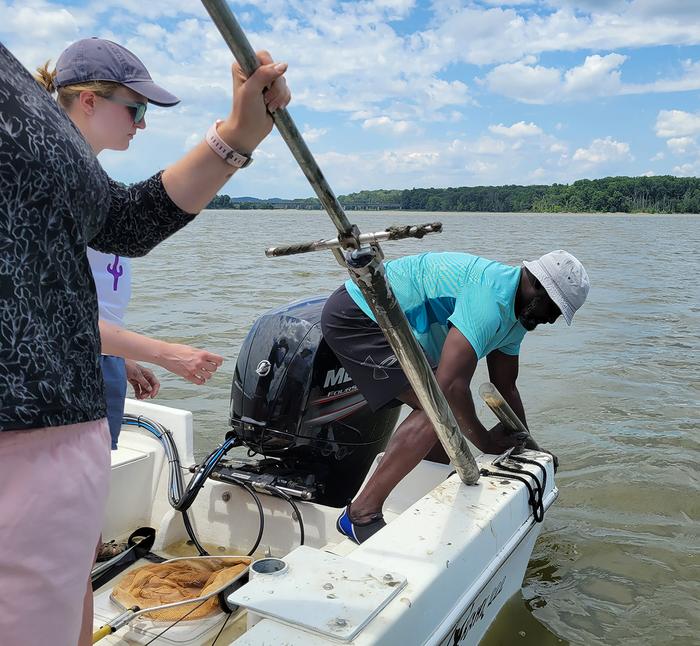
A new scientific publication in Environmental Pollution unveils alarming discoveries: Morris Animal Foundation-funded researchers have identified cancer-causing contaminants in sediments and fish in a Chesapeake Bay tributary near a coal ash landfill.
The study, led by Dr. Tyler Frankel, the project’s principal investigator and Assistant Professor of Environmental Sciences at the University of Mary Washington, uncovered long-overlooked impacts of trace metal contamination on waterways and aquatic species adjacent to coal ash landfills. Frankel emphasized the study’s focus was on addressing the missing risk management component, spotlighting the role of sediments in storing, releasing and transporting trace metals in aquatic ecosystems.
“These waterways serve as important routes for several migratory fish species and sensitive nursery habitats for various endemic species,” Frankel said. “Our work highlights the importance of considering this exposure pathway in conservation strategies.”

The research team examined water and sediment samples from aquatic environments surrounding five Virginia coal ash facilities. Coal ash, a prevalent industrial waste product produced in the United States, contains several water-soluble metals, including cadmium, selenium, mercury, lead and arsenic. The study revealed significantly heightened concentrations of these trace metals in sediments at waterway bottoms and in banded killifish tissues near these coal ash landfills.
The implications are grave. Long-term exposure to metals like arsenic, cadmium and chromium has been linked to cancer, increased cardiovascular risks and other detrimental health issues, impacting both wildlife and humans. Furthermore, these contaminants increase in concentration as they progress up the food web, posing threats to predatory fish and birds, Frankel said.
The pivotal role played by the $92,037 grant from Morris Animal Foundation facilitated field sampling and laboratory analyses and was crucial for the study’s completion. Additionally, Frankel said it helped spread the team’s work to national societies such as the Chesapeake Potomac Regional Chapter of the Society of Environmental Toxicology and Chemistry. These funds also provided immersive training opportunities for the next generation of scientists.
“As the Chesapeake Bay watershed is one of the largest and most productive estuaries in the United States, understanding our impacts on its waterways is critical to the long-term stewardship of this precious resource,” Frankel added.
IMAGE CREDIT: Tyler Frankel
Sign up for the Daily Dose Newsletter and get the morning’s best science news from around the web delivered straight to your inbox? It’s easy like Sunday morning.

Leave a Reply