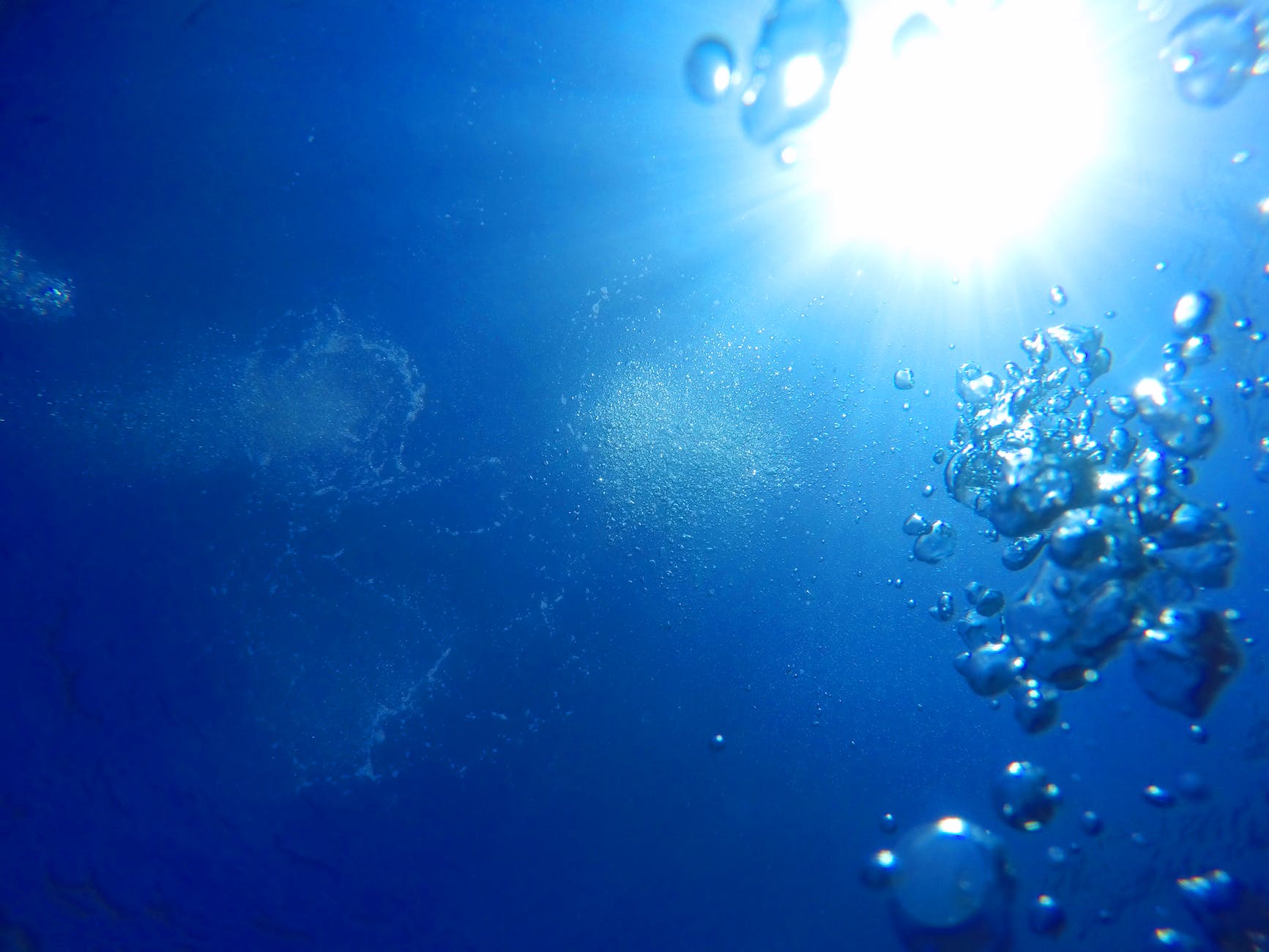
In a paper published October 3 in PNAS Nexus, the team of researchers showed that bubbles formed from breaking waves at the ocean’s surface can launch tiny bits of plastic — such as those that might come from broken down plastic bottles, synthetic clothing fibers, and cosmetic products — into the atmosphere after they burst. Combining their observations with global estimates of microplastic concentrations, the researchers projected that the ocean might be emitting around 100,000 metric tons of microplastics each year.
“These bursting bubbles have been shown to transport salt crystals and bacteria into the atmosphere, enough to influence cloud formation and global climate dynamics,” said Luc Deike, leader of the research team and associate professor of mechanical and aerospace engineering and the High Meadows Environmental Institute. “Now, we’ve shown that the same process is also capable of carrying microplastic particles out of the ocean and into the atmosphere.”

For their study, the researchers set up a closed tank of water and filled it with plastic and glass pieces ranging in size from 10 microns — smaller than the width of a human hair — up to 280 microns, or a little over a quarter of a millimeter. They then used a syringe to create bubbles in the tank, which eject many smaller drops known as jet drops after bursting at the water’s surface. By setting up high-speed cameras, the researchers could observe as the rising bubbles scavenged microplastic pieces and flung them out of the water in jet drops.
“The process we observed is the same one that happens in a glass of sparkling water,” said Daniel Shaw, the study’s lead author and a former graduate student in Deike’s lab. “If you were to put your eye up to the glass, you’d see a bunch of bursting bubbles throwing these drops surprisingly high into the air. In this case, however, those drops are carrying microplastics with them.”
The researchers recorded up to over a hundred pieces of plastic in a single drop, though they noted that some of the concentrations of microplastics in their experiment were much higher than the estimated concentration in the world’s oceans. Yet Shaw said that given the enormous size of the ocean and the high frequency of breaking waves, the number of microplastics emitted to the atmosphere from the ocean can quickly add up.
“Even with a relatively low concentration of microplastics — say, only one or two pieces of microplastic per cubic meter at the ocean’s surface — when you imagine how waves are constantly crashing in the ocean, each forming countless bubbles, there’s a good chance that each piece that remains at the surface will eventually get ejected in a drop,” Shaw said.
Once they leave the ocean’s surface, the researchers said that surface winds can transport microplastics high into the atmosphere and subsequently carry them across long distances. In fact, Deike said one of the motivating factors behind his team’s work was recent evidence of microplastics in remote areas, from algae in Arctic sea ice to snow drifts in Antarctica.
“We’ve seen many times that anything that you dump in the ocean is probably going to come back to you in one form or another,” Deike said. “While the process we described is not likely to dominate global budgets for microplastics, if it’s one of the ways that microplastics end up in Antarctica or on remote islands in the middle of the ocean, then the number becomes even more significant.”
The researchers said their work provides a reliable estimate of the size and number of microplastics that can be transported out of the ocean given a few known parameters, such as the size of the bubble and the concentration of microplastics at the ocean’s surface. However, they argued there is still considerable uncertainty about how microplastics are distributed in time and space across the ocean. They concluded that more work is needed to sample microplastics at the sea’s surface to refine their estimate of the ocean’s contribution to the global microplastics budget.
“At this point, microplastics have been found in almost every corner of the planet,” Deike said. “Ultimately, it really becomes a question of how much microplastic pollution we are willing to accept.”
IMAGE CREDIT: Linda Heyworth.
Sign up for the Daily Dose Newsletter and get the morning’s best science news from around the web delivered straight to your inbox? It’s easy like Sunday morning.



Leave a Reply