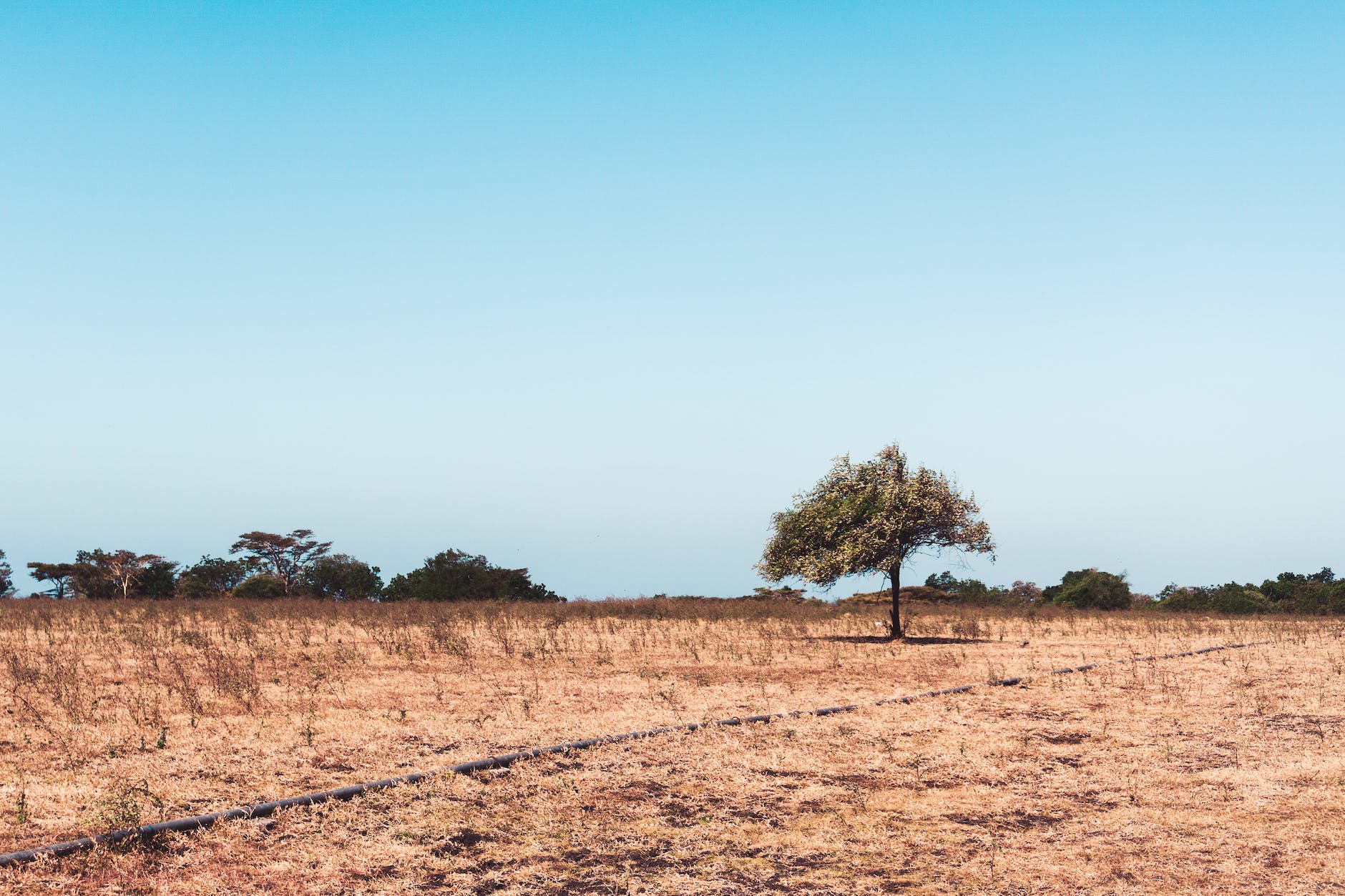
Savannas and grasslands in drier climates around the world store more heat-trapping carbon than scientists thought they did and are helping to slow the rate of climate warming, according to a new study.
The study, published online Oct. 2 in Nature Climate Change, is based on a reanalysis of datasets from 53 long-term fire-manipulation experiments worldwide, as well as a field-sampling campaign at six of those sites.
Twenty researchers from institutions around the globe, including two at the University of Michigan, looked at where and why fire has changed the amount of carbon stored in topsoil. They found that within savanna-grassland regions, drier ecosystems were more vulnerable to changes in wildfire frequency than humid ecosystems.
“The potential to lose soil carbon with very high fire frequencies was the greatest in dry areas, and the potential to store carbon when fires were less frequent was also the greatest in dry areas,” said study lead author Adam Pellegrini, currently an IGCB Exchange Professor at U-M’s Institute for Global Change Biology. His primary appointment is at the University of Cambridge.

Over the last 20 years, fire suppression due to population expansion and landscape fragmentation caused by the introduction of roads, croplands and pastures into savannas and grasslands led to smaller wildfires and less burned areas in drier savannas and grasslands.
In dryland savannas, the reduction in the size and frequency of wildfires has led to an estimated 23% increase in stored topsoil carbon. The increase was not foreseen by most of the state-of-the-art ecosystem models used by climate researchers, according to forest ecologist and study second author Peter Reich, professor and director of the Institute for Global Change Biology at the U-M School for Environment and Sustainability.
As a result, the climate-buffering impacts of dryland savannas have likely been underestimated, Reich said. The new study estimates that soils in savanna-grassland regions worldwide have gained 640 million metric tons of carbon over the past two decades.
“Ongoing declines in fire frequencies have probably created an extensive carbon sink in the soils of global drylands that may have been underestimated by ecosystem models,” Reich said. “In other words, in the past couple of decades, global savannas and grasslands have slowed climate warming more than they have accelerated it—despite fires. But there is absolutely no guarantee that will continue in the future.”
Savannas are tropical or subtropical grasslands—in eastern Africa, northern South America and elsewhere—that contain scattered trees and drought-resistant undergrowth. The new study looked at recent changes in burned area and fire frequency in savannas, other grasslands, seasonal woodlands and some forests.
Across 888,000 square miles (2.3 million square kilometers) of dryland savanna-grasslands, where fire frequency and burned area declined over the past two decades, soil carbon rose by an estimated 23%.
But in more humid savanna-grassland regions covering 533,000 square miles (1.38 million square kilometers), more frequent wildfires and increased burned area resulted in an estimated 25% loss in soil carbon over the past two decades.
The net change, during that time, was a gain of 0.64 petagrams, or 640 million metric tons, of soil carbon. That works out to a 0.038 petagram (38 million metric ton) increase per year.
“In the grand scheme of things, no, this is not really a massive amount of carbon that will put a dent in heat-trapping anthropogenic emissions,” Pellegrini said. “But no one region—neither the Amazon rainforest nor the U.S. Great Plains grasslands nor Canada’s boreal forest nor dozens of other biomes around the world—can alone store sufficient carbon to make a large contribution to slowing climate change. However, in aggregate, they can.
“Plus, there are several savanna and grassland regions that have soil carbon-credit projects being developed, so understanding their capacity to sequester carbon is relevant to the region—even if it’s not a massive flux globally.”
IMAGE CREDIT: rizknas.
Sign up for the Daily Dose Newsletter and get the morning’s best science news from around the web delivered straight to your inbox? It’s easy like Sunday morning.


Leave a Reply