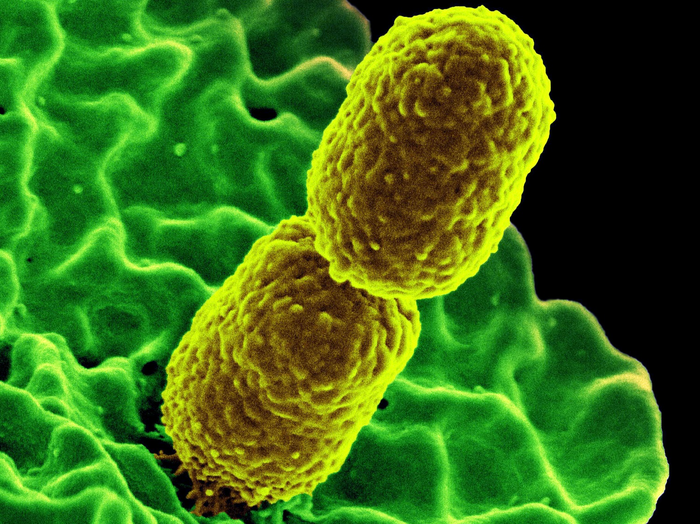
An evolutionary gateway which helps pneumonia cells become resistant to antibiotics has been discovered by scientists at the University of Sheffield.
The new research has identified a genetic scar left in the genomes of bacteria as they become resistant to antibiotic treatment.
This significant breakthrough in understanding how antibiotic resistance occurs will allow scientists to better predict which strains of pneumonia will become highly resistant in the future, giving them time to put control measures in place to help save patients’ lives.
Pneumonia is a very serious infection and the third leading cause of death in the UK population. Often these infections are caused by a bacterium called Streptococcus pneumoniae (S.pneumoniae). Antibiotics are given to patients to kill the bacteria, however the bacteria are finding ways to become resistant and this resistance threatens patient treatment in the long-term.
The Sheffield team discovered mutations called pde1 act as an evolutionary gateway through which the S.pneumoniae cells start to become resistant to antibiotics.

Lead author, Dr Andrew Fenton from the School of Biosciences at the University of Sheffield, said: “Pneumonia is a dangerous and deadly infection and effective treatment with antibiotics is essential for patient care. However, the effectiveness of antibiotics is increasingly under threat as the bacteria which cause pneumonia become resistant to antibiotic treatment over time.
“This research has identified a genetic scar left in the genomes of bacteria as they become resistant to antibiotic treatment. This is a major step forward in understanding how resistance occurs and how we might be able to predict it.
“If we understand the emergence of antibiotic resistance then we can predict what groups of bacterial strains are becoming more dangerous. Giving us time to put control measures in place to stop their spread, saving patients’ lives.”
Over the last 10 years there have been many large-scale genome association and genetic studies focused on S.pneumoniae antibiotic resistance but these have, so far, not led to effective mitigations.
This study, published in the journal PNAS, is a significant step forward in the molecular understanding of resistance and adds pde1 to the select few mutations known to promote antibiotic resistance in S. pneumoniae.
IMAGE CREDIT: CDC.
Sign up for the Daily Dose Newsletter and get the morning’s best science news from around the web delivered straight to your inbox? It’s easy like Sunday morning.



Leave a Reply