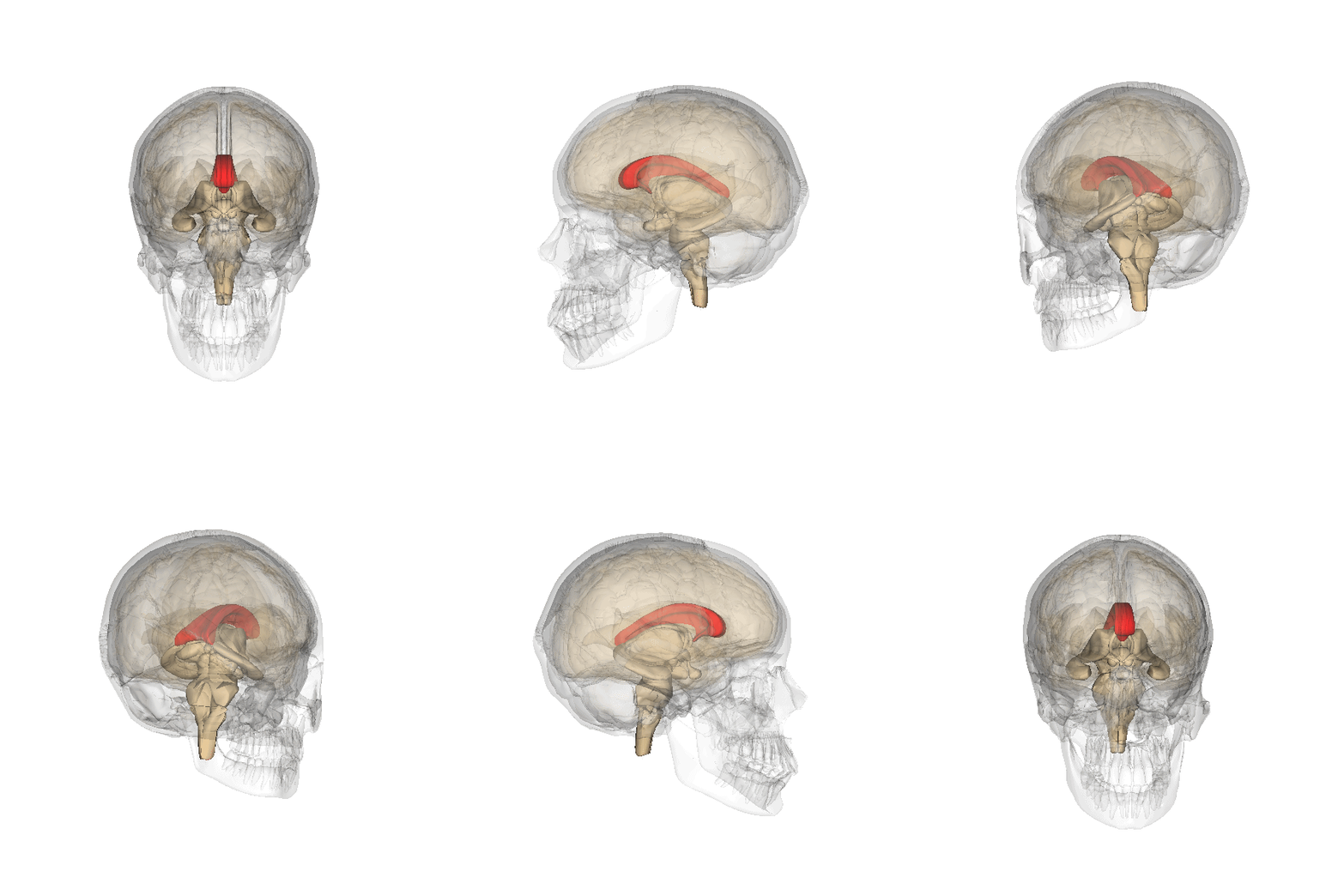

The role of the corpus callosum in the manifestation of split personalities, known clinically as Dissociative Identity Disorder (DID), is an area of considerable interest and ongoing research in the realms of neuroscience and psychology. The corpus callosum, being the largest white matter structure in the brain, plays a pivotal role in connecting the left and right cerebral hemispheres, thereby facilitating critical interhemispheric communication. This communication is integral to the coherent functioning of cognitive processes and behavior. In individuals with DID, alterations in this interhemispheric communication are hypothesized, which may contribute to the development of distinct and separate identities or personality states.
Neuroimaging studies, particularly those employing MRI (Magnetic Resonance Imaging), have indicated possible structural and functional variations in the corpus callosum in individuals diagnosed with DID. These variations might correlate with the unique and separate functioning of brain hemispheres observed in the disorder. However, these findings are not yet definitive and represent an area of ongoing investigation.
Theoretical models in neuroscience propose that if the corpus callosum does not effectively relay information between the hemispheres, this could lead to dissociation and compartmentalization of identities. Such models suggest that disrupted communication might result in separate streams of consciousness or identity states, each with limited access to the others’ memories and experiences. This theoretical perspective offers a possible explanation for the distinct identity states observed in DID.
However, the relationship between the corpus callosum and DID is subject to significant debate and challenges. DID is a multifaceted disorder, often arising from a combination of factors including severe trauma, making the isolation of a single contributing factor like the corpus callosum complex. Research in this area also contends with challenges such as small sample sizes, natural variability in brain structures among different individuals, and the inherent difficulty in establishing clear cause-and-effect relationships.
The future of research in this field lies in longitudinal studies and the application of more advanced neuroimaging techniques. Such research endeavors aim to provide a clearer understanding of how alterations in interhemispheric communication might contribute to DID. Unraveling the precise role of the corpus callosum in DID is crucial for a deeper understanding of the disorder and for the development of more effective treatment approaches. As of now, while there is some evidence to suggest a potential role for the corpus callosum in DID, the nature and extent of this relationship remain complex and not fully elucidated.



Leave a Reply