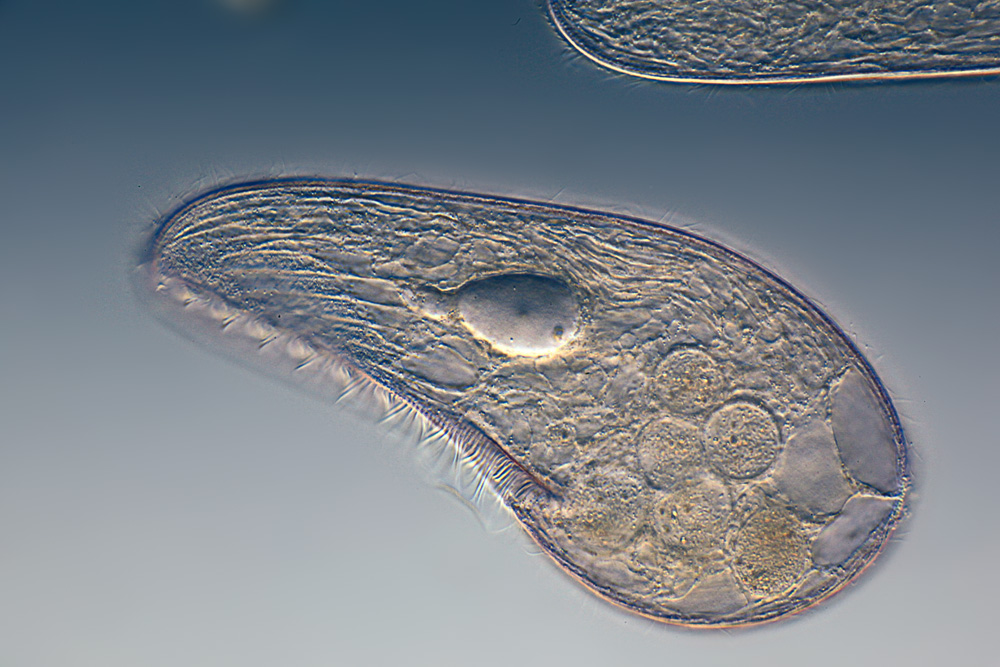

Blepharisma japonicum is a remarkable protozoan that stands out in the microscopic world due to its unique characteristics, setting it apart from other protozoa. This species is particularly notable for its distinctive pink or rose coloration, a rarity among protozoa. This color is attributed to the presence of the pigment blepharismin, which not only gives it its striking appearance but also serves a protective function against harmful ultraviolet light. Structurally, Blepharisma japonicum is a ciliate, covered with cilia that facilitate not just locomotion but also play a crucial role in feeding and environmental interaction.
In terms of size, Blepharisma japonicum is relatively large for a protozoan, typically measuring between 200 to 500 micrometers in length. Its elongated, pear-like shape is an evolutionary adaptation that aids in efficient movement through aquatic environments. One of the most interesting aspects of Blepharisma japonicum is its feeding habits. Unlike many protozoa that are strictly heterotrophic, it demonstrates mixotrophic tendencies, capable of ingesting algae and utilizing their photosynthetic capabilities in a process known as kleptoplasty. This rare dual feeding strategy indicates a complex evolutionary adaptation.
The reproduction mechanisms of Blepharisma japonicum also contribute to its uniqueness. It exhibits both asexual reproduction through binary fission and sexual reproduction via conjugation, a process involving the exchange of genetic material between two organisms. This reproductive flexibility allows for increased genetic diversity and adaptability to changing environmental conditions.
Behaviorally, Blepharisma japonicum displays unique traits, such as photophobic responses, where it rapidly changes direction in response to intense light, likely an adaptation linked to its light-sensitive pigment. From a biochemical perspective, Blepharisma japonicum is of interest due to its pigment, blepharismin, which has potential applications in photodynamic therapy for cancer treatment. Ecologically, as a relatively large protozoan, it plays a significant role in aquatic food webs, both as a predator and prey.
Blepharisma japonicum’s response to environmental stress is noteworthy. Its ability to withstand varying conditions and its role in its habitat underscore its importance in ecological studies and biological research, further highlighting its distinction from other protozoa.




Leave a Reply