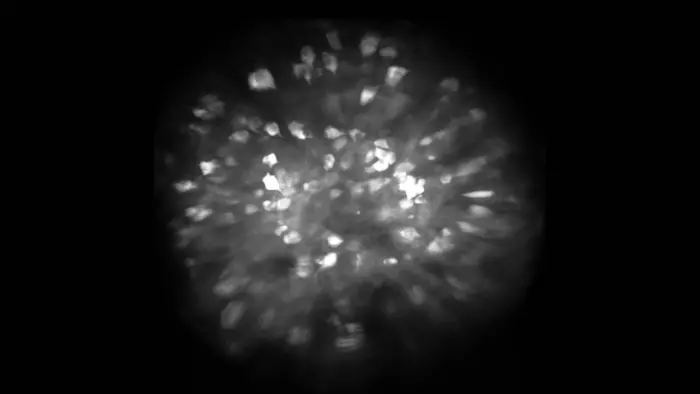
Order wine at a fancy restaurant, and the sommelier might describe its aroma as having notes of citrus, tropical fruit, or flowers. Yet, when you take a whiff, it might just smell like … wine. How can wine connoisseurs pick out such similar scents?
Cold Spring Harbor Laboratory (CSHL) Associate Professor Saket Navlakha and Salk Institute researcher Shyam Srinivasan may have the answer. They have found that certain neurons allow fruit flies and mice to tell apart distinct smells. The team also observed that with experience, another group of neurons helps the animals distinguish between very similar odors.
The study was inspired by research from former CSHL Assistant Professor Glenn Turner. Years ago, Turner noticed something odd. When exposed to the same scent, some fruit fly neurons fired consistently while others varied from trial to trial. At the time, many researchers dismissed these differences as a product of background noise. But Navlakha and Srinivasan wondered whether the variations might serve a purpose.

“There were two things we were interested in,” Navlakha says. “Where is this variability coming from? And is it good for anything?”
To address these questions, the team created a fruit fly smell model. The model showed that the variability came from a deeper circuit of the brain than previously thought. This suggested the variation was indeed meaningful.
Next, the team observed that some neurons respond differently to two very dissimilar odors, but the same to similar smells. The researchers called these neurons reliable cells. This small group of cells helps flies quickly distinguish between differing odors. Another much larger group of neurons responds unpredictably when exposed to similar smells. These neurons, which the researchers call unreliable cells, might help us learn to identify specific scents in a glass of wine, for example.
“The model we developed shows these unreliable cells are useful,” Srinivasan says. “But it requires many learning bouts to take advantage of them.”
Of course, this research isn’t just for wine drinkers. Srinivasan says the results might help explain how we learn to differentiate between similarities detected by other senses, and how we make decisions based on those sensory inputs. The findings could also lead to better machine-learning models. Unlike fruit fly and mouse neurons, computers generally respond the same to the same inputs.
“Maybe you don’t want a machine-learning model to represent the same input the same way every time,” Navlakha explains. “In more continual learning systems, variability could be useful.”
That means this research could someday help make AI more discerning and reliable.
IMAGE CREDIT: Navlakha lab/Cold Spring Harbor Laboratory
Sign up for the Daily Dose Newsletter and get the morning’s best science news from around the web delivered straight to your inbox? It’s easy like Sunday morning.

Leave a Reply