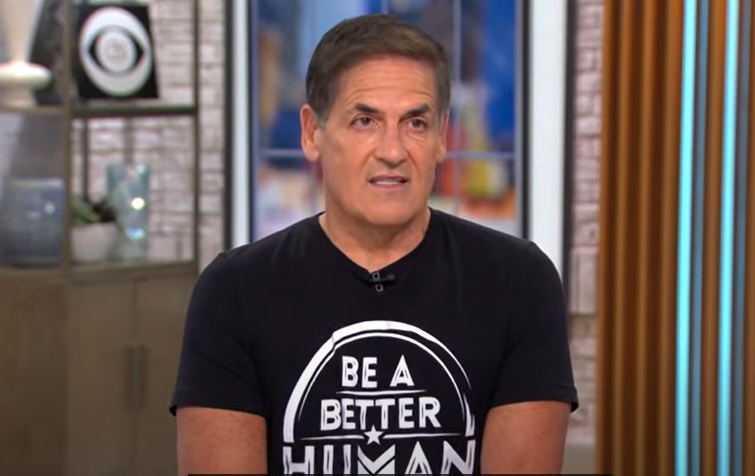
When billionaire Mark Cuban announced his attack on the pharmaceutical industry and its high-priced drugs in January 2021, it was met with cheers.
His new company — the Mark Cuban Cost Plus Drug Co., known as Cost Plus Drugs — has the “lowest prices on meds anywhere,” he said.
The serial entrepreneur and owner of the NBA’s Dallas Mavericks made the media rounds evangelizing, getting press via The Wall Street Journal, Time, “The Daily Show,” and many other outlets. He gave colorful quotes along the way, at one point declaring his goal is to “Just f— up the pharmaceutical industry so bad that they bleed.”
His new company, which currently offers over a thousand generic medications, has social media influencers singing his praises: Reality star Kim Kardashian both tweeted and Instagrammed kudos. Former basketballer and Twitter personality Rex Chapman said Cuban was “changing the game of prescription drug prices in America.”
Even a swinger’s forum on Reddit finds much to like about the company’s low prices for Viagra and other meds.
Yet beneath the hype lies a murky reality: In many cases, the price quotes that patients see on the website are higher than they’d get at their local pharmacy. It has to do with the segment Cuban is playing in — generic drugs — but also the layers of complexity peculiar to the American health system.
Right now, his company primarily sells generics, drugs that are no longer protected by patents that could ensure monopoly profits for big pharmaceutical companies. In most cases, it is the lowest-priced part of the pharma economy.
To examine a substantial slice of Cuban’s wares, KHN looked at all the medications and products offered on his site that start with the letter “A,” with each combination of strength, count, or quantity, and type of medication (e.g., capsule, tablet, or chewable gummies) available. It’s a sizable sample: As of early February, it amounted to 211 combinations.
KHN compared the prices for each variety of medication to the prices from other pharmacies for that same medication, as compiled by comparison-shopping discount site GoodRx. Focusing on the Washington, D.C., area, where KHN is based, the publication found lower prices in at least one pharmacy on GoodRx — which doesn’t include Cuban’s company in its comparisons — in 141 instances.
In the remaining 70 instances, Cuban’s operation had lower prices or was bested only by one-time offers. Where there were savings, they could be substantial. A Washingtonian taking aprepitant, an anti-nausea medication, could save hundreds of dollars using Cuban’s site.
The analysis was not comprehensive, as Cuban pointed out to KHN by email. In part, that’s because of the company’s pricing model: a 15% markup over manufacturers’ costs, plus $3 for labor per drug and $5 to ship each order.
Many generics are so cheap that the $5 shipping cost would swallow any small savings. Still, Cuban noted, bundling multiple drugs — all with one $5 shipping charge — might end up being cheaper overall.
Other regions of the country might have less favorable pricing. When presented with KHN’s analysis, Cuban thought cost comparisons might be better elsewhere. “Maybe in DC they were offering a Happy Hour special :),” he wrote, with attached screenshots comparing his site’s pricing of both 10 and 40 milligrams’ dosage of atorvastatin, a popular cholesterol drug, with the cost at a CVS in Dallas. (But searching in Dallas didn’t reveal better results: There was at least one online or brick-and-mortar option for each dosage and quantity with lower prices than Cuban’s company.)
So why are the prices not necessarily lower on Cuban’s site than elsewhere? It’s due to the peculiarities of the health care sector. While his Twitter bio declares he’s “dunking on the pharma industry,” what Cuban means is not what most people think he means.
“I view our competition not really so much as the actual generic pharmaceutical manufacturers themselves,” Cost Plus Drugs co-founder Dr. Alex Oshmyansky said in a podcast about pharmacies from March 2021.
Indeed, Oshmyansky said, they’re competing with pharmacy benefit managers and wholesalers.
Cuban’s bet so far, therefore, is less that drug manufacturers are inflating costs than that the companies in between — PBMs, wholesalers, and pharmacies — are.
And that bet is less likely to pay off for Cuban. Here’s why: PBMs negotiate costs over a basket of drugs for their clients — insurers and employers. They try to achieve a total drug-spend number per member of each plan. Optimizing the cost of each drug for each patient is not necessarily their goal.
So PBMs accept rebates from pharmaceutical companies and use other strategies that reduce spending (in theory) without necessarily reducing the price of individual drugs. Pharmacies, in turn, contract with multiple PBMs.
The price offered by PBMs can vary — day to day, sometimes. That’s why organizations like GoodRx (which aggregates prices across several outlets) and some independent pharmacies (which can acquire medications from wholesalers looking for higher volume) can opportunistically offer better prices on selected generics. It’s also why significantly lowering total drug spend is difficult.
Other large companies are trying other cost-lowering strategies. Amazon, for example, has launched a subscription service for members of its Prime club that provides for unlimited access to 53 generic medications. There’s substantial overlap between Amazon’s and Cuban’s list. If Amazon’s clout worries Cuban, he’s not saying so. “I won’t speak on the record about competitors,” he told KHN.
It’s common for large retailers — like Walmart — to offer low, fixed prices for many generics. There are also startups, like one called Renee, that offer subscription services for generics.
Cuban’s company occupies an unusual niche in the market. It’s not a pharmacy — it relies on Truepill, a digital mail-order company, for those services. It’s also not a PBM — though it has partnered with a few.
Cost Plus Drugs has started the process of building its own factory for generics, but right now critics wonder whether it’s really changing the supply chain. “They do not accomplish their mission of eliminating the middlemen as they do not yet manufacture anything and do not operate their own pharmacy, i.e., they are only middlemen,” concluded Kyle McCormick, who runs an independent pharmacy that also offers cash prices based on a similar markup over the cost of the drugs.
“It frustrates me that they claim to be innovating when all they are currently doing is doing things slightly better than incumbents,” he said.
Cuban often demonizes his competitors, GoodRx CEO Doug Hirsch said. “He’s a TV personality and he does a great job at bottling the anger that consumers have,” he said, before conceding he was glad Cuban was in the market.
Indeed, the media blitz is a critical ingredient in the company’s success so far. Cuban has said his company doesn’t spend money on marketing. Some credit the size of his Twitter following (nearly 9 million accounts) or his ability to earn news coverage. Cuban credits word-of-mouth.
Although patients’ comments on social media are generally favorable, there are exceptions — and revealing ones. Elisabeth Bitros, a Generation X nurse’s aide from New Jersey, said she switched antidepressants to Cost Plus Drugs after her brick-and-mortar pharmacy tried to charge her hundreds of dollars. But Cuban’s company wasn’t perfect either, she said. A glitch delayed the refills for her antidepressant around the 2022 holiday season.
“This medication, you start to withdraw if you miss a dose,” she said. “I don’t want to go through the holidays withdrawing!” But getting customer service from Cost Plus Drugs was challenging: It was hard to get hold of someone by phone. “It was all done electronically,” she said. After a few days of tag-teaming the service with her doctor, she went back to CVS.
Cuban declined to comment on Bitros’ case specifically on the record, but wrote: “We try to be very transparent about the fact that while we have operators that are available and we are always looking for exceptions that need personal attention and improving our support, we won’t be the fastest or highest touch source.”
Cuban concluded: “That’s just a reality that comes with being the low-cost provider.”
This article was originally published in Kaiser Health News and Fortune.
WORDS: Darius Tahir: DariusT@kff.org, @dariustahir
IMAGE CREDIT: Screenshot.



Leave a Reply