The scientific community does not exist in a vacuum. It is firmly planted somewhere in the vicinity of the center of society (even though it does so very quietly for the most part). As such, it is bound to reflect the good and bad elements. An article in Science highlights how scientists in Tropical countries, especially in Latin America and the Caribbean have called out their counterparts in the U.S. and U.K. for marginalizing their work. Per Science,
Two years ago, a group of ornithologists was outraged by the publication of a paper that highlighted how much scientists still don’t know about birds from Latin America and the Caribbean. Many criticized the authors—based at universities in the United States and the United Kingdom—for citing few studies by scientists from the region and from journals that don’t publish in English. Others said the paper, published in Ornithological Advances, perpetuated an elitist, exclusionary, “northern” approach that has overlooked the knowledge produced by Latin American experts and Indigenous people.

“It made me angry,” recalls bird ecologist Ernesto Ruelas Inzunza of the University of Veracruz in Xalapa, Mexico. “Deliberately or not,” he says, the article ignored “that today’s neotropical ornithology is nurtured by Latin American and Caribbean scientists.” He and others vowed to change that by smashing an array of barriers that they say have long disadvantaged ornithologists from neotropical nations and deprived the field of their contributions. Yesterday, their resolve bore fruit in two papers published in Ornithological Applications.

In one, 124 authors from the region examine numerous factors—including a shortage of funding, few Latin American ornithologists in leadership roles, and a bias against citing papers in Spanish and Portuguese—that they say have often marginalized the region’s researchers. In the other, a smaller group offers 14 recommendations for how the field’s major journals can revise their policies and practices to improve the flow of science from the region’s bird scientists.
It’s hard not to imagine papers in French, German, Japanese, Chinese and any other language also being overlooked. https://bit.ly/3JSRdxt
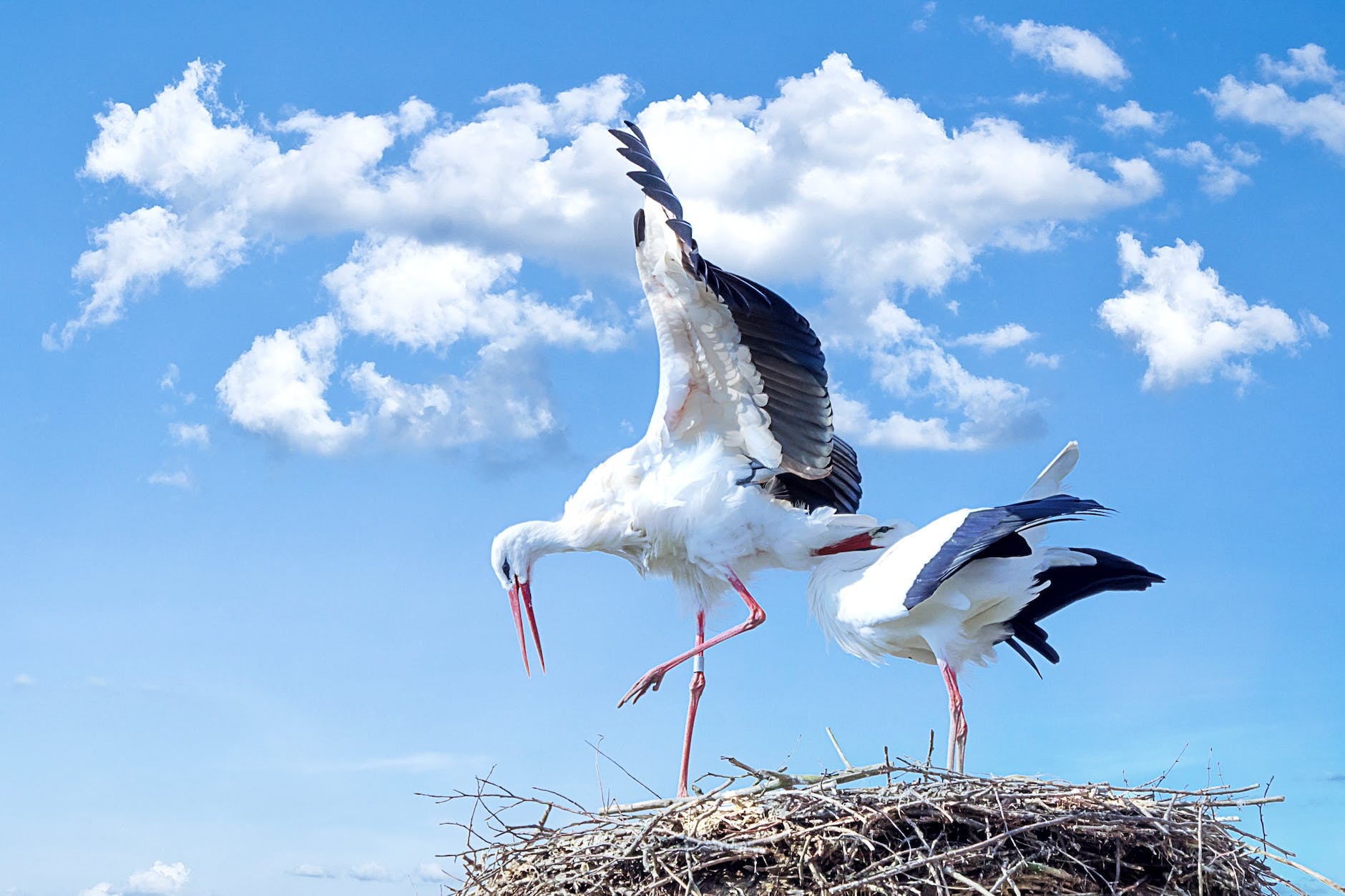
Climate change and changing landscapes are doing storks in Spain really dirty. Per the Associated Press,
The storks float and swoop in formation, circling over a landfill in the foothills of the Sierra de Guadarrama mountains north of Madrid. Then a garbage truck pulls up and disgorges its contents. One by one, they dive to the ground: breakfast is here.

Europe’s storks used to fly south to Africa’s Sahel region to spend the winter, stopping off in Spain along the way. But with higher temperatures driven by human-caused climate change and abundant food available at open-air waste disposal sites, most adult storks no longer make the long and exhausting journey.

At Madrid’s Colmenar Viejo landfill, around 100 trucks a day dump household waste into a crater that is then covered with sand by diggers. Hundreds of white storks have built nests up to six feet long on roofs and in the bell tower of the nearby church. There are even nests on streetlights.

“This is a stork paradise because they have grass, pastures and then the landfill, so they have it all here,” said Alejandro López García, who is studying Madrid’s stork population for his PhD at Madrid’s Complutense University.
I think we’d all agree storks deserve better. http://bit.ly/3jAzIHG
It’s that time again. Another paper destroying “consensus” about our human or non-human ancestors. This time, it’s about Neandertals. Per the Frontiers In blog,
Scientists studying archaeological remains at Gruta da Figueira Brava, Portugal, discovered that Neanderthals were harvesting shellfish to eat – including brown crabs, where they preferred larger specimens and cooked them in fires. Archeologists say this disproves the idea that eating marine foods gave early modern humans’ brains the competitive advantage.

In a cave just south of Lisbon, archeological deposits conceal a Paleolithic dinner menu. As well as stone tools and charcoal, the site of Gruta de Figueira Brava contains rich deposits of shells and bones with much to tell us about the Neanderthals that lived there – especially about their meals. A study published in Frontiers in Environmental Archaeology shows that 90,000 years ago, these Neanderthals were cooking and eating crabs.

“At the end of the Last Interglacial, Neanderthals regularly harvested large brown crabs,” said Dr Mariana Nabais of the Catalan Institute of Human Paleoecology and Social Evolution (IPHES-CERCA), lead author of the study. “They were taking them in pools of the nearby rocky coast, targeting adult animals with an average carapace width of 16cm. The animals were brought whole to the cave, where they were roasted on coals and then eaten.”
Let’s just write everything we know about Neandertals in pencil. It will make it easier to correct down the line, something that will inevitably happen. http://bit.ly/40GDJL1
Thanks for reading. Let’s be careful out there.





Leave a Reply