HAVE YOUR SAY.
Join us in The Bullpen, where the members of the Scientific Inquirer community get to shape the site’s editorial decision making. We’ll be discussing people and companies to profile on the site. On Wednesday, February 8 at 5:30pm EST, join us on Discord and let’s build the best Scientific Inquirer possible.
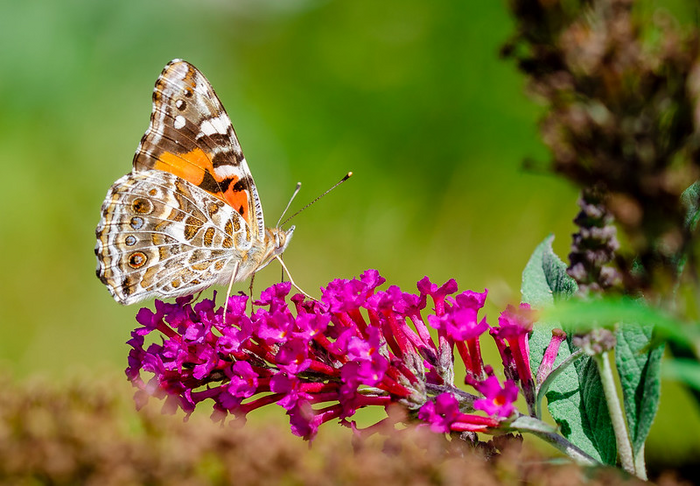
Insects play crucial roles in almost every ecosystem—they pollinate more than 80% of plants and are a major source of food for thousands of vertebrate species—but insect populations are collapsing around the globe, and they continue to be overlooked by conservation efforts. Protected areas can safeguard threatened species but only if these threatened species actually live within the areas we protect. A new study publishing on February 1 in the journal One Earth found that 76% of insect species are not adequately covered by protected areas.
“It’s high time we considered insects in conservation assessments,” says lead author Shawan Chowdhury (@shawan_c), a conservation biologist at the German Centre for Integrative Biodiversity Research (iDiv). “Countries must include insects in protected area planning and when managing the existing ones.”
Although protected areas are known to actively shield many vertebrate species from key anthropogenic threats, the extent to which this is true for insects remains largely unknown. To determine what proportion of insect species are protected by protected areas, Chowdhury and colleagues overlaid species distribution data from the Global Biodiversity Information Facility with global maps of protected areas.

They found that 76% of global insect species are inadequately represented in protected areas, including several critically endangered insects such as the dinosaur ant, crimson Hawaiian damselfly, and harnessed tiger moth. Furthermore, the global distributions of 1,876 species from 225 families do not overlap with protected areas at all.
The authors were surprised by the degree of underrepresentation. “A lot of insect data come from protected areas, so we thought that the proportion of species covered by protected areas would be higher,” says Chowdhury. “The shortfall is also much more severe than a similar analysis that was conducted on vertebrate species, which found that 57% of 25,380 vertebrate species were inadequately covered.”
Insects in some regions were better protected than others. Relatively high proportions of insect species achieved adequate protection in Amazonia, Saharo-Arabia, Western Australia, the Neotropics, the Afrotropics, and Central Europe, but protection fell short for many species in North America, Eastern Europe, South and Southeast Asia, and Australasia.
Insects have been historically overlooked by conservation programs, and this research was limited by the paucity of data on insect distributions. “Of the estimated 5.5 million insect species globally, we could only model the distributions of 89,151 species,” says Chowdhury. “Over 80% of all animals are insects, yet insects comprise only 8% of the assessed species on the IUCN Red List of Threatened Species.”
Even if insects live within protected areas, they may not be reaping the benefits of this “protection,” says Chowdhury. “Many insect species are declining within protected areas because of threats such as rapid environmental change, loss of corridors, and roads inside protected areas.”
“A number of steps can be taken to efficiently conserve insects, and participation from all sorts of people is essential,” says Chowdhury. “Citizen science could have an enormous impact in filling the data gap on insect distributions. Scientists and policy makers must now step up and help with this challenge of identifying sites of importance for insect conservation.”
IMAGE CREDIT: Shawan Chowdhury




Leave a Reply