HAVE YOUR SAY.
Join us in The Bullpen, where the members of the Scientific Inquirer community get to shape the site’s editorial decision making. We’ll be discussing people and companies to profile on the site. On Wednesday, October 12 at 5:30pm EST, join us on Discord and let’s build the best Scientific Inquirer possible.
WORDS, WORDS, WORDS.
World Health Organization Director Tedros Adhanom Ghebreyesus has penned an article in The Guardian where he reminds the world that the effects of long Covid are still emerging and that we are still learning about its ramifications. What we do know is that it is damaging, long term. Per the article,
Mostly data is only available from high-income countries, which means that we don’t currently have a clear picture on how many people are actually suffering. Current estimates suggest that tens of millions, and perhaps more, have contracted long Covid, and about 15% of those diagnosed with the condition have experienced symptoms for at least 12 months.

It can affect anyone, but according to the latest data from WHO and the Institute for Health Metrics and Evaluation (IHME) women are twice as likely as men to have contracted the condition and those hospitalised with severe Covid are more likely to develop the condition. From all the interactions WHO has had with those living with the condition, carers, civil society groups and experts, it’s very clear that the condition is devastating people’s lives and livelihoods.

It’s added a significant burden to health workers and the health system overall, which is still dealing with additional waves of infection and the knock-on backlog of essential medical services that have been severely disrupted.
I remember the early days of the pandemic and how unflattering it was to the man-called Tedros. https://bit.ly/3etoBxC
TRAGEDY ON THE BEACH.
There’s been a terrible incident in New Zealand where hundreds of whales became beached and subsequently died. The images are horrifying. So sad. Per the Associated Press,
Some 477 pilot whales have died after stranding themselves on two remote New Zealand beaches over recent days, officials say.

None of the stranded whales could be refloated and all either died naturally or were euthanized in a “heartbreaking” loss, said Daren Grover, the general manager of Project Jonah, a nonprofit group which helps rescue whales.

The whales beached themselves on the Chatham Islands, which are home to about 600 people and located about 800 kilometers (500 miles) east of New Zealand’s main islands.

The Department of Conservation said 232 whales stranded themselves Friday at Tupuangi Beach and another 245 at Waihere Bay on Monday.

The deaths come two weeks after about 200 pilot whales died in Australia after stranding themselves on a remote Tasmanian beach.
What is prompting these whales to strand themselves? https://bit.ly/3CuCLXd
NEW BLOOD GROUP.
A new blood group was discovered, pretty much by accident. Wired recounts the serendipitous series of events that led to the discovery,
The unborn baby was in trouble. Its mother’s doctors, at a UK hospital, knew there was something wrong with the fetus’s blood, so they decided to perform an emergency C-section many weeks before the baby was due. But despite this, and subsequent blood transfusions, the baby suffered a brain hemorrhage with devastating consequences. It sadly passed away.

It wasn’t clear why the bleeding had happened. But there was a clue in the mother’s blood, where doctors had noticed some strange antibodies. Some time later, as the medics tried to find out more about them, a sample of the mother’s blood arrived at a lab in Bristol run by researchers who study blood groups.

They made a startling discovery: The woman’s blood was of an ultrarare type, which may have made her baby’s blood incompatible with her own. It’s possible that this prompted her immune system to produce antibodies against her baby’s blood—antibodies that then crossed the placenta and harmed her child, ultimately leading to its loss. It may seem implausible that such a thing could happen, but many decades ago, before doctors had a better understanding of blood groups, it was much more common.
Blood types are one of those basic concepts that you learn about in elementary school biology. It’s amazing that something so seemingly settled is still ripe for groundbreaking discoveries. Gotta love science. You never know what to expect. https://bit.ly/3TixhFR
FIXING WHAT’S BROKE.
The scientific community appears to be coming around to a reality anyone who has tried to eat healthy has known for decades. The literature is wildly contradictory. Now, they want to fix things. Per Nature,
Now, a new approach could help health policymakers to better evaluate the quality of studies assessing potential health risks. A team at the Institute for Health Metrics and Evaluation (IHME) at the University of Washington in Seattle has created a star-based metric that rates the quality of the evidence for a link between a given behaviour — such as eating red meat or smoking — and a particular health outcome2. A five-star score means that the link is clearly established; one star means that either there’s no association between the two factors or that the evidence is too weak to draw a firm conclusion.

What the researchers call ‘burden of proof’ analysis does not, of itself, clear up vexing issues such as the risks of red meat or the benefits of vegetables. But as a judgement on the quality of available research, it can help to flag, to research funders, areas in which better evidence is needed for firmer conclusions.
Not to be pessimists, but we aren’t going to hold our breaths for any consistency. Eggs or no eggs? Who cares? Do what you wanna do. https://go.nature.com/3yyoQ10
ARMAGEDDON NO MORE.
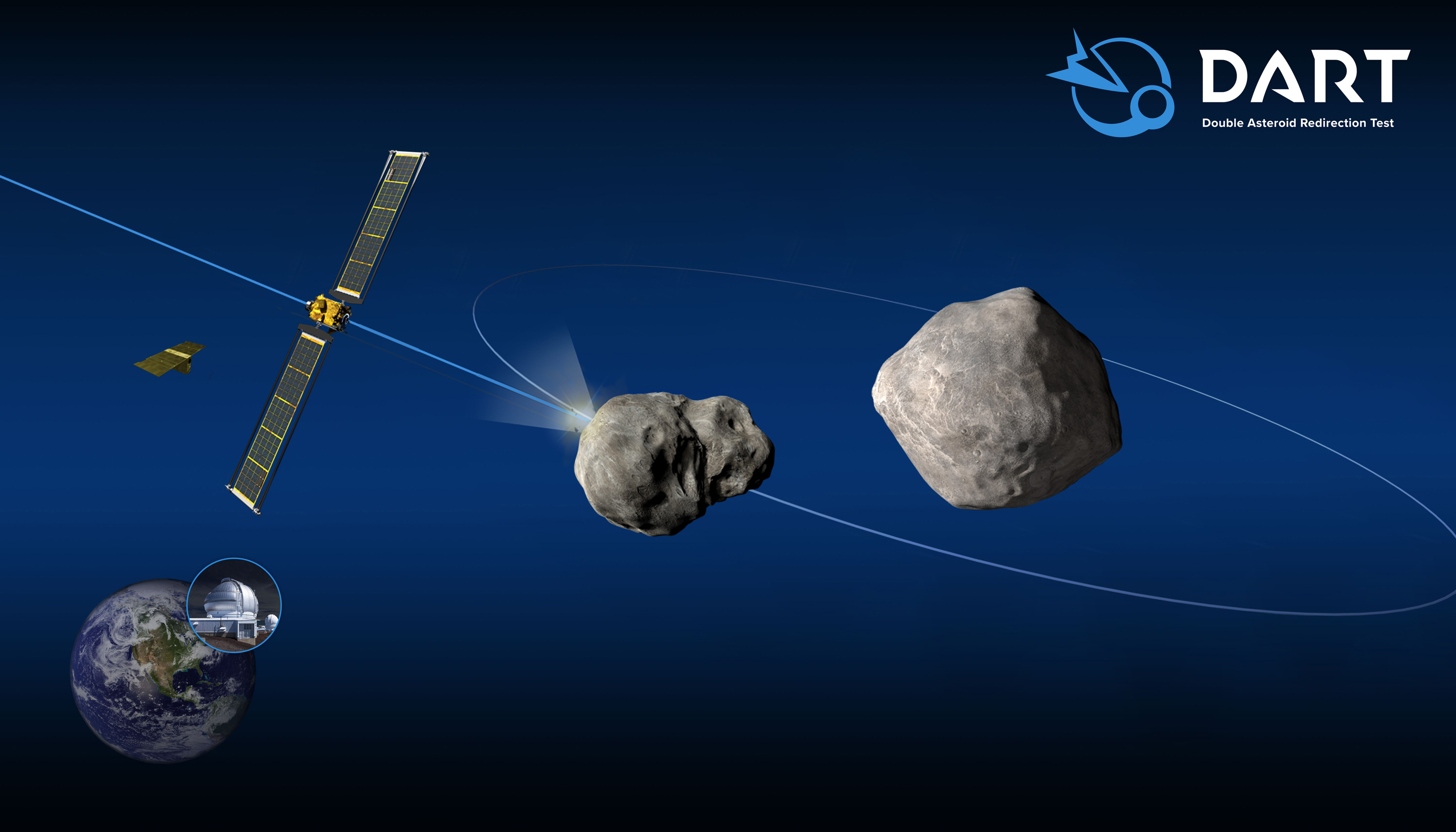
NASA decided they wanted to do a dry-run for saving the world from impending doom, Hollywood-style. Specifically, they wanted to see if they could “nudge” an asteroid slightly off course, just in case one of them suckers is headed straight to Earth. How did it go? Per Science,
Mission accomplished.

Two weeks ago, NASA carried out a mock trial of a planetary defense mission, smashing a cow-size spacecraft into Dimorphos, the 160-meter-wide moon of a larger asteroid. Today, the agency confirmed that the mission was a success: The impact of the Double Asteroid Redirection Test (DART) spacecraft nudged the moon closer to its partner, Didymos, shortening its nearly 12-hour orbital period by 32 minutes.

The degree of deflection was far greater than anticipated; NASA said before impact that an orbital reduction of at least 73 seconds would be considered a success, most astronomers predicted a shortening closer to 10 minutes. DART’s unexpectedly strong kick, which came as a pleasant surprise, is likely thanks to the fact that Dimorphos appears to be a rubble pile rather than solid rock. When DART crashed into it, loose debris rocketed away from the impact site, thrusting the moon forward.

 “We’re absolutely thrilled,” says Cristina Thomas, a planetary scientist at Northern Arizona University who led the observation team for the mission. “This really shows that kinetic impact is a viable option for planetary defense.
Cue Aerosmith… https://bit.ly/3Mr7VU3
Thanks for reading. Let’s be careful out there.
IMAGE CREDIT: NASA.






Leave a Reply to Ayi AriquaterCancel reply