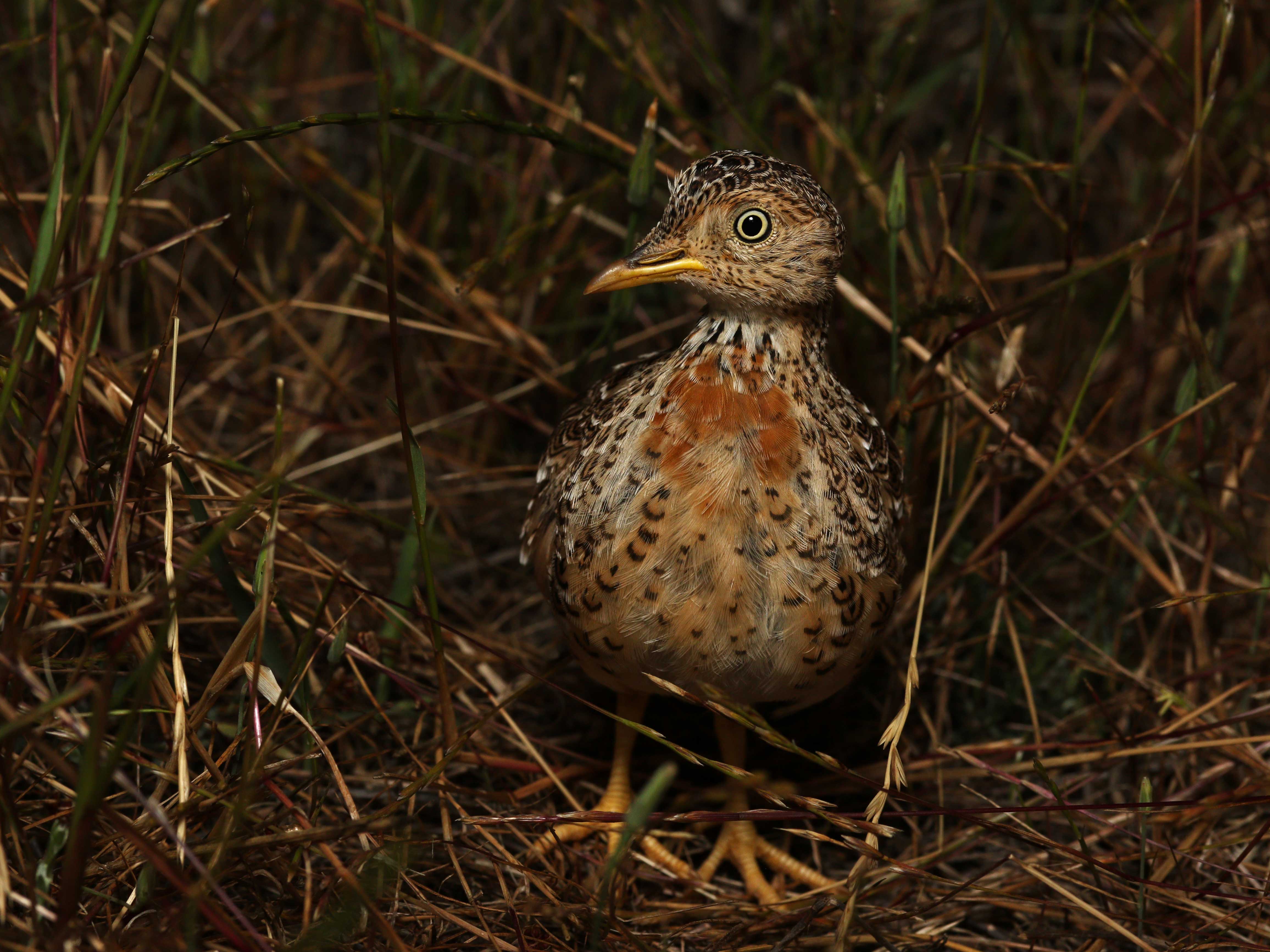
La Trobe University led research has found a major breeding event has triggered a population rebound for one of the world’s most unique and threatened birds.
A recent survey in northern Victoria uncovered a record number of Plains-wanderers – a small, quail-like bird that lives only in eastern Australia grasslands, and represents an ancient lineage of birds that evolved in Gondwana more than 100 million years ago.
The bird is so critically endangered and taxonomically unique it is ranked the number one priority for conservation action among birds of the world by the Zoological Society of London.
HAVE YOUR SAY.
Join us in The Bullpen, where the members of the Scientific Inquirer community get to shape the site’s editorial decision making. We’ll be discussing people and companies to profile on the site. On Wednesday, July 20 at 5:30pm EST, join us on Discord and let’s build the best Scientific Inquirer possible.
La Trobe University PhD student, Dan Nugent, said the team found more Plains-wanderers during the recent survey than since monitoring began back in 2010.
“We detected 60 adults and 41 chicks. This is more than double the previous best result in 2018 when 30 adults and 17 chicks were detected,” Mr Nugent said.
“A further encouraging sign was that 85 per cent of monitoring sites supported Plains-wanderers – the highest percentage of sites since surveys began 12 years ago.”
The survey was undertaken by La Trobe University in partnership with North Central Catchment Management Authority (CMA), as part of a report for Department of Environment Land and Water and Planning (DELWP).
Since 2010, ecologists have monitored Plains-wanderer numbers in native grasslands across private and public land on the Northern Plains of Victoria.
Project Manager at North Central CMA, Laura Chant said, as well as improvement in technology and survey methods over the years, the record numbers are likely the result of both human and non-human intervention.
“The La Nina climate cycle facilitated a wide-spread and prolonged breeding event, which is likely to have boosted their numbers,” Ms Chant said.
“Also, it’s highly likely the habitat management and protection measures we, and several partner organisations, have taken over many years to protect this incredible bird are proving to be highly effective – including conservation covenants and strategic grazing of conservation reserves.”
Natural Environment Program Officer at DELWP, Dr Aaron Grinter, said monitoring the elusive bird is a challenge.
“Plains-wanderers are highly cryptic; they are almost never seen during the day when most active because of their excellent camouflage and wariness of predators, making detectability a major challenge for researchers,” said Dr Grinter.
Mr Nugent said although the survey results are welcomed by conservationists, there remains significant concerns for the future of Plains-wanderers.
“In Victoria, habitat loss driven by conversion of native grasslands to croplands is a major threat. Today, there is estimated to be less than four per cent of the pre-European extent of native grasslands left on the Northern Plains,” Mr Nugent said.
“With so little habitat remaining, the population will continue to be vulnerable; fox predation may also be a threatening process but remains a knowledge gap.”
IMAGE CREDIT: Owen Lishmund/La Trobe University



Leave a Reply