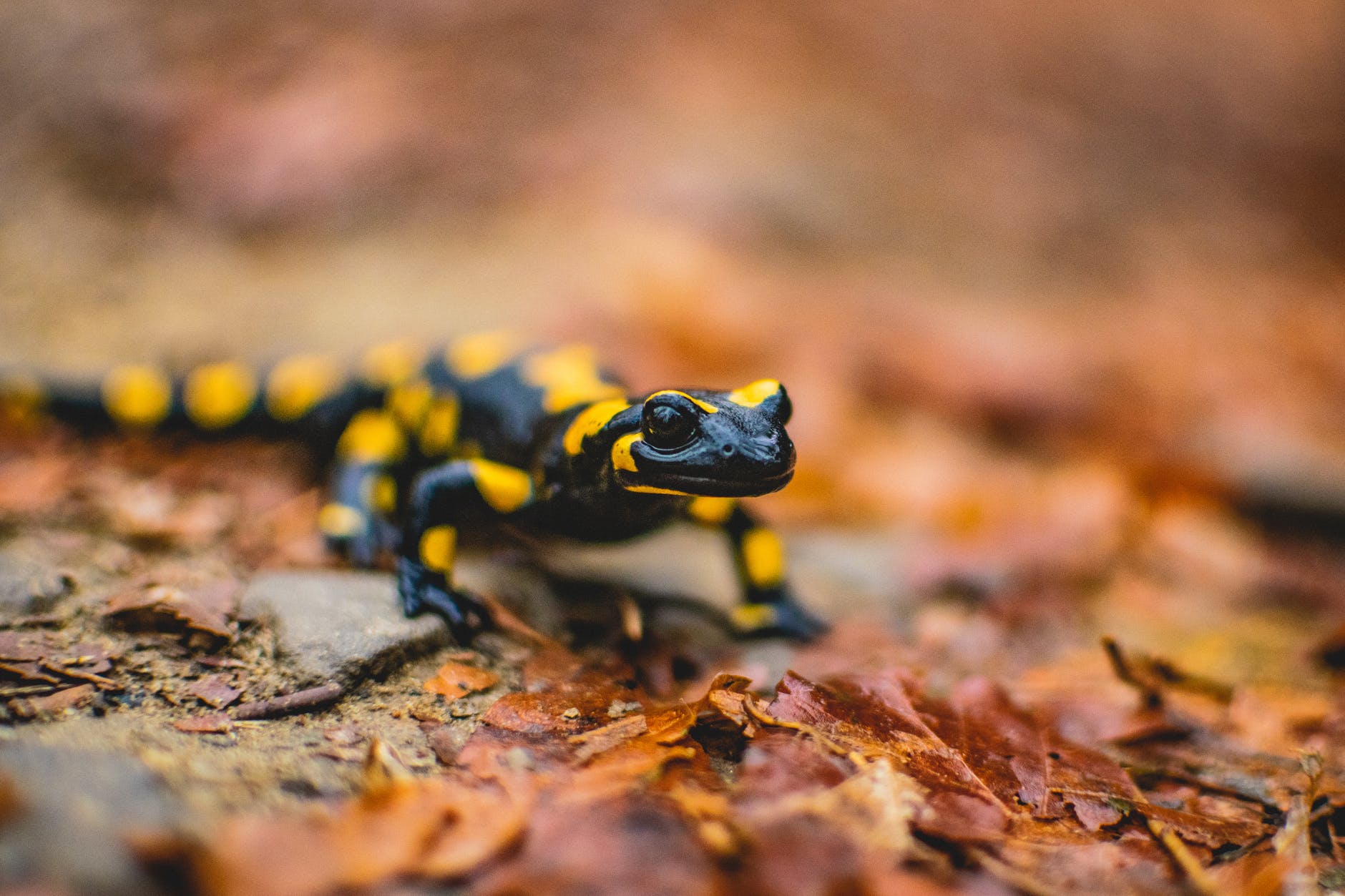
A new project from two NAU scientists aims to predict the future—specifically, the future of different amphibian species in the face of an unpredictable environment.

Principal investigator Joseph Mihaljevic, an assistant professor in the School of Informatics, Computing, and Cyber Systems who studies the ecology of infectious diseases, and co-PI Jason Ladner, assistant professor in the Pathogen and Microbiome Institute who studies genomic epidemiology, received an $844,000 grant from the National Science Foundation to study ectotherms—a type of cold-blooded organism that includes amphibians, fish, reptiles and insects. Their project will create better, more predictive models to help scientists understand how climate change and infectious diseases will likely interact in the future to impact the health of wildlife species and predict how climate and disease affect these species, including those at risk of extinction.
Ectotherms play a variety of diverse roles in the ecosystem; amphibians eat many insects that are considered pests, and they are sources of food for snakes, fish, birds and other animals. Because they have life stages in the water and on land, they are a significant part of the food web for multiple ecosystems.
“Our ultimate goal is to better understand and better predict how climate change interacts with infectious diseases to affect whether some species might be at a higher or lower risk of extinction, particularly for species that are ectotherms,” Mihaljevic said. “For these types of species, whose body temperature is regulated by the environment, the climate determines how well they can cope with infectious disease, and the climate also impacts how well these species survive and reproduce in their habitats. We need better predictive models of when climate and disease are expected to have the largest combined impacts on these species in the future. This is important for conserving biodiversity, as well as for agriculture and aquaculture.”
The research will focus on ranaviruses, a naturally occurring group of viruses that infects amphibians, and their effects on the tiger salamander population. Mihaljevic called it the “Ebola virus of the amphibian world;” it causes systemic infection and organ failure among larval salamanders, but adults are typically able to produce an effective immune response. Tiger salamanders can live for a decade or more, so even if a virus outbreak decimates one set of offspring, the animals have many years of reproduction left. Historically, this has meant the overall population of salamanders has been fairly stable.
That’s good news for the tiger salamander, but not every amphibian lives that long. Many species don’t have as many opportunities for reproduction, which means their populations are at much greater risk from this and other diseases—diseases that are evolving in unpredictable ways as the climate changes.
The researchers will survey natural populations of larval salamanders in water bodies in Arizona. They test for the virus by swabbing the skin of larvae and adults; the virus is shed from the skin back into the water, so they can detect the virus molecularly on the swabs. They also will monitor when adults breed and how many eggs they produce and can relate these patterns to precipitation, temperature patterns and other climate indicators.
Using lab experiments, they will study how water temperature affects how the virus transmits and build that knowledge into mathematical models, which explain how the climate influences salamander breeding and the severity of virus outbreaks. The next step is to look at long-term effects on population sizes, simulating what climate will look like in 20, 30 or 50 years and attempt to predict the likelihood that salamander populations will decline over time. What they learn from the salamanders will help create better models that can be applied to predict whether other amphibian species are at a higher or lower risk of extinction in the future.
It’s a critical question to answer when we know the threat of climate change is real but we don’t know the specific forms that threat will take.
“Emerging infectious diseases are a serious concern for global biodiversity, especially due to the movement of animals and pathogens through anthropogenic activity, and future climate change has the potential to exacerbate the impacts of infectious diseases, especially for exothermic species that are not able to self-regulate their internal temperature,” Ladner said. “This work is important because it will allow us to link seasonal disease dynamics with temperature variability to understand how the impacts of infectious disease might be affected by climate change.”
As part of the project, the team also will sequence up to 50 genomes of the Ambystoma tigrinum virus (a type of ranavirus) isolated from various wildlife species, which will allow them to explore basic questions about how this pathogen survives and circulates throughout the Southwest.
Mihaljevic and Ladner also are partnering with Greg Dwyer at the University of Chicago and scientists from Arizona Game and Fish. Several undergraduate students and a doctoral student will participate in the research, which builds on work from master’s students Kelsey Banister and Kathryn Cooney, alumni Diego Olivo and Monica Long, and undergraduate students Braden Spencer and Zane Ondovcik. Olivo and Spencer’s collaborative project was funded by Urdea, Ondovcik’s current project is funded by the Hooper Undergraduate Research Award. It also builds on efforts that were funded by a Heritage Grant from Arizona Game & Fish and TRIF.


Leave a Reply