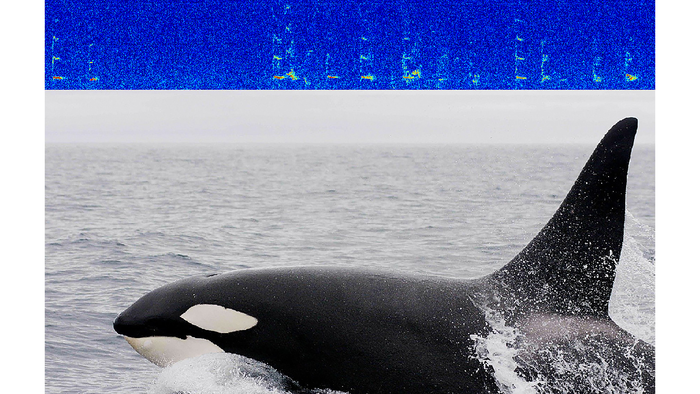
SEATTLE, December 2, 2021 — Killer whales are intelligent, adaptive predators, often teaming up to take down larger prey. Continuous reduction in sea ice in the Arctic Ocean is opening areas to increased killer whale dwelling and predation, potentially creating an ecological imbalance.

During the 181st Meeting of the Acoustical Society of America, which will be held Nov. 29-Dec. 3, Brynn Kimber, from the University of Washington, will discuss how killer whales have spent more time than previously recorded in the Arctic, following the decrease in sea ice. The talk, “Tracking killer whale movements in the Alaskan Artic relative to a loss of sea ice,” will take place Thursday, Dec. 2, at 5:35 p.m. Eastern U.S. at the Hyatt Regency Seattle.
Killer whales will often travel to different areas to target varieties of prey. In a study including eight years of passive acoustic data, Kimber and their team monitored killer whale movements using acoustic tools, finding killer whales are spending more time than previously recorded in the Arctic Ocean, despite risks of ice entrapment there. Their readings indicate this change is directly following the decrease in sea ice in the area.
“It’s not necessarily that killer whales haven’t been reported in these areas before, but that they appear to be remaining in the area for longer periods of time,” said Kimber. “This is likely in response to a longer open water season.”
The reduction in sea ice may have opened new hunting opportunities for killer whales if certain species of prey are unable to use the ice to avoid the highly adaptive predator. For example, the endangered bowhead whale is vulnerable to predation by killer whales, likely to increase due to longer open water seasons.
“Although there is high spatial and interannual variability, the September Arctic sea ice minimum is declining at an average rate of 13% per decade, when compared to values from 1981 to 2010,” said Kimber. “Killer whales are being observed in the Chukchi Sea (in the Arctic Ocean) in months that were historically ice covered and more consistently throughout the summer.”
IMAGE CREDIT: Brynn Kimber



Leave a Reply