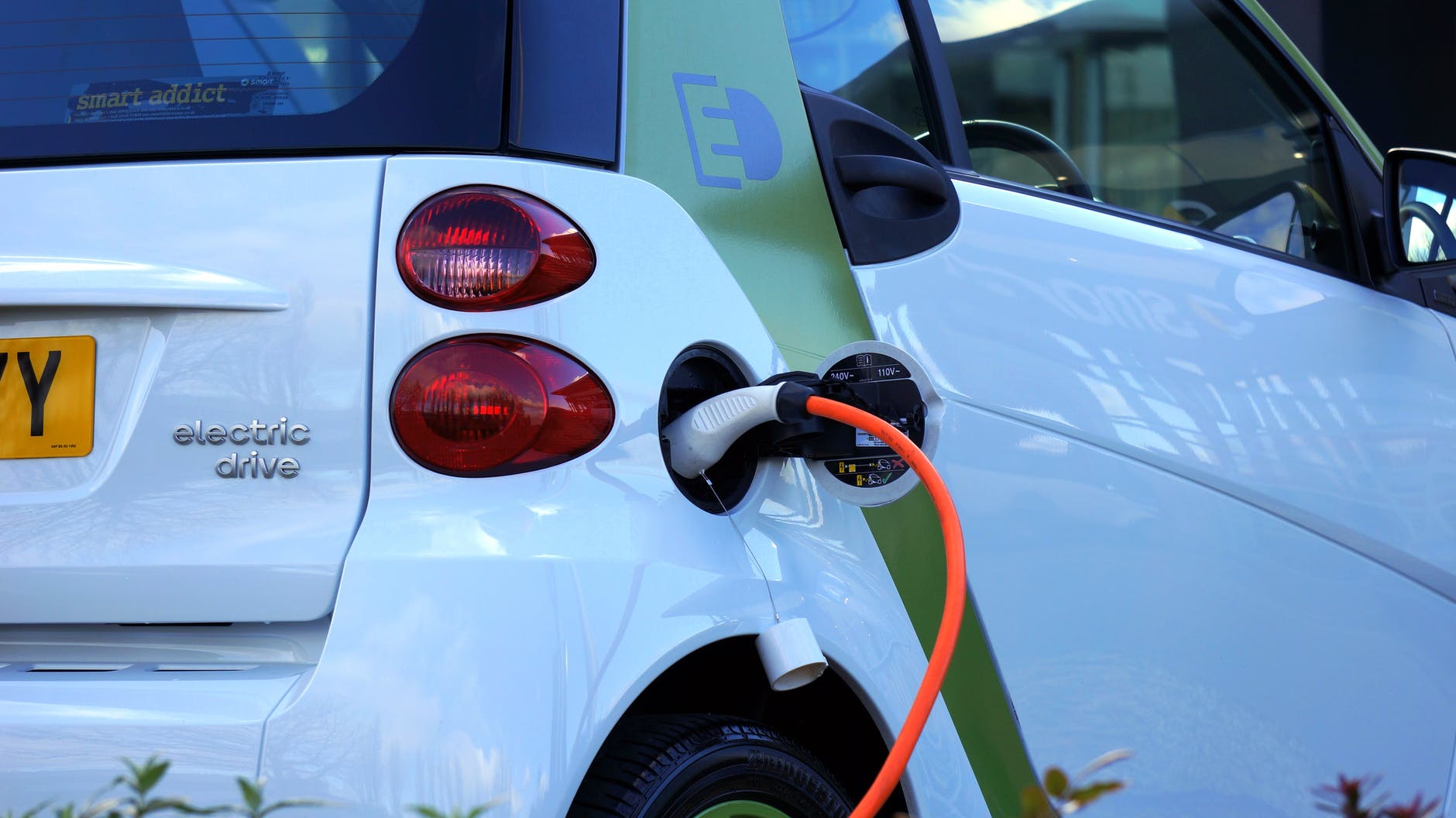
Widespread adoption of electric vehicles (EVs) with robust power plant emission controls and power sector decarbonization policies will yield net air quality and health benefits in every state in India in 2040, a new study finds. This is the case even under the conservative assumption that the additional power demand from EVs is met entirely by fossil fuel power plants.

The study was carried out by researchers from the International Council on Clean Transportation (ICCT) and the Indian Institute of Technology Kanpur (IIT Kanpur). It estimates vehicle and power sector emissions, air quality, premature mortality, and avoided health damages in India under an ambitious EV sales scenario between 2020 and 2040, with and without robust power sector emission control and decarbonization strategies.
Findings for 2030 and 2040 suggest that stricter emission control strategies tend to be more effective at avoiding premature deaths than ambitious decarbonization strategies. Importantly, though, the benefits are largely additive: Combining the two strategies maximizes the benefits of EVs and brings improved air quality in every Indian state in 2040 compared to the baseline in 2040. This results in as many as 70,380 avoided premature deaths, equivalent to avoided health costs of up to $80.7 billion (2020 U.S. dollars) in 2040 alone.
“Indisputably, there are benefits from decarbonizing the electricity grid and improving power plant emission controls, and we see those policies are valuable irrespective of the level of vehicle electrification,” said ICCT India Lead Anup Bandivadekar.
The study is illustrative for policymakers in India and other regions who are considering promoting large-scale vehicle electrification while electricity grids remain largely powered by coal. Even assuming no new policies to decarbonize the power sector or tighten power plant emission controls, the analysis finds that ambitious EV sales lead to net air quality and health benefits in India, including 13,300 and 16,700 annual avoided premature deaths in 2030 and 2040, respectively.
“The idea that electrification without cleaning up the grid would backfire in terms of air quality is largely untrue,” said Arijit Sen, an associate researcher at ICCT and the study’s lead author. “These findings highlight the societal benefits of EVs, and they can be maximized not by delaying electrification, but when policies for power sector emission control and decarbonization are implemented in parallel with vehicle electrification strategies.”
The study takes the national and gridded emissions output data from various vehicle and power sector scenarios to generate national and state level air quality values using the WRF-Chem model, particularly focused on fine particulate matter (PM2.5) concentration. In 2030 and 2040, there are PM2.5 concentration decreases for all scenarios, which indicates improved air quality nationally. At the state level, barring a slight worsening in air quality in Ladakh that is within model error tolerance, air quality improves or is steady for all states in all 2030 and 2040 scenarios compared to baseline of the same year.
“EVs are the future, but we must be careful about the transition phase and source of energy for charging the EVs. Our simulations on air quality show stringent emission controls at power plants and their decarbonization in a phased manner is the way forward,” said Mukesh Sharma, professor at IIT Kanpur and co-author of the study.
IMAGE CREDIT: International Council on Clean Transportation




Leave a Reply