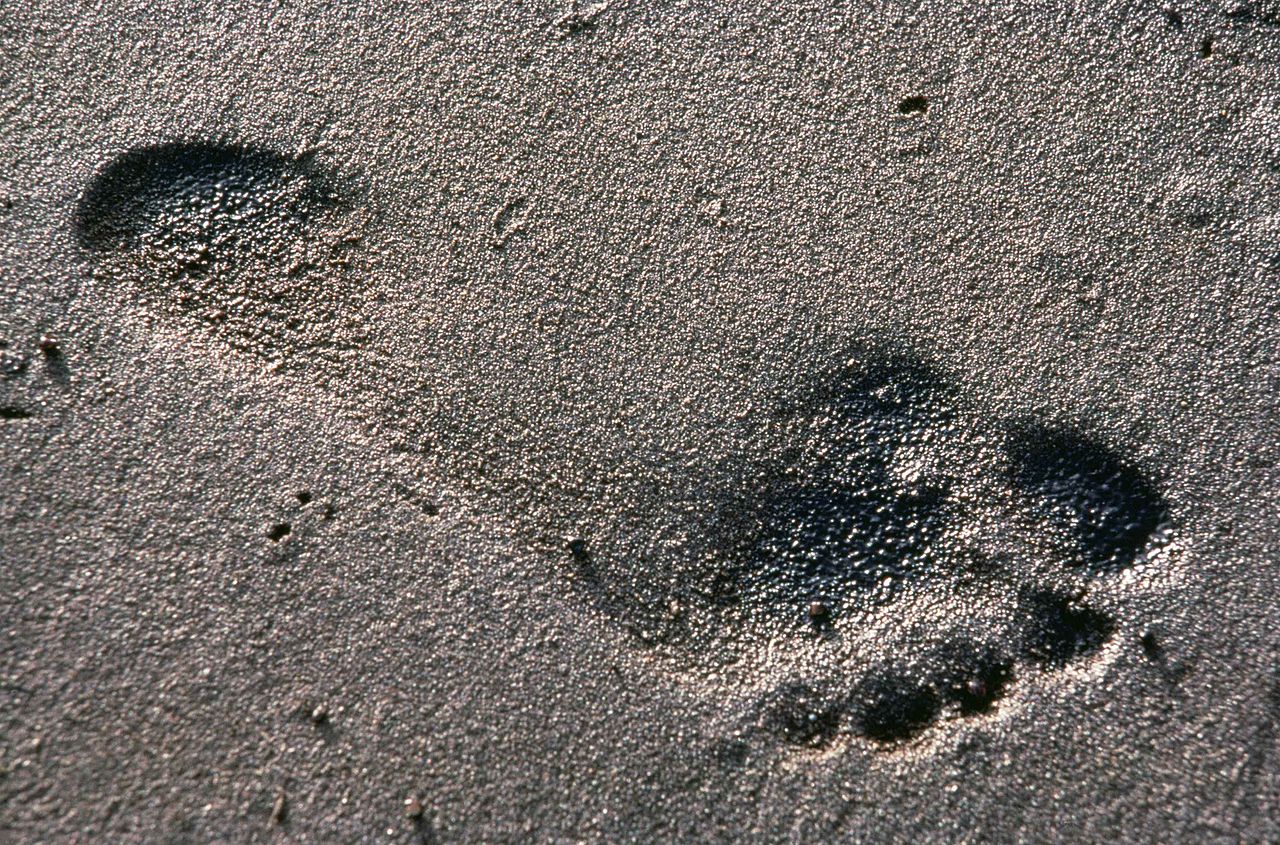
Newly discovered fossil human footprints embedded in an ancient lakebed show that humans inhabited North America during the Last Glacial Maximum (LGM), occupying the region of what is now White Sands National Park in New Mexico, United States, between 23 and 21 thousand years ago.

Not only do the findings provide definitive evidence on the early antiquity of the colonization of the New World, they also indicate that humans were present in southern North America before the glacial advances of the LGM prevented human migration from Asia. Despite nearly a century of research, the details concerning the migration of the first humans into the Americas and their impact on the Pleistocene landscape remain poorly understood, and the earliest archaeological evidence for the settlement of the region is often highly controversial.
Current estimates for the timing of these first occupants range from ~13,000 years ago to more than 20,000 years ago. However, in most cases, the timeline of human expansion into North America is largely constrained by the viability of the currently recognized migration routes from Asia – an inland ice-free corridor through western Canada and/or a Pacific coastal route – which would have likely been closed or difficult to traverse during the LGM. Matthew Bennett and colleagues report the discovery of a sequence of in situ human footprints on surfaces dating to between ~23,000 and 21,000 years ago and reveal nearly 2,000 years of human occupation in North America during the height of the LGM.
Unlike cultural artifacts or other evidence of human activity, which can have uncertain provenance, footprints have a primary depositional context, fixed on the imprinted surface, and represent a discrete moment in time. According to Bennett et al., further analyses of the tracks suggest that most were made by teenagers and children; larger adult footprints are much less frequent.
IMAGE CREDIT: (ENTER NAMES)


Leave a Reply