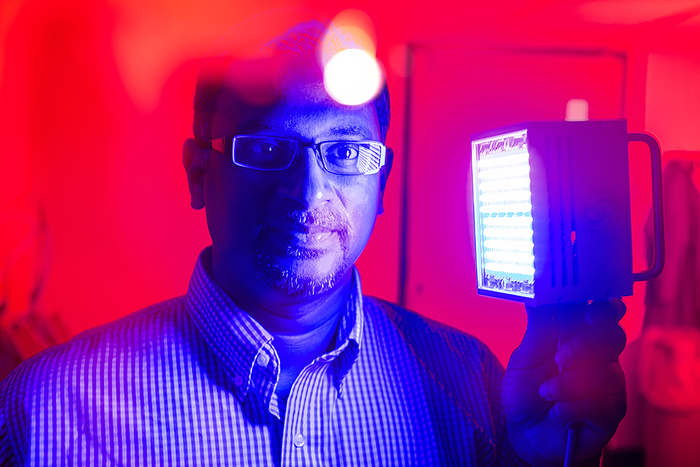
BUFFALO, N.Y. – Light therapy may accelerate the healing of burns, according to a University at Buffalo-led study.
The research, published in Scientific Reports, found that photobiomodulation therapy – a form of low-dose light therapy capable of relieving pain and promoting healing and tissue regeneration – sped up recovery from burns and reduced inflammation in mice by activating endogenous TGF‐beta 1, a protein that controls cell growth and division.
The findings may impact therapeutic treatments for burn injuries, which affect more than 6 million people worldwide each year, says lead investigator Praveen Arany, DDS, PhD, assistant professor of oral biology in the UB School of Dental Medicine.
“Photobiomodulation therapy has been effectively used in supportive cancer care, age-related macular degeneration and Alzheimer’s disease,” says Arany. “A common feature among these ailments is the central role of inflammation. This work provides evidence for the ability of photobiomodulation-activated TGF-beta 1 in mitigating the inflammation, while promoting tissue regeneration utilizing an elegant, transgenic burn wound model.”
The study measured the effect of photobiomodulation on the closure of third-degree burns over a period of nine days.
The treatment triggered TGF‐beta 1, which stimulated various cell types involved in healing, including fibroblasts (the main connective tissue cells of the body that play an important role in tissue repair) and macrophages (immune cells that lower inflammation, clean cell debris and fight infection).
The researchers also developed a precise burn healing protocol for photobiomodulation treatments to ensure additional thermal injuries are not inadvertently generated by laser use.
The effectiveness of photobiomodulation in treating pain and stimulating healing has been documented in hundreds of clinical trials and thousands of academic papers. The therapy was recently recommended as a standard treatment for pain relief from cancer-associated oral mucositis (inflammation and lesions in the mouth) by the Multinational Association for Supportive Care in Cancer.
Additional investigators on the study include Imran Khan, PhD, first author and staff scientist at the National Cancer Institute; Saeed Ur Rahman, PhD, assistant professor at Khyber Medical University, Peshawar; Elieza Tang, DDS, dentist; Karl Engel, senior field clinical specialist at Abbott; and Bradford Hall, PhD, staff scientist, and Ashok Kulkarni, PhD, senior investigator, both at the National Institute of Dental and Craniofacial Research.
IMAGE CREDIT: Photographer: Douglas Levere
Leave a Reply