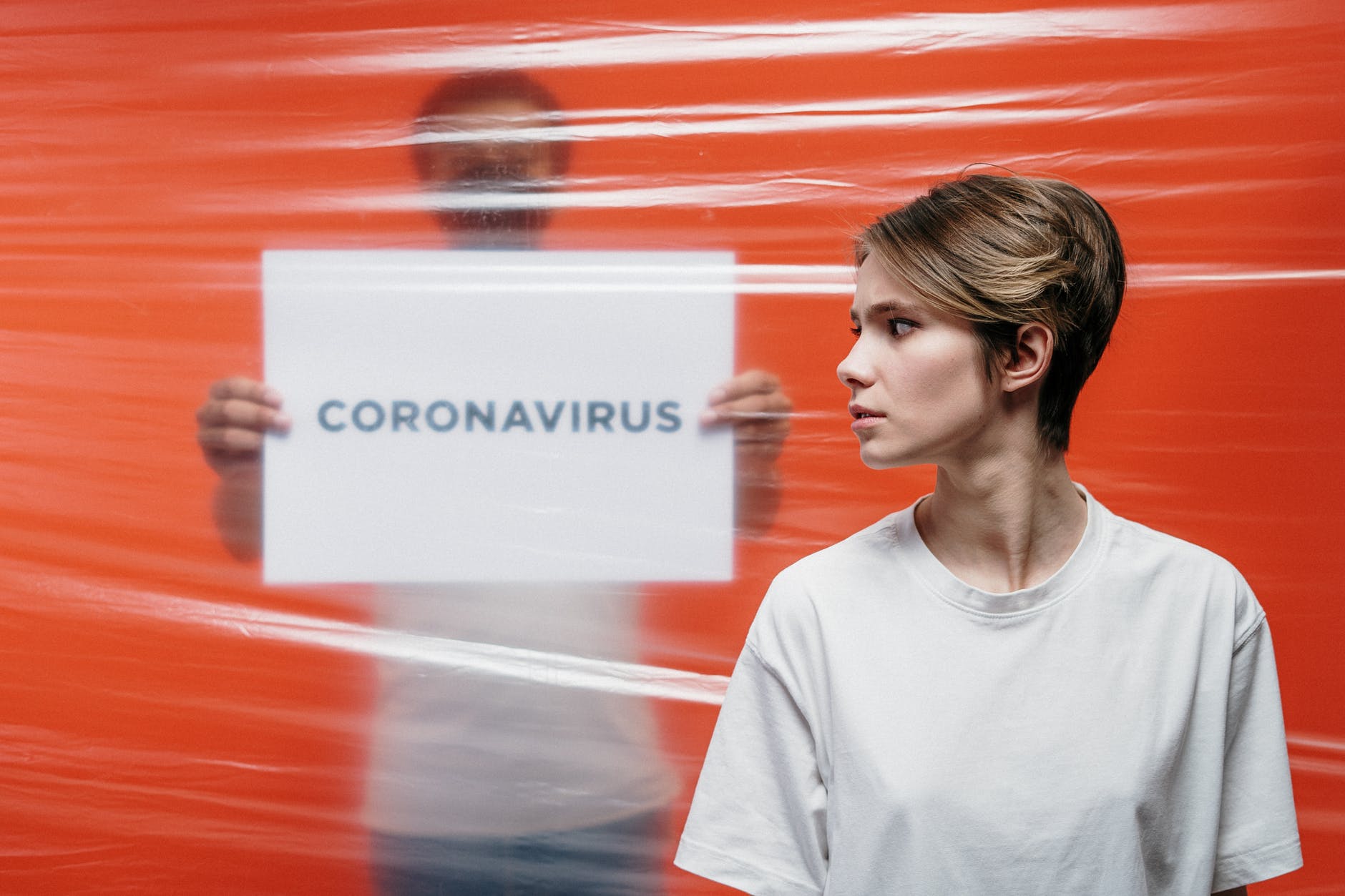
COVID-19 infections in Japan continue to break daily records, a very worrying trend. According to the Associated Press, “Japanese officials sounded the alarm Thursday as Tokyo reported record-breaking coronavirus cases for the third-straight day with the Olympics well underway. Tokyo reported 3,865 new cases Thursday, up from 3,177 on Wednesday and double the numbers a week ago. ‘We have never experienced the expansion of the infections of this magnitude,’ Chief Cabinet Secretary Katsunobu Kato told reporters. He said the new cases were soaring not only in the Tokyo area but across the country.” https://bit.ly/3rHuo4K
Dealing with some excruciating heat during the Summer Olympics has always been a concern and a challence. It has also provided an opportunity for new and sustainable technologies to be teseted. A BBC article takes a look at the various ways companies are For example, “Takasago Thermal Engineering… were chosen to install the heat management systems at the new Ariake Arena, which is hosting the Olympic volleyball and Paralympic basketball events. The company used several methods of so-called ‘green air technology’ to create comfortable spaces and reduce their environmental impact. One such innovation is a new type of air conditioning system called Swirling Induction Type, which pushes cool air in a spiral formation directly into the lower level spaces where people are likely to be. This spiraling air flow helps to mix the air more efficiently, reducing the amount of energy needed to cool a room by up to 40% compared to conventional air conditioning systems.” The 2022 FIFA World Cup has offered similar opportunities to test new cooling technologies. https://bbc.in/3l5O15f
Researchers and the public are growing increasingly concerned with breakthrough COVID-19 infections of fully vaccinated individuals. Naturally, there has been growing interest in whether such infections can be predicted. A recent study showed that a person’s levels of ‘neutralizing’ antibodies, which block SARS-CoV-2 from infecting cells, can be a useful indicator as to whether that person will become infected. Per Nature, “For 22 of the 39 workers with ‘breakthrough’ infections, the authors were able to obtain antibody measurements taken either on the day the infections were detected or in the week before. The researchers also examined data from 104 fully vaccinated workers who matched infected workers for factors such as age but who did not get infected. Comparison showed that levels of neutralizing antibodies were lower among those who got infected — providing the first direct evidence of this effect, says Davenport.” The authors conclude that levels of neutralizing antibodies can serve as a robust indicator. https://go.nature.com/2USLUXT
Another factor likely playing a role in breakthrough COVID-19 infections is the waning efficacy of vaccines. One study tested to see how long protection was conferred by the Pfizer/BioNTech vaccine. Per STAT, “The data, released in a preprint that has not been reviewed by outside scientists, suggest the vaccine was 91% effective overall at preventing Covid-19 over the course of six months. In the ongoing study, which enrolled more than 44,000 volunteers, the vaccine’s efficacy in preventing any Covid-19 infection that causes even minor symptoms appeared to decline by an average of 6% every two months after administration. It peaked at more than 96% within two months of vaccination and slipped to 84% after six months.” The study supports the thesis that booster shots will be needed at some point in the future to continue protecting against the coronavirus. https://bit.ly/2V48lcD
Thanks for reading. Let’s be careful out there.


Leave a Reply