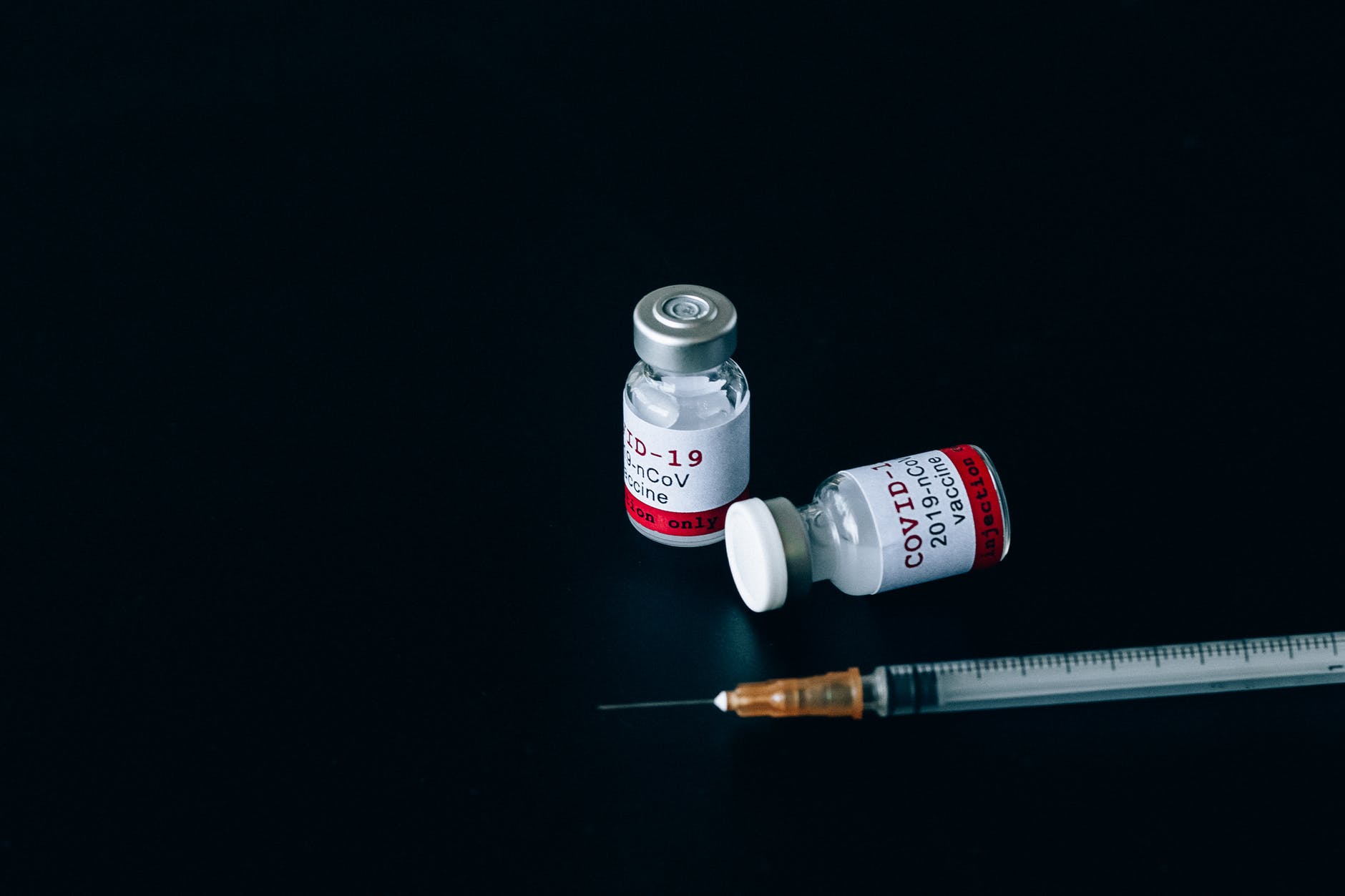
The logistical challenges behind a successful vaccination campaign have been in the spotlight lately. Japanese researchers believe they may have a solution for future immunization drives. “New research from Japan shows that people may one day be able to vaccinate themselves against maladies — from the coronavirus to the flu — simply by applying a patch to their skin that allows the vaccine to be absorbed into the body quicker than with conventional medical patches.” Everything will be automated sooner or later, so why not vaccines. Right? https://bit.ly/3qgOZdJ
When it comes to proactively vaccinating its population, China may be a victim of its own COVID-19 success. Nobody wants to get a jab. Per the South China Morning Post, “Early this week, top respiratory disease expert Zhong Nanshan said China had only vaccinated 3.56 per cent of its population of 1.4 billion by February. He said the government now wanted to speed up the programme to meet the July target of 40 per cent – or more than 500 million people” Officials cite misinformation about vaccine safety as a major driver of the country’s hesitancy. https://bit.ly/3eaST5A
The Great Barrier Reef is the gift that keeps on giving. Recent findings have shed light on mysterious limestone deposits. Per ABC (Australia), “Giant doughnut-shaped limestone mounds sitting in the Great Barrier Reef Marine Park, called Halimeda bioherms, have been building up on the seafloor off the Australian coast since the last ice age. It turns out the 10,000-year-old domes with sunken centres, which measure up to 300 metres across and 20m tall, host plant and animal communities unique to their surrounding environment.” The biodiversity in the GBR is like an underwater Amazon. https://ab.co/3rcfcLT
Waste not, want not. Or so the saying goes. If it were true, there would be a whole lotta wanting people in the world because a new report indicates that people are trashing tons of good food. Per the Associated Press, “The U.N. report estimates 17% of the food produced globally each year is wasted. That amounts to 931 million metric tons (1.03 billion tons) of food. The waste is far more than previous reports had indicated, though direct comparisons are difficult because of differing methodologies and the lack of strong data from many countries.” It’s further proof that human beings are just silly creatures. https://bit.ly/3kJttNA
Thanks for reading. Let’s be careful out there.

Leave a Reply