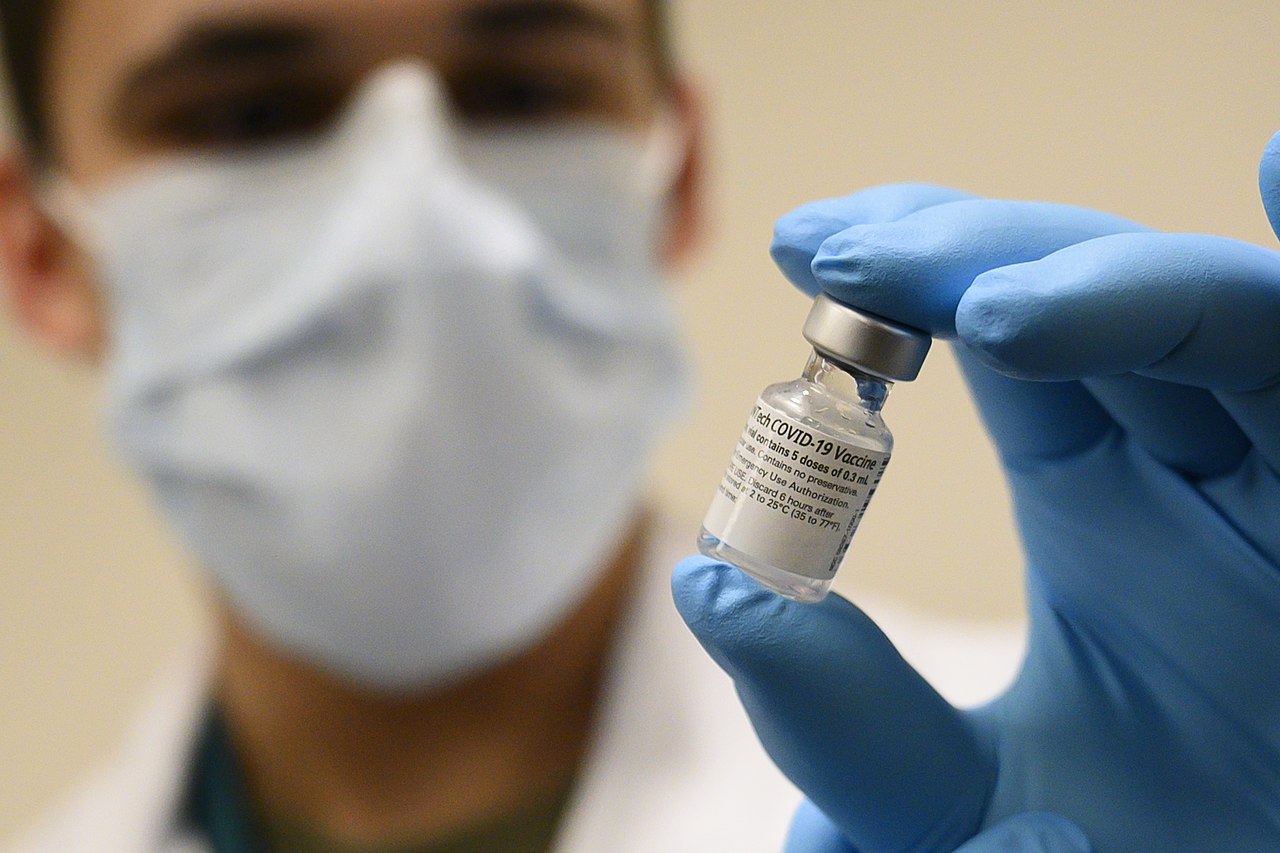
There’s been considerable concern about how COVID-19 vaccines will perform against the recently discovered strains of SARS-CoV-2. For the time being, it seems like they have maintained their efficacy, at least according to the one study posted online. “The first lab results are trickling in and many more are expected in coming days, as researchers rush to probe the viral variants and their constituent mutations in cell and animal models of SARS-CoV-2, and test them against antibodies elicited by vaccines and natural infections. A preprint published on 8 January1 found that a mutation shared by both variants did not alter the activity of antibodies produced by people who received a vaccine developed by Pfizer and BioNtech. Data on other mutations and vaccines are expected soon.” As more study results trickle in, a clearer picture should emerge. https://go.nature.com/2XjM881
Chinese pharmaceutical companies have announced another COVID-19 vaccine success. Per Fierce Biotech, “A little over a week after Sinopharm nabbed the world’s first full approval from Chinese regulators on a 79% efficacy showing for its COVID-19 vax, fellow Chinese native Sinovac, using similar tech, has shown pretty much the same numbers. In data out from a Brazilian phase 3 study of the so-called CoronaVac vaccine, the shot has shown to be 78% effective against COVID-19 while also giving total protection against severe cases of the disease.” Good news, right? https://bit.ly/2LBWCwY
Yes and no. It depends on where you’re sitting.
An article in Science highlights a lack of details with regards to the vaccine. “Both Sinovac and Sinopharm have kept a tight lid on what their partners can reveal about their vaccines. At the 23 December press conference held in São Paulo at the governor’s residence, researchers said that because of a contractual agreement with Sinovac they could only report CoronaVac had greater than 50% efficacy, an internationally accepted standard for emergency authorization. Today’s presentation revealed the specific efficacy rate, but researchers were coy about describing the exact number of people who developed disease in the vaccinated and placebo arms.” That isn’t to imply that anything nefarious is taking place. Data just hasn’t been released and, you know, sometimes it’s nice to see the actual results of clinical trials. https://bit.ly/3q0Xkm5
Moaning about taxes on sugary food and ultraprocessed foods is common practice. Nobody likes the feeling they’re being fleeced, especially by a government. The way they see it, it’s just another revenue stream. However, there are supposed to be real public health implications as well. Specifically, unhealthy food taxes are supposed to deter consumption. The question is, has it been effective? A recent meta-analysis published in PLOS Medicine suggests results are mixed, at best. “To date, tax rates are often too low, and the net impact, while important for public health, needs to be increased significantly. Increasing SSB taxation levels or expanding the tax base to include unhealthy ultraprocessed foods and beverages offer options. Additionally, the tax revenues should be directed toward human capital investments, particularly those targeting lower-income individuals or households, to address equity concerns and strengthen public support.” Does this mean higher taxes are in order? It’s not the most pleasant possibility on the table. https://bit.ly/3hWLdUc
Identical twins are supposed to be, well, identical. Before the advent of modern genetics, it was impossible to test whether there were any differences between siblings at the DNA/RNA level. Recent findings have popped that bubble. Per the Associated Press, “Scientists in Iceland sequenced DNA from 387 pairs of identical twins — those derived from a single fertilized egg — as well as from their parents, children and spouses. That allowed them to find “early mutations that separate identical twins,” said Kari Stefansson, a geneticist at the University of Iceland and the company deCODE genetics, and co-author of the paper published Thursday in the journal Nature Genetics… On average, identical twins have 5.2 of these early genetic differences, the researchers found. But about 15% of identical twin pairs have more genetic differences, some of them up to 100, said Stefansson.” All is not lost. There are always phenotypic identical twins. https://bit.ly/3hTaD5a
Thanks for reading and let’s be safe out there.


Leave a Reply