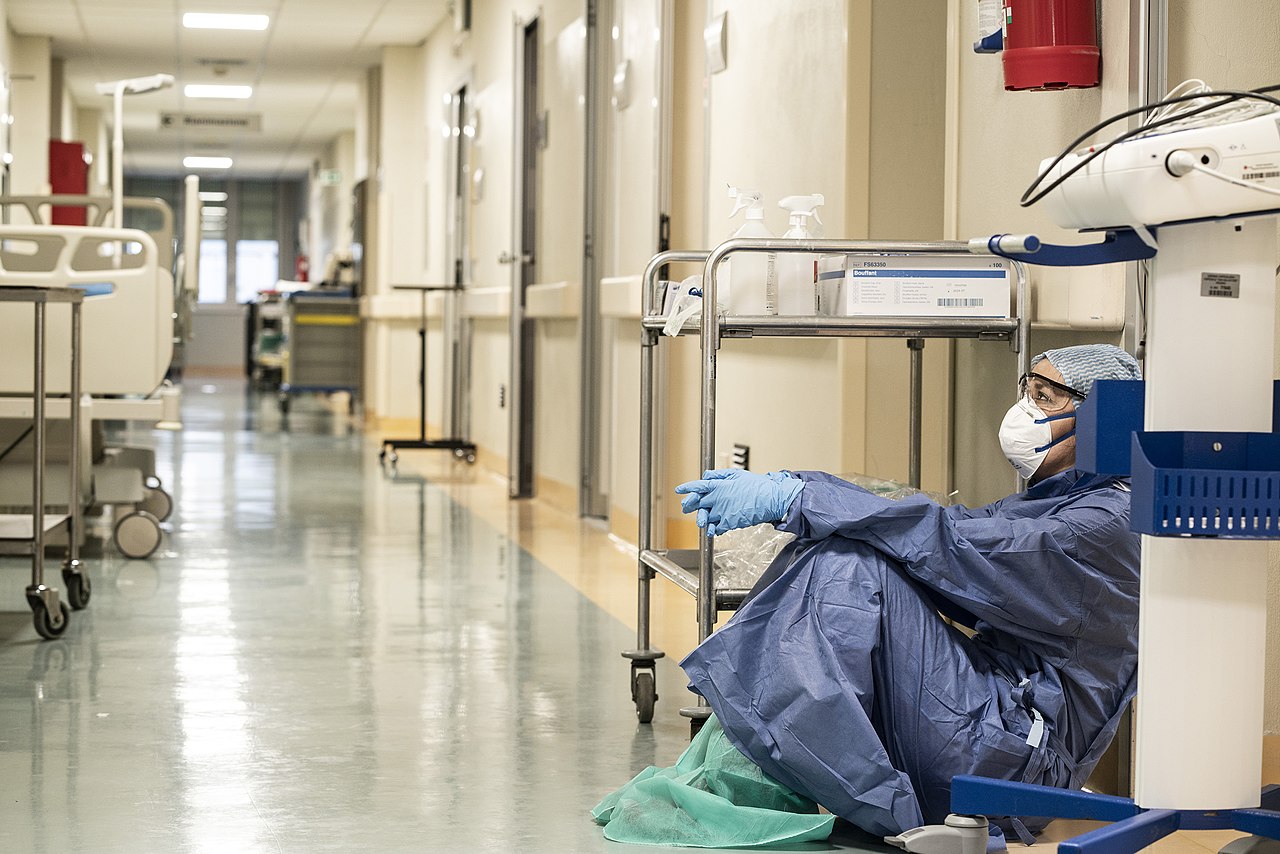
Two new mutations are threatening the efficacy of COVID-19 vaccines. While much of the world’s attention has been focused on the quick spreading variant that originated in the United Kingdom, public health experts and scientists believe the real threats stem from other mutated strains. Per STAT, “The mutation, identified in a variant first seen in South Africa and separately seen in another variant in Brazil, changes a part of the virus that your immune system’s antibodies get trained to recognize after you’ve been infected or vaccinated. Lab studies show that the change could make people’s antibodies less effective at neutralizing the virus. The mutation seems to help the virus disguise part of its signature appearance, so the pathogen might have an easier time slipping past immune protection.” Experts stress that vaccines are unlikely to be rendered ineffective by one mutation but that as more people are infected and vaccinated, evolutionary pressure favoring resistance mutations will increase. Worrying news. https://bit.ly/2Xh8XJt
While we’re on the topic of vaccines…More countries are turning to the AstraZeneca/Oxford University vaccine. Per the Associated Press“South Africa says it will import 1.5 million doses of the AstraZeneca vaccine to inoculate the country’s health workers. This is South Africa’s first announcement of the purchase of a COVID-19 vaccine as its cases soar. The first 1 million doses will be delivered later this month from the Serum Institute of India, followed by an additional 500,000 doses in February, Health Minister Zwelini Mkhize announced Thursday.” The AstraZeneca vaccine has been the subject of a little bit of controversy but remains much more affordable than the Pfizer/BioNTech and Moderna vaccines. https://bit.ly/3biXgdd
Countries around the world remain skeptical of, if not completely opposed to, genetically modified foods. Europe is particularly GM averse. One country (not-so-European?) has taken tentative steps toward reassessing its GM stance. Per the BBC, “The UK government has launched a public consultation on using gene editing to modify livestock and food crops… Environment Secretary George Eustice said the approach could be used to develop crops that are more resistant to disease and extreme weather. He said it could also lead to the production of healthier food, but some are opposed to the technology.” Adoption of more productive or even healthier GM foods may be an unintended benefit of Brexit. Not sure about the rest of the deal though. https://bbc.in/3s4TKcs
One of the lingering challenges to extended space travel has been the chronic loss of bone and muscle mass while in zero or low gravity. Mechanical solutions like exercising are the norm at this point. However, scientists are searching for a more efficient solution. A study in the Proceedings of the National Academy of Sciences looks at an alternative approach. According to the authors, “We investigated the effects of targeting the signaling pathway mediated by the secreted signaling molecules, myostatin and activin A, in mice sent to the International Space Station. We show that targeting this signaling pathway has significant beneficial effects in protecting against both muscle and bone loss in microgravity, suggesting that this strategy may be effective in preventing or treating muscle and bone loss not only in astronauts on prolonged missions but also in people with disuse atrophy on Earth, such as in older adults or in individuals who are bedridden or wheelchair-bound from illness.” https://bit.ly/2IU3XXu
Increased traffic to the moon has been another cause for concern among scientists. This time, it’s a question of pollution and disturbing areas that they want to study. Per Nature, “For the first time ever, several of the upcoming missions will explore some of the Moon’s most scientifically intriguing, yet sensitive areas — those at its poles. Researchers are excited about studying water that lies frozen in shadowed craters in these regions. But they’re also worried that increased traffic to the Moon might contaminate the very ice they want to study.” Unfortunately, the search for profits will likely trump any attempts at proceeding cautiously. https://go.nature.com/3pWqnHx
Thanks for reading. Let’s be careful out there.



Leave a Reply